Welcome: Shenzhen Zhuolida Electronics Co.TD
Language:
 ∷

∷
∷
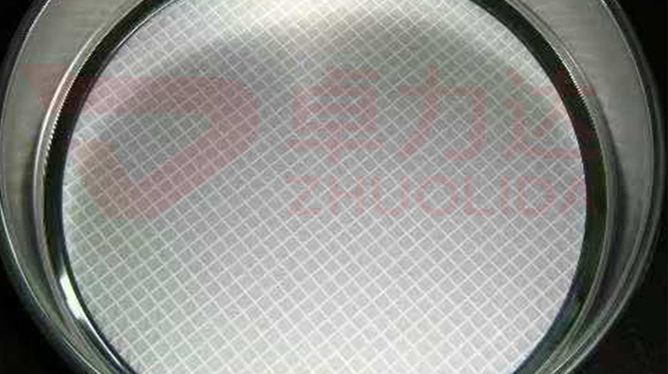
An imager scans the apertures and the ±3μm tolerance plus ≤0.01μm wall roughness both pass, yet a clean dimension sheet is not a corrosion sign-off. Precision nickel mesh is electroformed into a thin nickel-alloy sheet with no base material to take the corrosion for it. Precision nickel mesh corrosion resistance control governs the passivation film on the plating and whether it holds up under salt spray remeasurement: after the nickel-cobalt deposit, a low-temperature anneal comes first, then a chemical passivation grows a dense oxide film over the aperture mouths and mesh ribs, keeping moisture, chloride ions and the pore walls apart. Passivation is not about soaking the sheet thick; the film only passes if it stays thin enough not to block ≥25μm apertures, and film thickness, coverage and adhesion all follow the bath run.
Nickel mesh that comes back often measures fully in spec on the dimension sheet and fails at the aperture mouths after a few months in service. One lot for electrolyte filtration was poorly rinsed before passivation, so residual salt sat on the pore walls; two weeks after install the smallest apertures fogged white first, flow dropped, and under the microscope corrosion products had chewed a burr into a ≥25μm hole. Another lot dwelled too long in passivation, the film piled up at the rib roots, and a 10–55N tension pull cracked it at the boundary, with red spots along the cracks at 48h of salt spray. Subtler still, the anneal temperature drifted from the bath record, internal stress was not relaxed, the film looked even yet peeled off in sheets from the edge in a damp-heat chamber. The inspector signed off on the dimension sheet; only the damp-heat remeasurement exposed it, and peeled sheets are scrapped, not reworked — a lifted film cannot be patched by replating. Precision nickel mesh corrosion resistance control has to set passivation and salt spray remeasurement apart as their own stations, not sign them off mixed into dimensional release.
Parameter Window
• Thickness 15–200μm in classes, 30–50μm thin sheet passivated first, thicker sheet given longer dip per bath
• Minimum aperture ≥25μm, aperture tolerance ±3μm; film capped so it never blocks a hole
• Neutral salt spray 35 ±2°C, 5% NaCl, pH 6.5–7.2, remeasurement 24–96h in steps, no single pass hour written down
• Salt spray judged against a plant rating band (no red rust, no corrosion product piled at the mouth as the release line), no fixed grade promised to the customer
• Current density 1–4A/dm² in stages, nickel-cobalt hardness 450–550Hv, anneal in a 200–260°C band to relax stress
• Passivation dip 30–120s in steps, wall roughness ≤0.01μm, film adhesion sampled per lot
Manufacturing Process (8 Steps)
1. Data and base prep — lay out apertures to ±3μm, clean and conductivize the conductive base so the deposit traps no residual salt.
2. Lamination and LDI — 8μm/8μm resolution, double-side alignment ±5μm, aperture array and rib outline aligned in one shot.
3. Developing — hold concentration and time, leave no residue on the pore walls so passivation wets evenly.
4. Electroforming — nickel-cobalt grown to the 15–200μm class at 1–4A/dm², wall roughness held to ≤0.01μm.
5. Release and anneal — peel the whole sheet from the conductive base, low-temperature anneal relaxes stress so the film will not crack with it.
6. Chemical passivation — dip 30–120s in steps, film on mouths and ribs alike, thin enough not to block ≥25μm apertures.
7. Salt spray remeasurement — neutral salt spray 24–96h per lot, mouth and appearance judged against the plant rating band, film change logged.
8. Inspection and mounting — imager and flash gauge measure apertures, tension set at 10–55N, AB adhesive frame before shipment.
Core Advantages
1. Mouths do not rust first — hold precision nickel mesh corrosion resistance control and white fog plus flow loss drop together.
2. Film does not plug holes — passivation bound by the ≥25μm aperture, so ±3μm tolerance is not eaten by film thickness.
3. It adheres — passivate after stress relief and the film will not peel in sheets with the nickel stress.
4. Traceable criteria — spray hours, rating band and bath run all logged, anomalies trace back to a lot.
5. Honest life — nickel alloy hardness 450–550Hv, chloride cannot chew burrs into the pore walls in a damp-heat chamber after passivation.
6. Compliance in place — nickel-cobalt with RoHS records, salt spray window rechecked on a sample before the drawing goes out.
Typical Applications
1. Nickel mesh for electrolyte and chemical filtration, where chloride service leans hardest on passivation and salt spray remeasurement.
2. Battery current collectors and electrode support mesh, long in contact with electrolyte, where mouth corrosion raises internal resistance directly.
3. Precision sieves for semiconductor classification, where ±0.002mm roundness holes cannot be plugged by corrosion product.
4. EMI shielding and vent mesh, where damp-heat appearance rating and shielding continuity are read together.
5. Microhole mesh for sensor guards, where the film keeps white rust off the pore walls under condensation.
6. Medical and food screening mesh, where passivation residue and salt spray rating both need lot records.
Design and Selection Notes
1. Set the passivation route from the service medium first, step spray hours to plant test conditions, never write a fixed pass hour to the customer.
2. Keep film thickness under the premise of not blocking ≥25μm apertures, leave passivation margin in the ±3μm tolerance.
3. Do not swap anneal and passivation order; with stress left in, film adhesion sampling will fail.
4. Judge salt spray against the plant rating band; no red rust is a release line, not a promise of extreme capability.
5. Stage current density at 1–4A/dm², log nickel-cobalt composition per bath, hardness lands at 450–550Hv.
6. Set tension in 10–55N classes, check one point at the sheet edge, film cracks usually start at the mounting edge.
7. Give nickel mesh passivation film remeasurement its own station; an aperture checker cannot see film coverage or adhesion.
Break precision nickel mesh corrosion resistance control apart and no single step owns it: deposit density is set in electroforming, internal stress is relaxed by low-temperature anneal, the passivation film goes on in those few seconds of dip, and salt spray remeasurement decides whether the mouths fog white first. Longer dips do not buy more resistance; if bath concentration drifts outside the logged band, the lot goes back to the salt spray remeasurement window for a fresh call. The film follows passivation concentration and dip time, so coverage has to be sampled per bath; what matters is a dozen sheets from one bath and several consecutive lots all landing in the same rating band, only then does ±3μm aperture tolerance mean anything. At sampling, fix the thickness class, dip time and salt spray remeasurement window in the process card and run production to that card. Spray hours and judgement grade must be set against real plant test conditions and rechecked by an inspector with an imager on a sample before the drawing goes out, not written as one vague pass claim.
Contact:赖先生
Phone:+86 18938693450
Tel:0755-2708-8292
Email:yw9@zldsmt.com
Add:深圳市宝安区福永镇新和村福园一路华发工业园A3栋
 Zhuolida