Welcome: Shenzhen Zhuolida Electronics Co.TD
Language:
 ∷

∷
∷
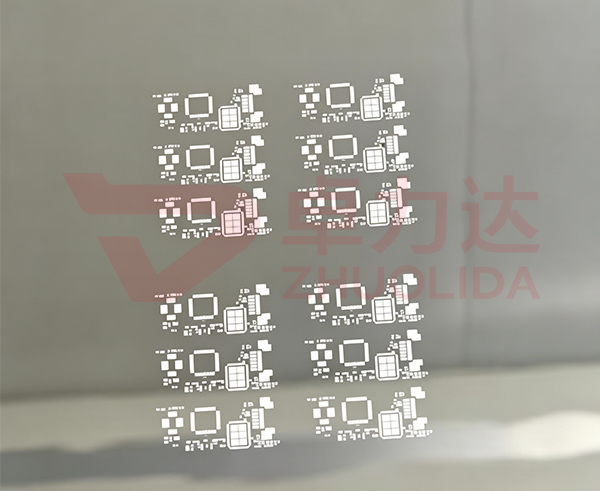
Electroforming and etching handle the same family of work: precision metal parts from a few tens of microns up to a millimetre or two. The methods run in opposite directions. Electroforming stacks nickel ion by ion onto a mandrel until the grown shell is the part. Etching dissolves away what is not wanted and leaves the remainder as the part. Additive against subtractive, and the boundary draws itself: as thickness rises, plating time is counted in hours and cost climbs with it; as thickness falls into the tens of microns, rolling texture and residual stress in the sheet start dragging flatness. Choosing between electroforming and etching is really a search for the dividing line across four dimensions, thickness, smallest feature, lot size and tooling cost. It is not a contest over which process is more advanced. Change the annual volume on one drawing from 100 pieces to 5000 and the answer can invert.
One job last year went back and forth three times. At 0.3mm thick, 0.1mm holes, 800 pieces a year, the electroforming quote drew a complaint on unit price, the etching quote drew one on lead time. What sat in the middle was not technology, it was nobody putting the criteria on the table. Another case: a 0.03mm sheet took the etching route for convenience, rolling texture plus residual stress pushed flatness out to 0.05mm, the part would not sit flat in the fixture, and it came back to be electroformed. The reverse happens too. A 1.0mm plate, 20mm square, was quoted as electroforming with a plating time past 30h; the unit cost ran well above etching and the quote went out to silence.
Parameter Window
• Thickness 0.05mm and below belongs to electroforming: 0.02–0.05mm plates plate in 4–8h, free of rolling texture and residual stress
• Thickness 0.05–0.5mm is the overlap: either route works, so feature size, lot size and tooling cost decide
• Thickness 0.5mm and above leans to etching: past 0.8mm, plating runs from 12h upward and time cost will not hold
• Smallest hole or slot: electroforming reaches 25–50μm at a conservative 1:1 aspect ratio, while undercut in etching grows with depth
• Lot size divider: at 500 pieces or fewer electroforming wins by skipping a tooling set-up; at 2000 and above etching unit cost drops as tooling is amortised
• Accuracy basis: electroforming at ±2μm thickness and ±3μm hole size, etching expressed as a percentage of sheet thickness, so settle the acceptance basis before signing the drawing
Manufacturing Process (8 Steps)
1. Drawing intake — record sheet thickness, smallest hole, slot width, material, annual volume and lead time; a missing field stops the review.
2. Feature reading — measure the greatest thickness and the smallest feature, then work out the aspect ratio; anything past 1:1 gets flagged, since both routes struggle there.
3. Volume sizing — split annual demand into three bands, under 500, 500–2000 and above 2000, each carrying a different cost structure.
4. Cost breakdown — list tooling or mandrel cost, unit run time, finishing and yield loss separately, so no single total hides the difference.
5. Material match — nickel and nickel-cobalt go to electroforming, stainless, copper and aluminium to etching; an undecided alloy gets a sample run first.
6. Trial confirmation — 3–5 first articles from each route, measured for thickness, hole size and flatness, with the data carried back against the criteria table.
7. Production control — the electroforming side runs 1–4 A/dm² across a 450–550HV window, with Cpk held at 1.33 or better through the first month.
8. Review and transfer — after 2000 cumulative pieces, revisit yield and unit cost, and adjust the criteria rather than defending the first table.
Core Advantages
1. With the criteria laid out first, the conversation about choosing between electroforming and etching shifts from who is cheaper to which boundary sits closer, and three rounds of requoting stop.
2. The three thickness bands absorb the most common disagreement before a quote is issued; draw the two lines and the workable range is visible.
3. Tooling cost carries its own line, so a small lot under 500 pieces is not quietly eaten by one fixed charge.
4. Aspect ratio is calculated up front, and a hole past 1:1 raises a flag before trial parts are cut rather than after.
5. Both routes sit in the same plant, so a transfer needs no new supplier and the trial data carries over, cutting the retest list by half.
6. First-article numbers feed back into the criteria; the table stays alive instead of a generic selection handbook being forced onto every drawing.
Typical Applications
• Encoder discs: nickel sheet 0.1–0.3mm, holes around 50μm, mostly electroformed
• Aperture and slit blades: 0.02–0.05mm sheet, 20μm slots, where electroforming is the clear route
• Stencils and printing screens: 0.08–0.2mm, dense hole arrays, chosen by lot size between the two
• Nameplates and decorative shims: 0.3–0.8mm, simple outlines, few holes, etching saves more
• Meshes and perforated plates: 0.05–0.3mm with hole counts in the tens of thousands, decided by hole tolerance
• Stiffener plates: 0.5–1.0mm, large format and few holes, where etching holds a steadier lead time
Design and Selection Notes
1. State thickness and smallest hole before discussing price. Fix those two numbers and the range for choosing between electroforming and etching is largely settled.
2. Thinner does not automatically mean electroforming. Below 0.02mm with large unsupported area, fixture and handling cost outweighs the process difference.
3. Lot size is a variable, not a constant. At 300 pieces a year and at 3000, one drawing yields two answers, so the quote must say which volume it assumes.
4. Etching tolerance is given as a percentage of sheet thickness; on thin stock, confirm a ±0.01mm callout can actually be measured before the drawing is signed.
5. Holes past a 1:1 aspect ratio force a downgraded commitment on either route, and more so as the hole shrinks.
6. If first-article thickness drifts beyond ±5μm, return to the parameter window and recheck; do not let downstream trimming make up the difference.
7. Keep trial data when a part changes route. Moving a drawing from etching to electroforming shifts both the hole and flatness datum, so the old report does not carry over.
Choosing between electroforming and etching has no universal answer, only boundaries. Below 0.05mm, plating time is short and the thin sheet escapes rolling texture. Above 0.5mm, plating hours stack up and etching is the better buy. In between, hole size and lot volume decide for everyone. The floor sequence is to work out the aspect ratio, then the annual volume, and only then quote. One drawing crossed routes twice, and on the third pass the volume moved from 800 to 3000 pieces a year; the answer became obvious. Clear criteria settle more than an argument about which process is superior.
Contact:赖先生
Phone:+86 18938693450
Tel:0755-2708-8292
Email:yw9@zldsmt.com
Add:深圳市宝安区福永镇新和村福园一路华发工业园A3栋
 Zhuolida