Welcome: Shenzhen Zhuolida Electronics Co.TD
Language:
 ∷
∷

∷
∷
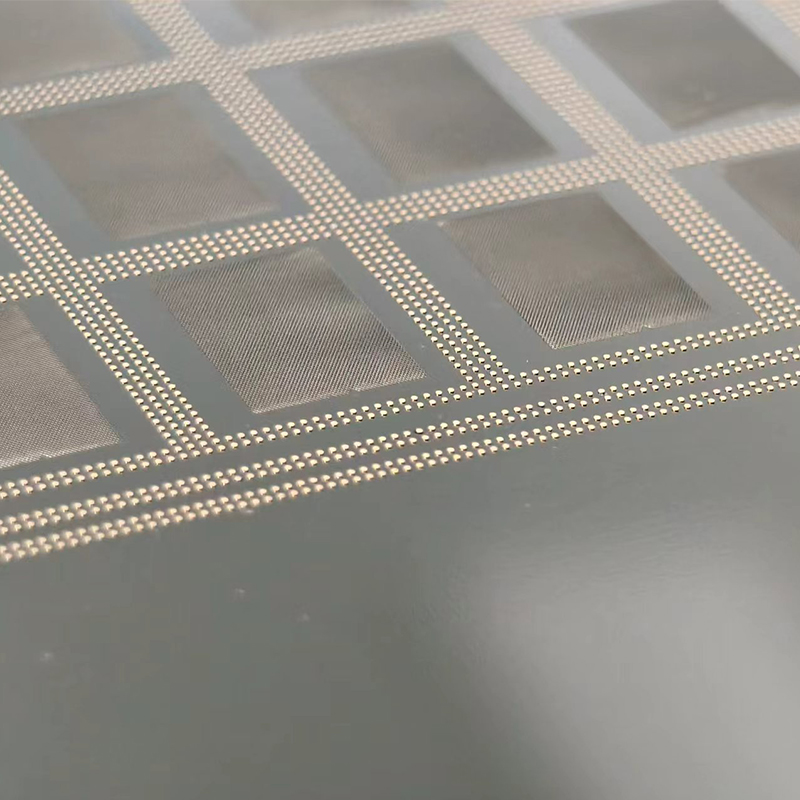
Electroforming in Dongguan is a precision machining technology developed on the basis of the principles of electrochemical deposition. With its nanometre-level replication accuracy and ability to form complex structures, it has become one of the core processes underpinning the transformation and upgrading of Dongguan’s manufacturing sector. Leveraging the advantages of the region’s well-established industrial chain, Dongguan’s Electroforming manufacturers are continuously optimising their processing technologies to enhance production efficiency and product precision, thereby meeting the demands of diverse sectors including consumer electronics, automotive manufacturing and optical components. As a core sub-sector of Dongguan’s electroforming industry, electroforming mould manufacturing is widely applied in the production of various precision moulds due to its high precision, long service life and ease of mass production, thereby helping Dongguan establish itself as a hub for precision manufacturing in the Pearl River Delta.
The electroforming process in Dongguan is rigorous and standardised, with every stage directly determining the final product quality. In line with the region’s industrial characteristics, the process can be divided into five core steps. The first is the design and preparation of the master mould, which forms the foundation for ensuring the quality of Dongguan’s electroforming. Leveraging local 3D printing and CNC machining industrial clusters, Dongguan electroforming manufacturers rapidly produce resin or metal master moulds. Through precision polishing, the surface roughness of the master mould is reduced to Ra ≤ 0.02 μm, ensuring that subsequent electroformed layers can faithfully replicate the master mould’s details. This is a key prerequisite for achieving high precision in Dongguan electroformed mould manufacturing.
The second step involves master mould pre-treatment, the core of which is to ensure the master mould’s surface meets conductivity and cleanliness standards. Dongguan electroforming manufacturers first thoroughly remove oil, oxidation layers and impurities from the master mould’s surface through solvent cleaning and alkaline degreasing. For non-metallic master moulds, they then apply chemical nickel plating or vacuum aluminium plating to achieve conductivity, thereby reducing production costs whilst enhancing the uniformity of electrical conductivity. Once pre-treatment is complete, the master mould undergoes activation to ensure uniform deposition of metal ions, laying a solid foundation for the smooth progression of the electroforming process and providing a high-quality substrate for the production of electroformed moulds in Dongguan.
The third step is the core electroforming deposition stage, which is also the central process of Dongguan electroforming. Based on product requirements, Dongguan electroforming manufacturers select suitable metals such as copper or nickel as the anode, with the pre-treated master mould serving as the cathode. Both are immersed in a customised electrolyte solution, and the current density is controlled via a pulsed reverse power supply to enable metal ions to deposit uniformly layer by layer onto the surface of the master mould. During this stage, Dongguan electroforming mould manufacturers precisely control the deposition time and electrolyte temperature to ensure uniform layer thickness with a tolerance of ±2μm. This results in a mould cavity with a dense structure and low internal stress, meeting the requirements for precision moulds.
The fourth step is the post-processing stage, which primarily involves separating the electroformed part from the master mould and optimising its performance. Dongguan electroforming manufacturers utilise robotic arm vision-guided demoulding or thermal separation technology to achieve non-destructive separation of the electroformed part from the master mould, with a yield rate of over 99%. Subsequently, processes such as magnetorheological polishing and diamond spray polishing are employed to remove burrs from the surface of the electroformed parts and enhance surface finish. Some high-end products also undergo nitriding treatment to improve wear and corrosion resistance. For products manufactured using Dongguan electroforming mould processing, annealing is also performed to eliminate internal stresses and extend the service life of the mould.
The fifth step is the quality control phase, which runs throughout the entire Dongguan electroforming process. Dongguan electroforming manufacturers utilise equipment such as X-ray fluorescence thickness gauges and coordinate measuring machines to conduct in-line inspections of electroformed layer thickness, dimensional accuracy and surface quality. Non-conforming products are rigorously screened out to ensure compliance with industry standards. Furthermore, leveraging Dongguan’s comprehensive environmental management system, electroforming wastewater undergoes membrane separation treatment to facilitate the recovery and reuse of heavy metals. This approach balances production efficiency with environmental compliance, serving as a crucial safeguard for the large-scale production of electroformed moulds in Dongguan.
Thanks to its unique advantages, Dongguan electroforming has become deeply integrated into the city’s pillar industries, covering a wide range of sectors including consumer electronics, automotive manufacturing, optical components and biopharmaceuticals. In the consumer electronics sector, Dongguan electroforming is widely used in the production of mobile phone camera modules, metal mesh grilles for TWS earphones and Type-C connector housings, utilising its high-precision replication capabilities to achieve the accurate forming of minute structures; Dongguan electroforming mould processing is utilised for the manufacture of moulds for products such as mobile phone buttons and light guides, with mould lifespans reaching 250,000 to 300,000 cycles, meeting the demands of mass production.
In the automotive manufacturing sector, Dongguan electroforming is employed for the processing of components such as automotive headlight reflectors and hydrogen fuel cell bipolar plate flow channels. Through Precision Electroforming processes, the optical performance and fluid control capabilities of these components are enhanced; In response to the automotive industry’s requirements, Dongguan electroforming manufacturers have optimised their mould processing techniques. The headlamp moulds they produce can replicate complex textures, enhancing the vehicle’s exterior finish and meeting the demands of high-end automotive manufacturing. Furthermore, Dongguan electroforming is also used for the production of moulds for car remote control buttons, satisfying the precision requirements of automotive electronics.
In the field of optical components, Dongguan electroforming is a core process for the manufacture of products such as Fresnel lenses and optical lenses, enabling nanometre-level surface precision and the regulation of light propagation characteristics; Dongguan electroforming mould processing is used for the manufacture of optical moulds, capable of precisely replicating complex textures such as CD patterns and diamond patterns, achieving a high-gloss finish without the need for subsequent polishing, and is widely used in products such as lighting fixtures and camera lenses. Leveraging mature technologies, Dongguan electroforming manufacturers are driving the optical components industry towards greater precision and lighter weight.
In the biomedical sector, Dongguan electroforming is utilised for the processing of products such as minimally invasive surgical instruments and biosensors; its burr-free and sterile characteristics ensure the safety of medical devices. Meanwhile, Dongguan electroforming mould processing is employed in the manufacture of moulds for medical components, precisely controlling cavity dimensions to guarantee the compatibility of these components. Furthermore, Dongguan electroforming is applied to the processing of precision filtration equipment, hardware accessories, and handicrafts, covering multiple industrial scenarios and demonstrating the industrial strength of Dongguan’s precision manufacturing sector.
Dongguan electroforming manufacturers consistently prioritise market demand, leveraging the city’s well-established industrial chain to continually overcome technical bottlenecks in electroforming, optimise processing workflows, and enhance both product quality and production efficiency. Looking ahead, as Dongguan’s manufacturing sector transitions towards high-end and intelligent production, Dongguan electroforming will achieve breakthroughs in more emerging fields, whilst electroforming mould manufacturing will undergo continuous upgrades. This will further integrate the sector into industrial chains such as consumer electronics and automotive manufacturing, injecting new vitality into the high-quality development of Dongguan’s manufacturing industry.
Contact:赖先生
Phone:+86 18938693450
Tel:0755-2708-8292
Email:yw9@zldsmt.com
Add:深圳市宝安区福永镇新和村福园一路华发工业园A3栋
 Zhuolida