Welcome: Shenzhen Zhuolida Electronics Co.TD
Language:
 ∷

∷
∷
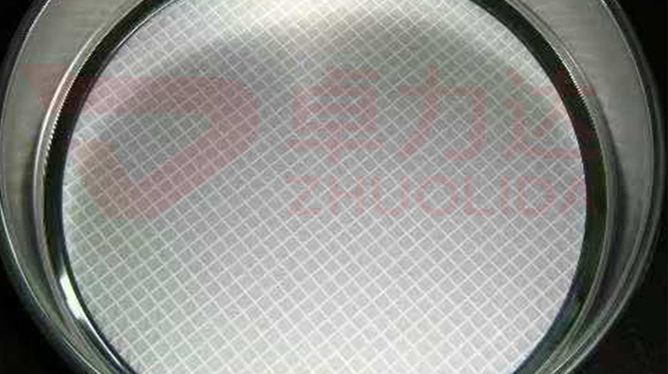
Hydrogen embrittlement relief baking for electroformed parts addresses a very specific defect: in the plating bath the cathode evolves nickel and hydrogen at the same time, and a fraction of that hydrogen is trapped in the deposit, sitting in lattice interstices and along grain boundaries, turning nickel that should bend into something hard and brittle. Hardness does not reveal it, since the reading stays at 450–550 Hv either way; what reveals it is whether the bend line cracks. Baking is a plain operation: hold the part at 180 ±5 °C for 2–4 h and let hydrogen diffuse out along the concentration gradient until ductility returns. This is not the same job as internal stress control, which works on deposition and grain structure. Here only hydrogen is moved.
Three symptoms identify hydrogen embrittlement on the floor. A 90° bend cracks along the bend line, with a flat fracture face and no visible necking, quite unlike the slanted face of an overload break. Blanking or punching leaves the edge chipping, a 0.05–0.2 mm rim flaking away, and the punch wears out after a few strokes. Cracking may also be delayed: a part sits in the assembly for 24–72 h and then splits around a screw hole on its own. A micrometer shows the thickness is fine, the press brake shows the truth, and incoming hydrogen measures 100–200 ppm. Whether the disposition sheet says scrap or rework depends on one thing, whether the bake step exists. One lot of 0.08 mm electroformed spring strip shipped without baking; 17% cracked at the customer within two days and the whole lot came back.
Parameter Window
• Bake at 180 ±5 °C for 2–4 h, adding 1 h per 25 μm of section above 25 μm.
• Ramp up at ≤3 °C/min and cool at ≤5 °C/min; the door opens only below 80 °C.
• Hydrogen by inert gas fusion, ≤30 ppm after baking, with an incoming baseline measured and filed first.
• Bend criterion 180° at a mandrel-to-thickness ratio R/t ≤1, no visible cracking on the bend line.
• Tensile elongation ≥8% on a 50 mm gauge length at 5 mm/min, median of three specimens.
• Nitrogen purge or vacuum in the chamber, dew point ≤−40 °C, so the part does not reabsorb moisture or discolour on exit.
Manufacturing Process (8 Steps)
1. Pre-treatment — substrate degreased and acid dipped so no surface hydrogen or debris enters the bath.
2. Electroforming — 1–4 A/dm² at 45–55 °C bath temperature, agitation stripping hydrogen bubbles before they cling.
3. Stripping — the nickel sheet lifts from a corner in one piece, never pried, so no pre-crack is planted.
4. Cleaning — 10 min ultrasonic in DI water removes residual salts that would bake into scale.
5. Loading — sheets stand upright with 20 mm spacing and no stacking, so gas flows past both faces.
6. Baking — 2–4 h at 180 ±5 °C, ramp ≤3 °C/min, chamber curve logged throughout.
7. Controlled cooling — cool in chamber below 80 °C before opening; a quench locks the hydrogen back in.
8. Re-test — 180° bend plus hydrogen sampling, and only both passing releases the lot to stock.
Core Advantages
1. Relief baking pulls hydrogen from the 150 ppm level down under 30 ppm, and a bend that always cracked stops cracking.
2. One written criterion, 180° bend at R/t ≤1, means the inspector no longer judges a crack by feel.
3. Hold time scales with section, 2 h for 0.03 mm foil and 4 h for 0.1 mm strip, so thin parts are not overbaked.
4. Cooling is controlled as its own step, with the door kept shut above 80 °C, so ductility is not lost at the last minute.
5. Furnace curves and hydrogen results are filed together, giving a traceable chain when a customer asks about a lot.
6. Stripping to baking stays inside 24 h under one roof, with no transport queue in between.
Typical Applications
1. Electroformed spring fingers and contact leaves that bend past 90° during assembly and snap at the bend line when brittle.
2. Corrugated diaphragms and capsule bellows, which flex thousands of times while a brittle part perforates within hundreds.
3. Precision shims and adjustment washers, where a chipped blanking edge leaves the mating face unable to seat.
4. Fine mesh filter discs, whose edge cracks when the mesh is rolled into a cylinder.
5. Optical aperture foils at 20–50 μm, which must stay flat after punching.
6. Thin-wall medical components with several bend and crimp operations, where embrittlement turns directly into scrap rate.
Design and Selection Notes
1. Put the bend criterion on the drawing before the hydrogen ceiling, and make sure the two numbers agree.
2. Hotter is not better. Above 220 °C grain growth starts and both hardness and dimensions move.
3. Do not copy thin-foil hold times onto heavy sections; above 1 mm, extend the cycle from measured hydrogen.
4. If the bend still cracks while hydrogen is within limit, go back to the bath and check additives and agitation instead of adding hours.
5. Bend within 24 h of relief baking; a longer interval introduces natural ageing as a confounder.
6. Where the surface carries a passivation or coating, confirm first that the bake temperature will not yellow it.
7. On a trial lot, pull three pieces for a 180° bend rather than baking the batch and sorting afterwards.
Hydrogen embrittlement relief baking is not an optional step; it compensates for a weakness inherent to electroforming. Hydrogen evolution in the bath cannot be avoided, but how much enters and how much leaves can be managed: current density held at 1–4 A/dm², agitation carrying bubbles away, and the furnace entered within 24 h of stripping will take hydrogen from 150 ppm to below 30 ppm with reasonable certainty. The verdict is equally plain, a 180° bend without cracking and elongation past 8%, both or nothing. One caution: baking removes hydrogen, not coarse grains or inclusions, so when a bend still cracks, look at the microstructure before discussing the furnace. For orders with a deposit hydrogen re-test requirement, hand over the furnace curve, the hydrogen result and the bend photo together; that carries more weight than a verbal assurance.
Contact:赖先生
Phone:+86 18938693450
Tel:0755-2708-8292
Email:yw9@zldsmt.com
Add:深圳市宝安区福永镇新和村福园一路华发工业园A3栋
 Zhuolida