Welcome: Shenzhen Zhuolida Electronics Co.TD
Language:
 ∷

∷
∷
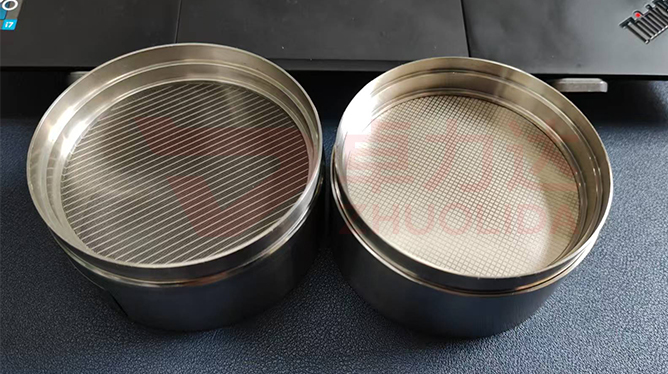
An electroforming quotation structure explains why a nickel part is worth what it costs: thickness sets how many deposition hours it takes, precision sets how much inspection labour it draws, lot size sets how the mandrel and mask are spread, and re-measurement sets how much work remains after shipping. Put those four weights on the table, price against the drawing, and the sheet reconciles. Working them out separately before pricing beats explaining the number afterwards.
Send the same drawing to three shops and the replies can differ by 40%, and it is rarely a matter of honesty. One quotes 30μm nominal, another quotes 25μm±3μm, and 5μm of thickness is half an hour of tank time. Inspection basis differs too: one samples 20%, another inspects everything, and re-inspection hours double between them. Lot size does the same thing, since 5 pieces and 500 pieces share one mandrel and the fixed cost lands on very few parts in the first case. A buyer comparing only totals is comparing three different bases. Lead time behaves the same way: 15–20 days standard against 7 days rush occupies a different slot.
Parameter Window
• Thickness 15–200μm: each additional 50μm pushes deposition hours roughly 1:1.2, with power draw and tank occupancy moving the same way.
• Aperture tolerance tightened from ±5μm to ±3μm lifts sampling from 20% to 100%, more than doubling re-inspection hours.
• Lot size 1–500 pieces in four bands; below 5 pieces the mandrel and mask carry most of the quotation.
• Above 400 holes per square centimetre, development and automatic inspection each slow by about 30%.
• Re-measurement counted at release, 3 months and 6 months comes to roughly 2.5 times a single release check.
• Laminated LDI adds one lamination step over dry film, and 8μm/8μm resolution means longer equipment occupancy.
Manufacturing Process (8 Steps)
1. Drawing intake — check revision and units first. Two revisions of one part quoted side by side always ends in an argument, so ask.
2. Read the critical dimensions — functional sizes set the precision band, cosmetic sizes the standard band, and the two are not in the same labour league.
3. Judge the process window — the step most often skipped in an electroforming quotation structure. Anything outside gets a redraw talk, and a redraw usually costs less than forcing the part.
4. Fix substrate and mask route — a stainless mandrel can be reused dozens of times, and that reuse count rewrites the per-part share.
5. Slot scheduling — sharing a tank run spreads power cost; a rush insert takes the slot and shows up in the quotation.
6. Inspection plan — vision system, flash measurer and automatic inspection machine carry different labour, so sampling or full inspection is settled before hours are booked.
7. Quotation — the four weights of an electroforming quotation structure added, then multiplied by the lot factor, itemised on the sheet, priced against the drawing.
8. Sign-back — quotation validity, lot bands, re-measurement count and deviation handling all on paper, scheduling only after signature.
Core Advantages
1. Four lines on the sheet let a buyer see which item is expensive and argue with it directly instead of guessing. A quotation that cannot be split rarely explains itself.
2. No loss-leader pricing: the first article is quoted at its real process cost, and volume never makes up a gap later.
3. Redraws that save money are volunteered: taking a 20μm aperture to 25μm removes one full inspection pass.
4. Lot size is quoted in bands, 1, 50, 200 and 500 pieces, with no percentage concession. The gap between bands follows mandrel reuse and tank occupancy, not a feeling.
5. Re-measurement sits inside the quotation, at 3 and 6 months, so no surcharge argument starts later.
6. Parts outside the window are declined before quoting; 8μm at ±2μm never goes out low and comes back with a supplement.
Typical Applications
• Precision stencil — 15–200μm with ≥25μm apertures; move the thickness band and tank hours move with it.
• Step stencil — the step zone needs a second exposure, one extra operation that can be listed on its own line.
• Electroformed screen — true roundness ±0.002mm comes from the mandrel, so mandrel grade is the first cost watershed.
• Code disc — a 50μm±0.5μm track width; past that line the tooling moves to finer resolution and hours jump.
• Aperture plate — 20μm rib width; thinner ribs mean lower yield, and scrap rate belongs in the spread.
• Ball-placement and micro-hole mesh — ±3μm aperture tolerance with 30μm minimum holes, where sampling or full inspection is agreed first.
Design and Selection Notes
1. Annual volume and batch rhythm: 200 pieces a year in runs of 20 is a different cost structure from 200 at once, and fragmented batches add changeovers.
2. Say whether the tolerance is per piece or per lot; a lot tolerance needs Cpk ≥1.33 data, and inspection volume rises with it.
3. Settle inspection early: sampling ratio, decision owner and which instrument, all of which rewrite the re-inspection line.
4. Delivery form: loose part, AB adhesive frame or tensioned assembly, every added operation carrying its own labour.
5. State how many re-measurements and when; release plus 3 and 6 months differs visibly from a single check.
6. Drawing revision and change frequency: a new revision means a new mask and the whole route again, so parts that change often need room in the number.
7. Lead time and rush orders: 15–20 days normal against 7 days urgent occupy different slots and are quoted apart.
An electroforming quotation structure is not a single total. Differences come less from who is cheap than from whether the bases line up: thickness reference, inspection method and lot band, written down, make three quotes comparable. Putting those three into the enquiry saves more time than asking three shops twice. Thinner is not automatically cheaper either: below 15μm the scrap rate climbs and the cost per good part rises. If yield drops 5% when thickness goes from 50μm to 100μm, we go back to bath chemistry and shielding for another measurement round and re-price, rather than patching the old number.
Contact:赖先生
Phone:+86 18938693450
Tel:0755-2708-8292
Email:yw9@zldsmt.com
Add:深圳市宝安区福永镇新和村福园一路华发工业园A3栋
 Zhuolida