Welcome: Shenzhen Zhuolida Electronics Co.TD
Language:
 ∷

∷
∷
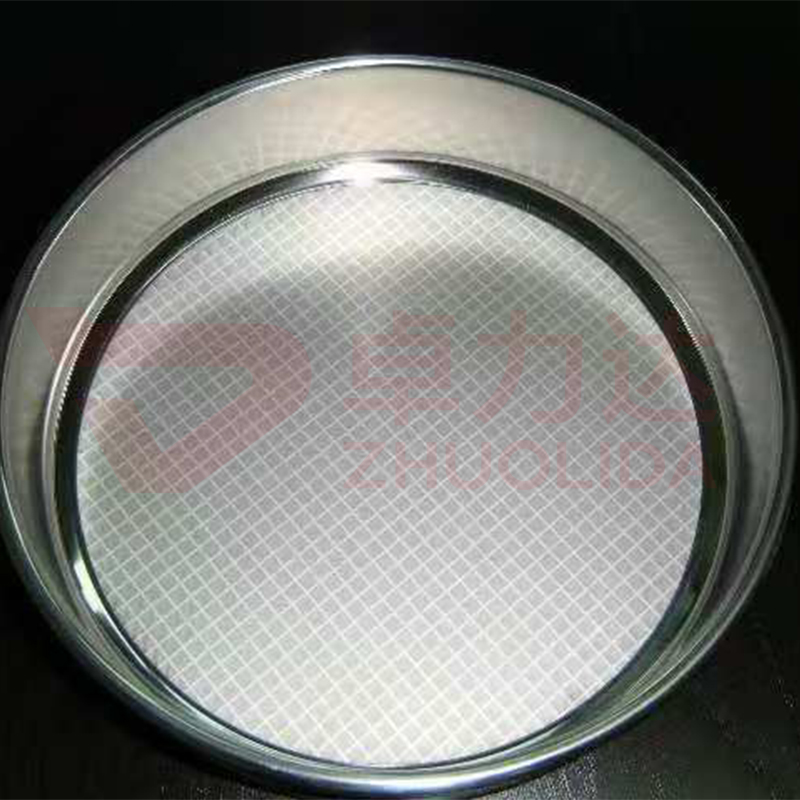
Electroformed screen tension decay is the curve traced by mesh tension after the screen is stretched onto its frame. It is read with a mechanical tension meter at five points, the four corners and the centre, in newtons. The baseline is taken after the new screen rests 2 h, then checked once per shift and fully re-measured once a week. This is a separate account from residual stress: residual stress is internal stress left in the nickel deposit, while this is service tension after mounting. The two get mixed up on the floor and rework then chases the wrong target. Below 28 N the mesh springs back as the squeegee lifts, and paste edges grow 0.1–0.2 mm of slump.
Tension decay usually announces itself through three symptoms. The first is slumped print edges: a screen that held 0.25 mm apertures for three days starts leaving 0.15 mm of burr on every print on the fourth, with no change in speed or squeegee. The second is contradictory re-measurement, where two people reading different points on a mesh that never rested can differ by 3–4 N; the shift leader releases against the higher figure and a batch of slumps arrives the next day. The third is replacement by feel, one line running to 12000 prints before anyone changes the screen, by which time the frame adhesive has crept and 38 N is the best a re-stretch can deliver. Put those three together under electroformed screen tension decay and the usual culprits are a mounting tension set too high, no rest time, and moving measurement points.
Parameter Window
• Mounting tension 35–45 N, spread across the five points ≤2 N; out-of-range screens are stripped and re-stretched, never pulled tighter to pass.
• 24 h tension retention ≥92%; a drop beyond 3 N per 24 h is excessive creep, and the AB adhesive cure record goes back on the table.
• Weekly floor at 28 N, below which the screen is replaced; used screens are scrapped, never re-stretched, since creep on a second mounting doubles.
• Thin screens at 0.10–0.15 mm take the low end, 35–38 N; apertures above 0.25 mm may return to 40 N.
• Baseline readings are taken at 23±2 °C after 2 h of rest; a cold screen read straight off the frame runs 1–2 N high.
• Print life is capped at 15000 cycles, with an extra tension check every 2000 prints once the counter passes 12000.
Manufacturing Process (8 Steps)
1. Frame preparation — aluminium frame trued to within 0.1 mm flatness, AB adhesive mixed at 1:1.2 and cured 24 h at 23±2 °C.
2. Stretching to value — pulled to a 40 N target, corners alternated, done in one pass instead of tightening and backing off.
3. Rest and release — 2 h at 23±2 °C lets adhesive stress relax before the five baseline points are read.
4. Card entry — baseline value, five point coordinates and meter serial number go on the inspection card and travel with the screen.
5. Printing service — squeegee pressure 5–8 kg/cm, print speed 20–40 mm/s, snap-off speed staged by segment.
6. Weekly re-measurement — same meter, same five points, every 7 days, plotted as a tension-versus-time curve.
7. Replacement decision — break below 28 N or drop more than 3 N in 24 h and the screen comes off; everything removed is scrapped.
8. Batch review — print count and tension curve filed at replacement, and the next batch tries 1–2 N lower mounting tension.
Core Advantages
1. With electroformed screen tension decay plotted per screen, replacement stops depending on a veteran's judgement and shift handover points at the curve.
2. Five-point reading filters out frame warpage, holding two tension meters within 1 N of each other.
3. Margin left in the mounting value means a screen stretched at 35 N still reads 30 N after 7 days, and slump complaints fall with it.
4. The 2 h rest is written into the route card, so the false high reading from a cold screen never reaches the baseline.
5. Scrapping every removed screen closes off re-stretching and saves a chunk of rework hours on second-mount parts.
6. Print count and tension decay line up, so three in-process checks cover the whole 15000 cycle design life.
Typical Applications
1. SMT paste printing stencils, where lines with 0.25 mm apertures and 1.6 mm boards are the most tension-hungry.
2. Ball placement templates and leadframe printing, where ±7 μm total pitch makes the mesh sensitive to springback.
3. Thin screens for packaging substrates, below 0.10 mm thick, with mounting tension capped at 40 N.
4. Lithography mask frames held to ±5 μm double-sided alignment, where tension drift writes straight into overlay error.
5. Short prototype frames with frequent replacement, where the five point coordinates must be fixed once and never moved.
6. Export orders requiring RoHS paperwork and tension curves with the goods, run against the weekly re-measurement record.
Design and Selection Notes
1. Set the tension floor before choosing mesh thickness; the reverse order tends to stretch thin mesh with thick-mesh habits.
2. Higher tension is not automatically better. Past 50 N the frame adhesive creeps faster and the 7 day drop doubles.
3. If the weekly drop exceeds 3 N two weeks running, go back to the frame cure record and the adhesive mix ratio.
4. Meter model and the five point coordinates belong on the drawing; 40 N without a point convention is not a spec.
5. Give 0.10 mm thin mesh and 0.15 mm thick mesh separate windows, since decay rates differ by a factor of two.
6. Run the screen replacement cycle on both print count and tension, whichever arrives first.
7. New supplier screens run a 7 day retention trial first, and only a passing curve reaches the production line.
Electroformed screen tension decay cannot be stopped, only rate-controlled. Fix three actions, 35–45 N mounting, 2 h rest at 23±2 °C, five-point re-measurement, and tension stops being a matter of feel. Replace at 28 N, cap at 15000 prints, never re-stretch a used screen, and the line between assembly tension and manufacturing residual stress stays clear. The inspector reads five points against baseline and the 24 h drop, and anything past 3 N gets a red tag without waiting for a batch of slumps. For customers with hard screen tension retention re-measurement requirements, put the coordinates, rest duration and decision line on the card that ships with the goods, and both sides compare against one table; the screen replacement cycle then rests on records rather than memory.
Contact:赖先生
Phone:+86 18938693450
Tel:0755-2708-8292
Email:yw9@zldsmt.com
Add:深圳市宝安区福永镇新和村福园一路华发工业园A3栋
 Zhuolida