Welcome: Shenzhen Zhuolida Electronics Co.TD
Language:
 ∷
∷

∷
∷
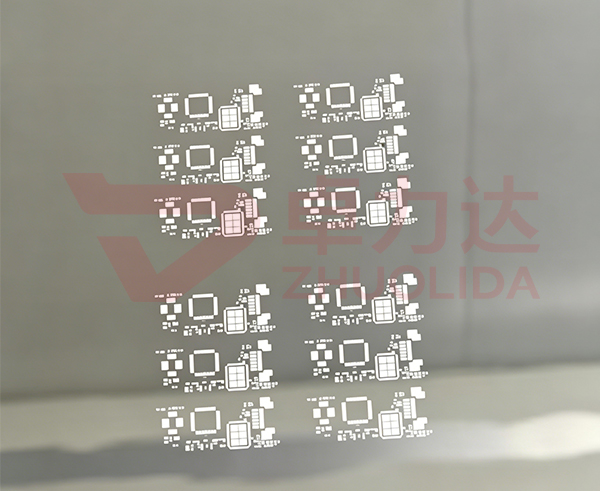
With the large-scale development of the smartphone, smart wearable, home industrial control, and smart home device industries, the iteration cycle for consumer-grade main control chips, memory chips, and driver chips is accelerating. Chip packaging and testing now prioritize mass production efficiency, cost control, universal template designs, and compatibility with high-speed automated production lines. However, high-end tooling often involves excessive process redundancy, high costs, and long lead times, making it difficult to meet the demands of frequent design revisions and high-volume production for consumer chips. Consumer-grade chip packaging and wafer testing templates are designed to accommodate standard consumer chip packaging dimensions, conventional electrical testing, high-speed probe testing, and wafer sorting operations. They offer the advantages of high template versatility, excellent cost-effectiveness, compatibility with mass production lines, and ease of replacement and debugging. These templates are essential precision fixtures for the entire process of consumer chip back-end packaging and testing, including electrical continuity testing, die sorting, pre-packaging defect screening, and probe positioning—making them essential precision tooling for the back-end packaging and testing of consumer chips. The manufacturing of test templates for consumer-grade chip packaging wafers employs standardized cleanroom etching processes, universal alloy substrate forming, simplified adaptation and modification, and a batch-intensive production model. This approach accommodates the needs for rapid prototyping of consumer chip samples, mass production of multiple template types, and frequent revision processing, aligning with the production goals of reducing costs and improving efficiency in consumer electronics packaging and testing. Manufacturers of consumer-grade chip packaging wafer test templates focus on the pain points of mass production in the consumer packaging and testing sector. By optimizing and streamlining processes, shortening production cycles, and standardizing template parameters, they overcome industry challenges such as poor consistency in mass-produced templates, lengthy revision cycles, and limited compatibility with product categories, thereby aligning with the production rhythm of the consumer-grade semiconductor supply chain.
The entire production process is carried out in a closed-loop system within a conventional Class 1,000 temperature-controlled cleanroom. It comprises nine standardized processes: design tailored to consumer chip operating conditions; cutting and selection of universal alloy substrates; cost-effective multi-stage board surface pretreatment; standardized photolithographic pattern replication; balanced wet etching; conventional cleanroom film removal and cleaning; basic anti-static functional modification; mass production benchmark quality inspection; and moisture- and dust-proof encapsulation. strictly controlling production costs and lead times while mitigating four major mass-production defects: template hole misalignment, wafer warpage, surface static electricity, and micro-pore burrs. Consumer-grade chip packaging wafer test templates are categorized into three mainstream types: general-purpose memory chip templates, dedicated driver chip templates, and general-purpose controller chip templates, covering the vast majority of 6- to 8-inch consumer-grade wafer packaging and testing requirements on the market. The manufacturing of consumer-grade chip packaging wafer test templates is categorized into three process standards—basic consumer-grade, high-speed mass production-grade, and high-density pin-count-grade—to meet the varying precision and production capacity requirements of consumer chip packaging and testing. Manufacturers of consumer-grade chip packaging wafer test templates have established a universal process database for consumer templates, standardizing process parameters for mainstream designs to reduce new product debugging time and adapt to the rapid iteration cycle of consumer chips.
Matching operating conditions to structural design is the primary preliminary step before consumer-grade chip packaging wafer test templates enter production. Technical personnel conduct structural design by considering standard consumer wafer dimensions, common BGA and QFN package pin layouts, automated test equipment benchmarks, production line test rates, and typical room-temperature operating conditions. They calculate etching compensation parameters and basic board stress, and optimize the layout of probe test vias, wafer retaining frames, equipment positioning reference holes, and edge clearance groove layouts. This approach balances template versatility with machine compatibility, enabling a single template to accommodate multiple consumer-grade wafers of the same specifications and reducing tooling development costs. To meet the high-speed probe testing requirements of production lines, we optimized the hole layout to prevent probe jamming, alignment shifts, and surface scratches on wafers. After triple verification of compatibility, precision, and mass-production durability, the production plan was finalized. The manufacturing of consumer-grade chip packaging wafer test templates relies on standardized structural drawings, enabling rapid mold creation and quick production launch, thereby shortening the delivery cycle for consumer chip-related equipment. Manufacturers of consumer-grade chip packaging wafer test templates adapt to the characteristics of consumer chips—short R&D cycles and frequent revisions—by optimizing process iteration workflows to improve the efficiency of template revisions.
The selection of versatile base materials and cost-effective surface pretreatment lay a solid foundation for the basic performance of test templates used in consumer-grade chip packaging wafer testing. We select cost-effective, low-stress stainless steel alloys and nickel-based alloys as general-purpose substrates. These substrates meet flatness standards, have low residual stress, and are suitable for mass etching production. During warehousing, we screen sheets for thickness, surface flatness, and surface oxidation status, rejecting raw materials with warping, scratches, or uneven thickness to balance template performance with production costs. Pre-treatment follows consumer-grade standard cleaning procedures, sequentially performing ultrasonic degreasing, recirculating pure water rinsing, basic plasma activation, and surface leveling/pre-etching to remove dust, oil, and oxidation impurities from the surface. This ensures secure adhesion of the photoresist dry film and prevents pattern peeling or localized etching defects during mass production. For templates of standard thickness, redundant aging processes are eliminated to control overall processing costs. The processing of consumer-grade chip packaging wafer test templates is adapted for large-scale, batch pre-treatment operations, increasing per-batch template processing capacity. Manufacturers of these templates optimize bulk procurement of raw materials and pre-treatment processes to control tooling production costs, aligning with the cost-reduction requirements of consumer electronics production.
Standardized photolithographic pattern transfer and molding ensure the precision of basic hole positions in consumer-grade chip packaging wafer test templates. High-speed lamination and curing of photosensitive dry film are performed in Class 1,000 cleanroom mass production stations. Relying on mass-production-grade vision alignment equipment, integrated batch exposure of test holes, positioning holes, and stop grooves is achieved. For conventional high-density micro-hole arrays in consumer chips, uniform light energy exposure parameters are adopted to simplify zone-specific debugging processes, balancing production efficiency with pattern accuracy to meet standard packaging and testing tolerance requirements for consumer chips. After development at a constant speed and temperature, the protective patterns are cured, enabling rapid replication of standardized packaging and testing drawings. This ensures uniformity in template patterns and consistent hole spacing across large batches, supporting uninterrupted operation on automated consumer electronics packaging and testing assembly lines. The fabrication of consumer-grade chip packaging wafer test templates employs standardized lithography processes, reducing manual debugging errors and improving batch product consistency. Manufacturers of these templates adapt to mass-production lithography line layouts to increase daily template output volume.
Batch, constant-temperature spray chemical etching is the core mass-production process for fabricating consumer-grade chip packaging wafer test templates. Batches of coated panels are fed into large-capacity, sealed etching chambers. Using mass-production-grade, environmentally friendly etching solutions, the system uniformly controls chamber temperature, dual-sided spray pressure, and panel conveyor speed to ensure consistent and balanced spray etching. This process simultaneously completes the integrated formation of the template’s outer contour, test microvia holes, and positioning structures, while precisely controlling lateral etch depth to ensure smooth test hole walls free of bulk burr defects. The entire process involves no mechanical cutting or high-temperature thermal processing, eliminating secondary processing deformation in the templates. This meets the requirements for repeated mounting and high-volume cyclic testing of consumer-grade wafers. The centralized chamber operation allows for the simultaneous etching of multiple templates, significantly improving mass production efficiency. The streamlined process layout for manufacturing consumer-grade chip packaging wafer test templates reduces intermediate handling steps and shortens the overall processing time. Manufacturers of these test templates have optimized the mass-production etching solution recycling system to balance production capacity, precision, and facility environmental compliance requirements.
Batch-based film removal, cleaning, and basic anti-static modification optimize the mass-production service performance of consumer-grade chip packaging wafer test templates. After etching is complete, batch operations are conducted, including neutral agent film removal, ultrasonic cleaning of micropores, multi-stage purified water rinsing, and constant-temperature drying. These processes collectively remove resin residue and metal debris from the template surface and inside the micropores, meeting the basic cleanliness requirements for consumer chip packaging and testing. In line with anti-static testing requirements for production wafers, basic passivation and anti-static coating treatments are applied to the template surface to prevent electrostatic damage to bare chips and enhance the template’s fundamental wear resistance and oxidation resistance, ensuring compatibility with routine mass production conditions in the factory. By avoiding redundant high-end coating processes, the production cost of the finished templates is kept under control, aligning with the cost budget of the consumer-end market. Surface modification treatments for consumer-grade chip packaging wafer test templates are performed in batches to standardize the surface performance parameters of finished products. Manufacturers of consumer-grade chip packaging wafer test templates implement tiered surface process configurations, distinguishing between modification processes for standard and high-density templates.
Rapid full inspection and dust- and moisture-proof packaging during mass production ensure that quality control standards for consumer-grade chip packaging wafer test templates are met before shipment. Automated batch inspection equipment is used to perform rapid spot checks and full inspections of template dimensions, flatness, hole positioning accuracy, and anti-static performance. The templates undergo on-machine calibration and debugging against consumer packaging and testing equipment benchmarks to verify their compatibility with high-speed machinery and alignment accuracy. Qualified products undergo standardized dust- and moisture-proof vacuum packaging, meeting the requirements for high-volume warehousing and inter-facility transportation while preventing surface oxidation and dust accumulation. The manufacturing process for consumer-grade chip packaging wafer test templates establishes a highly efficient mass-production quality inspection mechanism that balances inspection accuracy with shipping efficiency. Manufacturers of these test templates streamline redundant traceability record-keeping processes to align with the mass-production quality control systems for consumer electronics.
Consumer-grade chip packaging wafer test templates are widely used in three major application scenarios: main control chips for portable devices, solid-state storage chips, and smart home driver chips. The manufacturing of these test templates continuously optimizes to align with the trends of low cost, rapid iteration, and high-volume production in the consumer chip sector. Manufacturers of consumer-grade chip packaging wafer test templates specialize in providing supporting equipment for civilian packaging and testing, empowering the consumer semiconductor industry to improve quality and reduce costs.
Application Case for Portable Device Controller Wafers: Controller chips for smartphones and tablets feature high production volumes and frequent revisions, creating a strong demand for universal templates and fast delivery. Consumer-grade chip packaging wafer test templates feature universal designs that accommodate testing for multiple controller wafer models. Standardized manufacturing processes for these templates enable rapid completion of new product revisions and mass production. Manufacturers of test templates for consumer-grade chip packaging wafers shorten delivery cycles to align with the time-to-market pace of consumer end products.
Solid-State Storage Wafer Application Case: Consumer-grade storage chips have massive production capacity, imposing stringent requirements for template durability, high consistency, and low cost. Consumer-grade chip packaging wafer test templates offer excellent durability, supporting 24-hour continuous testing on production lines. The batch-intensive production of these test templates effectively reduces tooling procurement costs. Manufacturers of consumer-grade chip packaging wafer test templates standardize mass-production parameters to ensure consistent performance across tens of thousands of templates.
Smart Home Driver Wafer Application Case: Home appliance and sensor driver chips feature a moderate number of pins, requiring simple template debugging and strong compatibility with multiple devices. Consumer-grade chip packaging wafer test templates are compatible with multiple devices, eliminating the need for repeated fixture debugging. The manufacturing process for these templates features a simplified structural design, improving the success rate of machine compatibility. Manufacturers of consumer-grade chip packaging wafer test templates optimize universal templates to broaden the range of compatible consumer chips.
Overall, consumer-grade chip packaging wafer test templates are core mass-production fixtures for the packaging and testing of consumer chips. Their manufacturing processes—which are standardized, intensive, and cost-effective—meet the needs of the consumer industry. Manufacturers of these test templates are positioned in the consumer semiconductor support sector, driving the large-scale and efficient development of China’s consumer-grade chip packaging and testing industry.
Contact:赖先生
Phone:+86 18938693450
Tel:0755-2708-8292
Email:yw9@zldsmt.com
Add:深圳市宝安区福永镇新和村福园一路华发工业园A3栋
 Zhuolida