Welcome: Shenzhen Zhuolida Electronics Co.TD
Language:
 ∷
∷

∷
∷
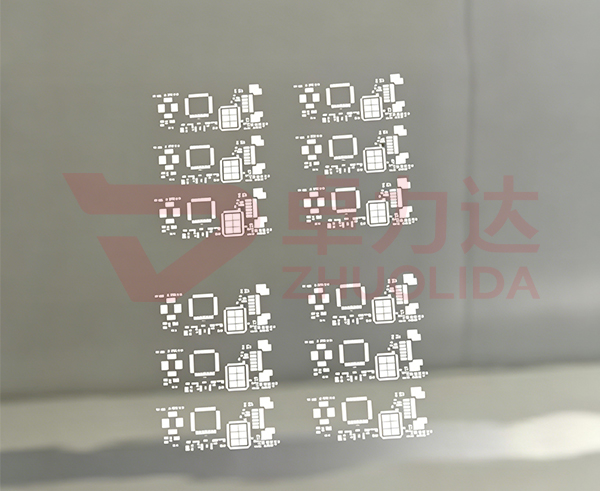
With the rapid development of the new energy inverter, industrial frequency conversion, photovoltaic energy storage, and new energy electronic control industries, IGBT power devices play a central role in circuit frequency conversion and voltage regulation, high-voltage current conduction, and energy consumption control. Device packaging and testing must meet stringent standards for high-voltage endurance, high-temperature cycling, electromagnetic interference resistance, and high structural stability. Conventional, general-purpose wafer templates have a high coefficient of thermal expansion, suffer from alignment shifts under high voltage, have poor insulation performance, and experience board warping at high temperatures. These issues can easily lead to false positives in IGBT wafer high-voltage testing, gate grain damage, probe positioning errors, and failure of aging test fixtures, making them unsuitable for meeting the qualification requirements of power semiconductor packaging and testing. IGBT power device packaging wafer templates are specifically designed for high-voltage power wafers, trench-type IGBT wafers, and module-level IGBT wafers. They feature core characteristics such as low thermal deformation, high-voltage insulation, high-temperature aging resistance, high-strength positioning, and electromagnetic interference (EMI) resistance. These templates support the entire process flow—including electrical breakdown testing, high-temperature aging screening, gate probe positioning, and module packaging alignment—making them essential precision fixtures for the back-end packaging and testing of power semiconductors. The manufacturing of IGBT power device packaging wafer templates relies on an integrated process that combines cleanroom, temperature-controlled power semiconductor fabrication, low-stress special alloy etching, high-voltage insulation passivation, and high-temperature aging calibration. This approach accommodates both custom prototyping for new IGBT products and large-scale mass production of power wafers, while meeting the dual production control standards for automotive and industrial control applications. Manufacturers of IGBT power device packaging wafer templates have deeply engaged in the power semiconductor packaging and testing support sector, overcoming industry pain points such as high-temperature dimensional drift of templates, high-voltage insulation failure, poor consistency of power via positions, and long-term cyclic deformation. They have established a dedicated IGBT process system to support the quality improvement and upgrading of the domestic power device packaging and testing industry chain.
The entire production process is implemented in a closed-loop system within a Class 1,000 constant-temperature, temperature-controlled cleanroom for power semiconductors. It comprises IGBT high-voltage operating condition simulation design, selection of high-temperature-resistant specialty substrates, ultra-clean pretreatment of power-grade substrate surfaces, high-voltage alignment lithography, constant-temperature, low-stress controlled etching, dust-free micro-hole debonding and purification, high-voltage insulation and temperature resistance modification, quality inspection against power operating conditions, and vacuum packaging with anti-static and moisture-proof protection. Throughout the process, strict controls are maintained over temperature fluctuations in the cleanroom, chemical purity, and substrate stress parameters to eliminate the four major power device manufacturing defects: high-temperature warping of the substrate, misalignment of test holes, damage to the insulation layer, and micro-hole burrs. IGBT power device packaging wafer templates are divided into three major categories: single-transistor IGBT wafer templates, module-integrated IGBT templates, and specialized high-voltage trench IGBT templates, catering to the packaging and testing needs of IGBT wafers with varying power ratings for low-voltage industrial control, high-voltage energy storage, and automotive electronic control applications. The manufacturing of IGBT power device packaging wafer templates follows a three-tier process control system categorized by industrial control grade, high-voltage energy storage grade, and automotive-grade standards, with etching compensation parameters and insulation coating thickness adjusted accordingly. Manufacturers of IGBT power device packaging wafer templates establish dedicated process databases for power templates, optimizing process solutions based on the thermal expansion parameters of the substrate to ensure high consistency in temperature resistance, insulation, and dimensional performance across batches.
Structural design based on IGBT power operating condition simulation is a core pre-production process for IGBT power device packaging wafer templates. Technical personnel conduct 3D simulation modeling based on IGBT wafer dimensions, power gate arrays, high-voltage probe locations, temperature differentials during 150°C high-temperature aging, high-voltage insulation thresholds, and module packaging equipment benchmarks. They calculate lateral etching compensation values and high- and low-temperature stress variables, and optimize the layout of power probe vias, wafer positioning slots, high-voltage isolation grooves, and the layout of equipment positioning reference holes. They also added stress-relief grooves and insulation isolation structures to the board surface to mitigate risks such as template deformation under high-temperature conditions, electrical leakage and crosstalk in high-voltage environments, and damage to the wafer gate structure caused by probe pressure. For large-size IGBT module wafer templates, we optimized the global stress-balancing structure to accommodate prolonged high-temperature and high-voltage cycling test conditions. After the drawings underwent four-fold verification—for temperature resistance, high-voltage insulation, alignment accuracy, and mechanical durability—the production plan was finalized. Prior to machining IGBT power device packaging wafer templates, we simulate extreme packaging and testing conditions for power devices to enhance template compatibility with equipment and improve IGBT wafer packaging and testing yield. The manufacturer of IGBT power device packaging wafer templates adapts to iterative processes for both grooved and planar IGBT devices, enabling rapid template redesign and large-scale mass production.
The careful selection of specialized substrates for power applications and thorough surface pretreatment lay a solid foundation for the high-voltage performance of IGBT power device packaging wafer templates. The process utilizes specialty alloy sheets with ultra-low thermal expansion, high-temperature resistance, high insulation adhesion, and inherently low stress. Each batch is inspected upon receipt for thermal expansion coefficient, high-temperature deformation rate, surface density, and inherent internal stress, eliminating materials prone to high-temperature deformation, those with excessive impurities, and or poor insulation adhesion, thereby addressing dimensional drift in IGBT high-temperature packaging and testing templates and insulation substrate failure at the source. Pre-treatment involves sequential ultrasonic degreasing of the power-level components, multi-stage closed-loop rinsing with ultrapure water, dual plasma surface activation, and surface stress pre-leveling. This thoroughly removes oil residues, oxide layers, and ultrafine dust from the surface, enhancing the adhesion of photoresist dry films and insulating coatings to prevent delamination in high-density via areas and localized etching defects. Finished templates undergo high-temperature stress-relief aging treatment as a preliminary step. The processing of IGBT power device packaging wafer templates adheres to high-cleanliness production standards for power semiconductors, eliminating high-voltage test leakage issues caused by the adhesion of conductive impurities. Manufacturers of IGBT power device packaging wafer templates select substrate materials through a tiered screening process; templates for high-voltage energy storage levels use modified alloy substrates to enhance resistance to extreme operating conditions.
Micrometer-level photolithographic patterning ensures precise alignment of the probe holes on IGBT power device packaging wafer templates. High-temperature-resistant photoresist dry films are uniformly laminated and cured in sealed, temperature-controlled, dust-free workstations. Equipped with dedicated visual alignment systems for power devices, the process achieves precise exposure of power probe holes, insulation isolation grooves, and equipment positioning holes. For IGBT power micro-hole arrays with alternating dense and sparse patterns, a zone-specific light energy balancing exposure process is employed to balance the development rates between dense gate hole areas and border regions, thereby eliminating process defects such as micro-hole jagged edges, hole position shifts, and resin layer defects. Following constant-temperature, slow development, the protective patterns are cured to precisely replicate the parameters specified in IGBT power packaging and testing drawings, ensuring that the concentricity and pitch tolerances of high-power probe holes meet power semiconductor packaging and testing standards, and enabling compatibility with automated high-voltage power testing production lines. The processing of IGBT power device packaging wafer templates enables the simultaneous formation of power hole positions across the entire IGBT wafer, with uniform alignment accuracy achieved across the entire area. Manufacturers of IGBT power device packaging wafer templates have iteratively improved their power vision alignment systems to minimize alignment errors under high-temperature conditions, thereby meeting the precision testing tolerance requirements for high-voltage IGBTs.
Double-sided, constant-temperature, segmented, and controlled etching is the core forming process in the fabrication of IGBT power device packaging wafer templates. The coated substrate is fed into a sealed, corrosion-resistant, constant-temperature etching chamber, where an environmentally friendly etching solution with low side-etch properties—specifically formulated for power templates—is used. The temperature of the etching solution, double-sided spray pressure, and substrate transport speed are constantly monitored and controlled. A segmented intermittent spray etching process is employed to precisely control the power hole aperture, wall perpendicularity, and lateral etch rate, ensuring that the inner walls of the high-voltage probe holes are vertical, smooth, burr-free, and free of flaring. This prevents high-voltage probe jamming and scratches on the wafer’s power electrodes. The entire process involves no mechanical cutting or laser thermal damage, leaving the templates free of secondary processing stresses. The structural dimensional stability is excellent under high-temperature conditions, making them suitable for high-temperature aging and repeated high-voltage withstand testing of IGBT wafers. The integrated processing of IGBT power device packaging wafer templates enables the simultaneous formation of power test holes, insulation grooves, and positioning reference holes, streamlining back-end tooling and machining processes. Manufacturers of IGBT power device packaging wafer templates have optimized the chemical solution circulation and filtration system to balance processing precision with environmental production control requirements at the facility.
Dust-free stripping and high-voltage insulation composite modification are used to optimize the durability of IGBT power device packaging wafer templates under extreme operating conditions. After etching, a neutral, dust-free stripping agent is used to remove residual photoresist from the wafer surface. Through micro-pore-targeted ultrasonic cleaning, multi-stage ultrapure water circulation rinsing, and vacuum cryogenic drying, residue and conductive metal debris are thoroughly removed from the interior of the power micro-pores; Subsequently, high-temperature passivation, high-voltage insulation coating, and anti-aging composite modification treatments are performed to enhance the template’s high-voltage insulation, high-temperature resistance, and electromagnetic interference (EMI) resistance, thereby preventing high-voltage current crosstalk and ensuring compatibility with IGBT high-voltage withstand and long-term high-temperature aging test conditions. The processing of IGBT power device packaging wafer templates involves standardized control of insulation coating thickness to meet the packaging and testing specifications for IGBT devices of different voltage ratings. Manufacturers of IGBT power device packaging wafer templates optimize insulation coating formulations specifically for these power devices, ensuring no coating peeling or insulation performance degradation during long-term high-temperature use.
Power operating condition benchmarking, 100% inspection, and cleanroom packaging are strictly enforced to maintain the minimum quality control standards for IGBT power device packaging wafer templates upon shipment. High-temperature deformation testers, high-voltage insulation testers, and 3D profilometers are used to conduct comprehensive verification of dimensions, temperature resistance, and insulation performance. Simulated in-machine testing replicates the actual high-temperature aging and high-voltage withstand conditions of IGBT packaging and testing to verify the template’s dimensional stability, high-voltage insulation capability, and alignment accuracy. Qualified finished products are vacuum-sealed in anti-static, high-temperature-resistant packaging to isolate them from moisture and dust during storage and transportation, thereby preventing board oxidation and insulation degradation. The manufacturing of IGBT power device packaging wafer templates establishes a “one product, one file” traceability and quality inspection system, with acceptance conducted item by item against IGBT packaging and testing industry standards. Manufacturers of IGBT power device packaging wafer templates retain full-process parameter records, ensuring end-to-end traceability of batch quality and reproducibility of the manufacturing process.
IGBT power device packaging wafer templates are widely used in three major packaging and testing fields: industrial variable-frequency IGBT wafers, photovoltaic energy storage IGBT wafers, and automotive electronic control IGBT wafers. The manufacturing of IGBT power device packaging wafer templates aligns with the trend toward upgrading high-voltage power device packaging, driving continuous process iteration. Manufacturers of IGBT power device packaging wafer templates are tackling the challenges of precision machining for power tooling, helping to improve quality and efficiency in China’s IGBT power semiconductor packaging and testing industry.
Case Study: Industrial Inverter IGBT Wafers—Industrial inverters subject devices to high voltage loads and long-term constant-temperature aging, imposing stringent requirements on the templates’ high-voltage insulation and resistance to deformation. IGBT power device packaging wafer templates feature a dense insulation layer that eliminates high-voltage leakage and crosstalk. IGBT power device packaging wafer templates undergo comprehensive stress-relief treatment during processing, ensuring they remain distortion-free during long-term high-temperature operation. Manufacturers of these templates implement industrial-grade quality control to support mass production and testing of industrial control IGBTs.
Photovoltaic Energy Storage IGBT Wafer Case Study: Energy storage power devices experience wide temperature variations and frequent cycle testing, requiring templates with exceptional temperature resistance and anti-aging performance. IGBT power device packaging wafer templates are reinforced with low-thermal-expansion substrates, ensuring no dimensional shifts under varying temperatures. These templates feature a thickened, heat-resistant insulating coating, making them suitable for extreme energy storage operating conditions. Manufacturers of IGBT power device packaging wafer templates have optimized the aging process to extend the service life of templates used in energy storage applications.
Case Study: IGBT Wafer Templates for Automotive Electronic Control: Automotive power chips are subject to intense vibration, and automotive-grade quality control is extremely stringent, requiring wafer templates to meet strict standards for vibration resistance, high reliability, and electrostatic discharge (ESD) protection. IGBT power device packaging wafer templates feature excellent structural strength and outstanding resistance to vibration and ESD damage. The manufacturing of IGBT power device packaging wafer templates undergoes comprehensive automotive-grade quality control throughout the entire process, meeting the qualification standards for automotive power devices. Manufacturers of these templates adhere to automotive power semiconductor processes, fulfilling the supporting requirements for automotive-grade IGBT packaging and testing.
Overall, IGBT power device packaging wafer templates are core precision fixtures for the back-end packaging and testing of high-voltage power devices. Their manufacturing relies on high-temperature-resistant insulating etching processes to address the challenges in power fixture manufacturing. Manufacturers of these templates specialize in precision machining for power semiconductors, comprehensively supporting the high-quality development of China’s IGBT power device packaging and testing industry.
Contact:赖先生
Phone:+86 18938693450
Tel:0755-2708-8292
Email:yw9@zldsmt.com
Add:深圳市宝安区福永镇新和村福园一路华发工业园A3栋
 Zhuolida