Welcome: Shenzhen Zhuolida Electronics Co.TD
Language:
 ∷
∷

∷
∷
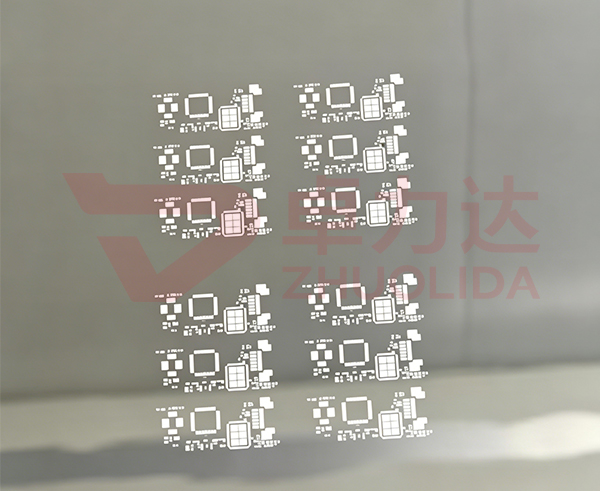
Advanced semiconductor packaging technologies continue to evolve toward finer pitch, higher density, and greater integration. Processes such as wafer ball placement, solder paste printing, and protective coating now demand significantly higher precision in positioning and shape-control fixtures. As a core precision fixture that defines the paste application area, constrains solder ball placement, and ensures precise pattern replication, the semiconductor packaging wafer mask template directly determines packaging yield and product consistency. It has now become an indispensable component in mainstream packaging processes such as FC, BGA, and CSP. The manufacturing of semiconductor packaging wafer mask templates integrates end-to-end processes including high-precision photolithography, chemical etching, surface functional modification, and comprehensive inspection. Production solutions are customized for different wafer specifications, pad layouts, and packaging processes, accommodating both small-batch R&D prototyping and large-scale industrial mass production. Manufacturers of semiconductor packaging wafer mask templates continuously optimize their forming processes and quality control systems, consistently overcoming challenges in the processing of ultra-fine pores, narrow pitch, and large-area panels, thereby providing stable, precision tooling support for the semiconductor packaging and testing industry.
Semiconductor packaging wafer mask templates are produced using a standardized closed-loop manufacturing process, comprising nine major steps: process design, substrate selection and cutting, deep surface pretreatment, high-precision pattern transfer, precision forming, de-masking and cleaning, surface functionalization and strengthening, multi-dimensional performance testing, and cleanroom anti-static packaging. The entire process is carried out in a Class 100 temperature-controlled cleanroom, where environmental temperature, humidity, and dust levels are strictly controlled to prevent processing defects such as aperture deviation, panel warping, rough aperture walls, and slurry adhesion at the source. Semiconductor packaging wafer mask plate processing can flexibly switch between single-piece etching and roll-to-roll continuous processing modes based on substrate thickness, aperture density, and operating conditions, with multi-tiered production standards established for consumer-grade, automotive-grade, and high-end chip-grade applications. Manufacturers of semiconductor packaging wafer mask templates dynamically adjust chemical solution ratios, spray parameters, and processing rhythms based on the physical and chemical properties of different substrates, such as stainless steel and nickel alloys, to ensure consistent quality and uniformity across batches for a wide range of mask templates.
Process design and substrate selection are critical preliminary steps before the mass production of semiconductor packaging wafer mask templates. Technical personnel integrate parameters such as wafer outer diameter, individual chip pad coordinates, solder ball dimensions, printing pressure, and equipment mounting benchmarks. Using process simulation, they calculate etch side-etch rates and account for dimensional compensation, while simultaneously planning positioning holes, sealing grooves, panel ribs, and irregular clearance zones. For templates designed for ultra-thin wafers, the focus is on optimizing structural layout to mitigate stress-induced deformation during the printing process. The final design is confirmed after multiple rounds of verification regarding dimensions, structure, and operating conditions. In production, ultra-thin metal sheets with low internal stress, high flatness, and corrosion resistance are prioritized. Upon arrival, each sheet is individually screened for thickness tolerance and surface condition, and raw materials with scratches, oxidation, or uneven grain structure are rejected. The manufacturing of semiconductor packaging wafer mask templates is controlled simultaneously at both the design and material selection stages to meet the precision requirements of various packaging processes. Manufacturers of these templates maintain comprehensive material and process databases, significantly shortening the time-to-market for new product solutions.
Surface pretreatment is a fundamental process for ensuring the forming quality of semiconductor packaging wafer mask templates. In accordance with high semiconductor cleanliness standards, the following steps are sequentially performed: alkaline ultrasonic degreasing, multi-stage purified water rinsing, plasma surface activation, and micro-etching leveling. This thoroughly removes oil, oxide scale, and fine impurities from the substrate surface, effectively enhancing the adhesion strength of the subsequent photoresist dry film and preventing issues such as delamination and localized etching defects during the photolithography stage. For ultra-thin substrates with a thickness of less than 0.04 mm, a low-temperature stress-relief process is additionally incorporated to preemptively release the substrate’s inherent stress, thereby reducing the likelihood of warping and deformation after molding. The processing of semiconductor packaging wafer mask templates differentiates cleaning intensity and procedures based on product grade, with products for high-end chips adhering to multiple levels of deep purification standards. Manufacturers of semiconductor packaging wafer mask templates refine pretreatment parameters for different materials, establishing standardized operating procedures to reduce defect rates at the source.
Substrate pretreatment is a fundamental process that ensures the quality of semiconductor packaging wafer mask templates. In accordance with high semiconductor cleanliness standards, the process sequentially involves alkaline ultrasonic degreasing, multi-stage purified water rinsing, plasma surface activation, and micro-etching leveling. This thoroughly removes oil, oxide scale, and fine impurities from the substrate surface, effectively enhancing the adhesion strength of the subsequent photoresist dry film and preventing issues such as delamination and localized etching defects during the photolithography stage. For ultra-thin substrates with a thickness of less than 0.04 mm, a low-temperature stress-relief process is additionally incorporated to preemptively release the substrate’s inherent stress, thereby reducing the likelihood of warping and deformation after molding. The processing of semiconductor packaging wafer mask templates differentiates cleaning intensity and procedures based on product grade, with products for high-end chips adhering to multiple levels of deep purification standards. Manufacturers of semiconductor packaging wafer mask templates refine pretreatment parameters for different materials, establishing standardized operating procedures to reduce defect rates at the source.
High-precision pattern transfer is a critical step in determining the processing accuracy of semiconductor packaging wafer mask templates. Dry film hot-press lamination or uniform spin coating of photoresist is performed in a Class 1,000 cleanroom to ensure consistent film thickness and the absence of bubbles or pinholes. High-precision alignment and exposure are achieved using laser direct writing equipment. Following controlled, temperature-regulated development, the protective pattern is fully preserved, exposing the areas to be etched. For complex structures with significant variations in density and irregular avoidance grooves, a zoned differential exposure process is employed to balance development effects across different areas, preventing pattern defects and blurred edges. The fabrication of semiconductor packaging wafer mask templates allows for rapid adjustment of pattern layouts based on revised drawings, adapting to the pace of chip product iterations. Manufacturers of semiconductor packaging wafer mask templates continuously upgrade automated exposure and alignment equipment, controlling pattern alignment errors to the micron level and improving the overall consistency of large-area mask templates.
Precision forming is the core process in the fabrication of semiconductor packaging wafer mask templates. The patterned workpieces are fed into a sealed spray equipment. Specialized eco-friendly etching solutions are formulated according to the substrate properties. A dual-sided synchronous segmented spraying mode is employed to precisely control the solution temperature, spraying pressure, and etching duration, effectively suppressing lateral side etching. This ensures that the side walls of micropores and grooves remain vertical and smooth, with pore openings free of burrs or flaring. The entire forming process involves no mechanical compression, preventing tensile deformation of the sheet material and fully meeting the processing requirements for ultra-thin precision sheets. For templates with ultra-high-density micro-hole arrays, an intermittent etching process is employed to control the forming depth and aperture dimensions in stages. The processing of semiconductor packaging wafer mask templates can integrate multiple processes—such as hole drilling, contour cutting, and sealing groove machining—into a single operation, thereby streamlining the production workflow. Manufacturers of semiconductor packaging wafer mask templates continuously refine low-side-etch formulations to balance processing precision with environmental production requirements.
Stripping, cleaning, and surface functionalization are critical processes for optimizing the performance of semiconductor packaging wafer mask templates. After etching, specialized stripping agents are used to remove residual protective resin layers from the template surface. This is followed by ultrasonic micro-pore cleaning, multi-stage purified water rinsing, and vacuum drying to thoroughly remove etching residues and metal debris from the pores, ensuring compliance with semiconductor packaging cleanliness standards. Depending on specific process conditions such as ball placement and solder paste printing, selective treatments including electrolytic polishing, passivation for corrosion resistance, and anti-adhesion coating are applied. These measures reduce solder adhesion and pore blockage, enhance the stencils’ wear resistance and tolerance to high and low temperatures, and extend their service life. Semiconductor packaging wafer mask stencils can be processed to achieve various surface finishes, such as matte or mirror-like, according to custom requirements. Manufacturers of semiconductor packaging wafer mask templates integrate supporting surface treatment processes to achieve integrated etching and functional modification operations, thereby shortening product delivery cycles.
Comprehensive precision inspection and cleanroom encapsulation constitute the final quality control stage before semiconductor packaging wafer mask plates leave the factory. Using equipment such as laser aperture profilometers, 3D profilometers, and flatness testers, we conduct item-by-item inspections of aperture size, hole spacing, overall dimensions, and surface flatness. For custom-made products, we additionally perform simulated on-machine printing tests to replicate actual packaging conditions and identify latent compatibility defects. Products that pass inspection undergo anti-static vacuum packaging in a cleanroom environment to isolate them from dust and moisture during storage and transportation, thereby preventing oxidation of the material and clogging of micro-pores. The manufacturing of semiconductor packaging wafer mask templates follows a dedicated “one item, one file” inspection system, with each item strictly verified against the drawings. Manufacturers of these templates have established a comprehensive quality traceability system, retaining complete production and inspection data for every process step.
Semiconductor packaging wafer mask templates are widely used in wafer-level packaging for automotive chips, high-capacity memory chips, micro-sensor chips, and high-end logic chips. The manufacturing of these templates continuously evolves in tandem with advancements in advanced packaging technologies, as manufacturers continually overcome bottlenecks in precision machining to support the steady upgrading of the semiconductor industry.
In automotive power chip packaging applications, automotive-grade chips operate within a wide temperature range and are subject to stringent packaging standards. Semiconductor packaging wafer mask templates are manufactured using temperature-resistant and corrosion-resistant materials with reinforced structural designs. The manufacturing process strictly controls micron-level tolerances to prevent dimensional shifts caused by temperature fluctuations. Manufacturers of semiconductor packaging wafer masks implement automotive-grade quality control throughout the entire process to ensure long-term production stability.
In high-capacity memory chip packaging applications, memory wafers feature large surfaces and dense arrays of microvias, demanding extremely high overall uniformity. Semiconductor packaging wafer masks optimize stress distribution across the entire surface to prevent warping on large panels. The fabrication of semiconductor packaging wafer mask templates employs a zoned etching process to ensure uniform aperture dimensions across the entire sheet. Manufacturers of these templates optimize spray systems to improve the yield rate for large-area sheet forming.
In applications for micro-sensor chip packaging, sensor chips feature complex structures, and the corresponding templates incorporate numerous irregular-shaped clearance features. Semiconductor packaging wafer mask templates precisely replicate irregularly shaped slots and micro-hole arrays. The manufacturing process of these templates involves meticulous control over the forming details of complex structures to avoid obstructing the functional areas of the chips. Manufacturers of semiconductor packaging wafer mask templates have refined precision machining standards to meet the demands of microchip precision packaging
Overall, semiconductor packaging wafer mask templates are indispensable precision tooling for advanced packaging processes. Their manufacturing relies on mature end-to-end processes to solve various precision forming challenges. Manufacturers of these templates continue to deepen their expertise in precision manufacturing, driving the domestic semiconductor packaging industry toward higher precision and reliability through process upgrades.
Contact:赖先生
Phone:+86 18938693450
Tel:0755-2708-8292
Email:yw9@zldsmt.com
Add:深圳市宝安区福永镇新和村福园一路华发工业园A3栋
 Zhuolida