Welcome: Shenzhen Zhuolida Electronics Co.TD
Language:
 ∷
∷

∷
∷
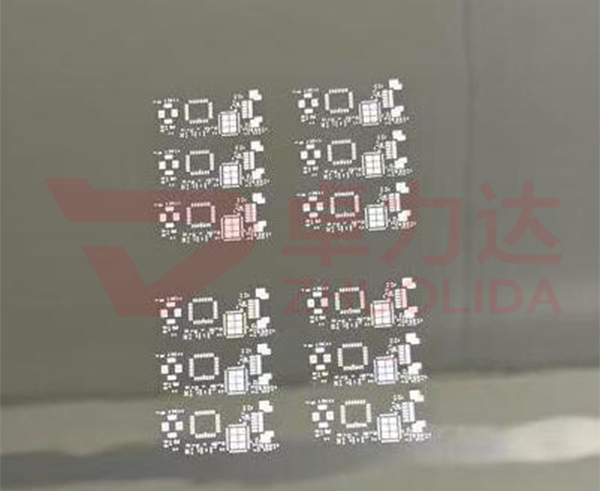
Electroformed wafer masks are core semiconductor components manufactured using high-precision electrochemical deposition technology. Made primarily from high-purity nickel and copper, they offer key advantages such as high pattern accuracy, excellent dimensional consistency, superior surface finish and high wear resistance. Capable of precisely replicating wafer patterns ranging from the nanometre to the micrometre scale, they provide essential support for semiconductor processes such as lithography and packaging. Through precise control of electroforming parameters, stringent cleanliness management and closed-loop precision control, the processing of electroformed wafer masks enables the mass production of precision-formed masks, aligning with the semiconductor industry’s trends towards miniaturisation and integration. Manufacturers of electroformed wafer masks have a deep understanding of the semiconductor industry’s requirements. They continuously optimise process systems and quality control standards, driving the advancement of electroformed wafer mask manufacturing towards ultra-high precision, high stability and intelligent solutions, thereby providing core supporting solutions for the semiconductor industry.
The electroforming wafer mask manufacturing process is rigorous and precise, meeting the semiconductor industry’s ultra-high precision and high cleanliness requirements. Centred on five core stages—master template preparation, conductive treatment, electroforming deposition, post-demoulding treatment, and precision inspection—it forms a standardised and traceable operational chain. Manufacturers of electroformed wafer masks strictly adhere to semiconductor-grade cleanroom production standards. Building upon this foundation, they enhance pattern accuracy and dimensional consistency to ensure that every mask meets semiconductor industry standards for pattern accuracy, geometric tolerances and surface quality, thereby catering to the processing requirements of wafers of various specifications.
The first step involves the design and fabrication of the master mould, which lays the foundation for the electroforming of wafer templates. Manufacturers of electroformed wafer templates determine the key parameters of the templates based on wafer specifications and pattern design requirements, and select high-precision materials such as quartz or borosilicate glass to fabricate the master mould. The master template undergoes precision photolithography and laser direct writing to produce the wafer pattern, with exposure accuracy controlled to within ±0.002 μm, ensuring the master template pattern is fully consistent with the wafer design. During the pre-treatment stage, ultrasonic cleaning and plasma purification are employed to thoroughly remove impurities and contaminants from the master template surface, ensuring the master template meets Class 100 cleanliness standards with a surface roughness of Ra ≤ 0.05 μm. The precision of the master mould directly determines the quality of the electroformed wafer stencils. The processing of electroformed wafer stencils imposes even more stringent requirements on the master mould, which must undergo 100% inspection using high-magnification electron microscopy to eliminate defects such as surface scratches and pattern distortion, thereby ensuring the success of subsequent electroforming.
The second step involves the conductivisation of the master mould and the preparation of the electrolyte, which ensures the forming quality of the electroformed wafer stencils. Manufacturers of electroformed wafer templates subject non-metallic master templates to a clean conductivisation process, using vacuum sputtering to deposit an ultra-thin conductive layer (0.3–0.8 μm thick). This ensures the conductive layer is uniform, dense and free of pinholes, whilst preventing the introduction of impurities, thereby guaranteeing the cleanliness and conductivity of the electroformed wafer templates. Subsequently, a specialised high-purity electrolyte is prepared using raw materials such as high-purity nickel aminosulphate and copper sulphate. The purity of the electrolyte and impurity content are strictly controlled, whilst ion concentration, pH and temperature are precisely regulated. Specialised additives are incorporated to refine the grain structure and reduce internal stress within the electroformed layer, ensuring it is uniform and dense. This is the core factor by which manufacturers of electroformed wafer templates guarantee product consistency.
The third step is the core electroforming process, which is a critical stage in the manufacture of electroformed wafer templates. The electroforming wafer template manufacturer places the pre-treated master template as the cathode and a high-purity metal plate as the anode into a Class 100 cleanroom electroforming tank. Using pulse electroforming technology, the process precisely controls a low current density (0.3–1.5 A/dm²) and a constant temperature (42–52 °C) environment, enabling metal ions to deposit uniformly layer by layer onto the surface of the master template’s wafer pattern. The entire electroforming process takes place in a cleanroom, with real-time monitoring of deposition progress and electroforming parameters. Deposition time is adjusted according to the required thickness of the electroformed wafer template to ensure uniform thickness of the electroformed layer, with clear pattern contours free from burrs and residual impurities. The fabrication of electroformed wafer templates employs precise parameter control to reduce internal stress within the electroformed layer, ensuring pattern tolerances are maintained within ±0.003 μm and surface flatness meets specifications, fully demonstrating the core technical capabilities of the electroformed wafer template manufacturer.
The fourth step involves demoulding and post-cleaning treatment to optimise the performance of the electroformed wafer templates. Once the electroformed layer has reached the designed thickness, the manufacturer employs a gentle demoulding method: for metal master templates, non-destructive separation is achieved by utilising thermal expansion differences caused by temperature gradients; for non-metallic master templates, demoulding is carried out using an environmentally friendly chemical dissolution method. This ensures the electroformed wafer templates remain intact, free from damage and pattern distortion. Following demoulding, the templates undergo multiple stages of cleaning treatment. Through ultrasonic cleaning with pure water and plasma purification, residual electrolyte and microscopic impurities are thoroughly removed, ensuring the templates’ cleanliness meets semiconductor industry standards. Electrolytic polishing and passivation treatments are carried out as required to enhance the surface finish and corrosion resistance of the templates, thereby extending their service life. An additional clean packaging process is incorporated into the electroformed wafer template manufacturing to prevent contamination during storage and transport, thereby meeting the stringent requirements of semiconductor wafer processing.
The fifth step involves comprehensive precision inspection, which runs throughout the entire electroformed wafer template manufacturing process. Manufacturers of electroformed wafer templates are equipped with high-precision inspection equipment, such as scanning electron microscopes, laser interferometers and coordinate measuring machines, to conduct comprehensive testing of the templates’ pattern accuracy, dimensional tolerances, surface roughness, cleanliness and mechanical properties. Every single template undergoes 100% inspection to strictly prevent non-conforming products from leaving the facility. The manufacturing process places particular emphasis on inspecting nanometre-level pattern accuracy and surface integrity; high-magnification electron microscopy is used to verify the absence of cracks, burrs and impurities. Data is retained and traceable throughout the entire process to ensure stable and reliable product quality, which is also a key safeguard for manufacturers to achieve large-scale production.
The application of electroformed wafer masks is highly concentrated within the semiconductor industry. Thanks to their ultra-high precision and exceptional stability, they are deeply integrated into core processes such as wafer lithography, chip packaging and semiconductor testing, making them a critical component in semiconductor manufacturing. Through precise process control, electroformed wafer mask manufacturing meets the stringent demands of the semiconductor industry. Manufacturers of electroformed wafer masks leverage technological innovation to provide customised products and solutions, thereby supporting technological upgrades and product iterations within the semiconductor sector.
The wafer lithography stage is the core application scenario for electroformed wafer masks, where the requirements for mask precision and stability are extremely high. As the core medium for lithographic masks, electroformed wafer masks can precisely replicate wafer patterns, guiding the lithographic beam to form fine circuit patterns on the wafer surface, which directly determines the chip’s integration level and performance. Electroformed wafer mask processing enables the precise reproduction of nanometre-scale patterns, meeting the requirements of wafer processing for advanced processes of 7nm and below. Manufacturers of electroformed wafer masks strictly adhere to semiconductor industry standards, ensuring the precision of mask patterns and dimensional consistency, thereby guaranteeing the stability and efficiency of the lithography process.
In the field of chip packaging, electroformed wafer masks play a vital role, meeting the demands of miniaturised chip packaging. These masks are used in processes such as lead frame forming and bump preparation during chip packaging. For instance, electroformed wafer masks used for chip bump preparation can precisely control bump size and spacing, thereby enhancing the reliability of the connection between the chip and the circuit board. Electroformed wafer template processing enables the mass production of complex packaging patterns, balancing precision with efficiency. Manufacturers of electroformed wafer templates optimise their processes to enhance the templates’ wear resistance and service life, meeting the demands of large-scale chip packaging production.
In the semiconductor testing sector, electroformed wafer templates are used in the fabrication of wafer inspection fixtures, meeting the high-precision requirements of wafer testing. Electroformed wafer templates serve as the core structure of inspection fixtures, conforming precisely to the wafer surface to enable accurate inspection of circuit patterns, dimensions and defects, thereby ensuring wafer quality meets specifications. Electroformed wafer template manufacturing allows for customised patterns and dimensions tailored to specific inspection requirements, thereby improving inspection accuracy and efficiency. Manufacturers of electroformed wafer templates strictly control product quality to ensure the templates meet the stringent standards of semiconductor inspection.
The field of advanced packaging has emerged as a key growth area for electroformed wafer mask processing, meeting the evolving demands of the semiconductor industry’s advanced packaging technologies. With the widespread adoption of advanced packaging technologies such as chiplets and fan-out, the requirements for the precision and complexity of electroformed wafer masks are constantly increasing. These masks can realise the fine patterns and interconnect structures required for multi-chip integration, thereby facilitating the large-scale application of advanced packaging technologies. Through technological innovation, electroformed wafer mask processing has overcome the processing bottlenecks associated with ultra-fine patterns and complex structures. Manufacturers of electroformed wafer masks are strengthening their research and development efforts to meet the differentiated demands of the advanced packaging sector.
Furthermore, electroformed wafer masks are also applied in fields such as semiconductor materials research and development and micro-device manufacturing. Leveraging their ultra-high precision, they provide core support for technological research and development in these related fields. Electroformed wafer masks remain firmly oriented towards the needs of the semiconductor industry, continuously overcoming technical bottlenecks. The processing of electroformed wafer masks is constantly evolving towards greater precision, higher efficiency and greater environmental sustainability. Manufacturers of electroformed wafer masks are strengthening technological R&D and industrial collaboration to drive technological upgrades in this field, thereby providing core supporting infrastructure for the high-quality development of the semiconductor industry.
Contact:赖先生
Phone:+86 18938693450
Tel:0755-2708-8292
Email:yw9@zldsmt.com
Add:深圳市宝安区福永镇新和村福园一路华发工业园A3栋
 Zhuolida