Welcome: Shenzhen Zhuolida Electronics Co.TD
Language:
 ∷
∷

∷
∷
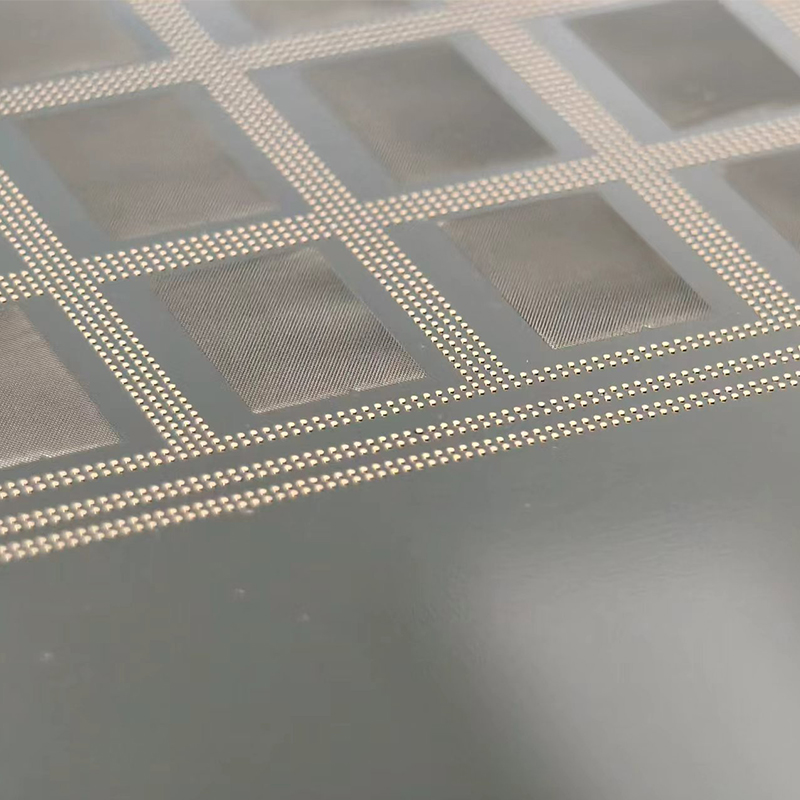
Electroforming of ultra-thin metal sheets is a precision machining technique customised for ultra-thin metal substrates, based on the principles of electrochemical deposition. With its core advantages of uniform thickness, a smooth surface, absence of mechanical damage and high forming accuracy, it has become a key manufacturing method in high-end sectors such as electronics, aerospace and biomedicine. Ultra-thin metal sheet electroforming is a highly specialised and demanding process. By precisely controlling electroforming parameters, it achieves nanometre-level forming of ultra-thin metal sheets, meeting the high-end demands of various industries for ultra-thin, high-precision metal components. Companies specialising in the electroforming of ultra-thin metal sheets focus on the research, development and processing of such materials. Drawing on mature process expertise and stringent quality control, they provide high-quality ultra-thin metal sheet products to various industries, supporting the sector’s transition towards lightweight and miniaturised solutions.
The electroforming process for ultra-thin metal sheets is rigorous and complex, balancing the fragile nature of the ultra-thin substrate with the demands for processing precision. It can be broken down into five core steps. The first is the design and preparation of the master mould, which forms the foundation for ensuring the quality of the electroforming process. Based on the customer’s requirements for thickness, dimensions and precision, the company designs precise product structural drawings. Master moulds are fabricated using quartz, high-precision resin or metal materials. Through processes such as laser etching and precision polishing, the surface of the master mould is ensured to be flat and the structure clear, with dimensional tolerances controlled to within ±0.1μm, laying a solid foundation for subsequent electroforming. This is also a key prerequisite for achieving high precision and thin-profile designs in the electroforming of ultra-thin metal sheets.
The second step involves master mould pre-treatment, the core of which is to ensure the master mould’s surface is conductive and meets cleanliness standards, thereby preventing any impact on the uniform deposition of metal ions whilst protecting the structural integrity of the master mould. The company first employs gentle methods such as ultrasonic cleaning and plasma cleaning to thoroughly remove oil, oxidation layers and impurities from the master mould’s surface, ensuring the surface is free of any contaminants and preventing any adverse effect on the adhesion of the electroformed layer. Subsequently, chemical nickel plating or vacuum aluminium plating processes are employed to deposit an ultra-thin conductive metal layer onto the master mould’s surface. This not only achieves the conductive treatment but also ensures the layer is uniform and dense, laying a solid foundation for the smooth execution of ultra-thin metal sheet electroforming and serving as a crucial step in improving product yield rates.
The third step is the core electroplating deposition stage, which is also the central process in the electroplating of ultra-thin metal sheets, with a focus on controlling the thickness and uniformity of the electroplated layer. The electroforming company uses the pre-treated master mould as the cathode and selects suitable metals such as pure nickel, copper alloys or gold as the anode. Both are immersed in a customised electrolyte solution. By precisely controlling the current density, electrolyte temperature and deposition time, metal ions are deposited uniformly layer by layer onto the surface of the master mould, forming an ultra-thin electroformed layer of controllable thickness. During this stage of ultra-thin metal sheet electroforming, process parameters must be strictly controlled to ensure the electroformed layer is uniform in thickness, with a smooth surface free from burrs and deformation. The thickness can be controlled within the range of 0.01–0.1 mm, meeting the requirements of various industries for ultra-thin metal sheets. This represents the core technological competitiveness of ultra-thin metal sheet electroforming companies.
The fourth step involves demoulding and post-processing, the key objective of which is to achieve the damage-free separation of the ultra-thin metal sheet from the master mould whilst optimising product performance. Companies specialising in the electroforming of ultra-thin metal sheets employ thermal separation or precision mechanical demoulding techniques, in conjunction with flexible demoulding aids, to achieve damage-free separation without damaging the ultra-thin metal sheet or compromising dimensional accuracy, resulting in a yield rate of over 99%. Following demoulding, gentle processes such as electrolytic polishing and passivation are employed to remove burrs from the surface of the metal sheets, enhance surface finish, improve corrosion and wear resistance, and extend service life. At the same time, the thickness and dimensions of the ultra-thin metal sheets are precisely calibrated to ensure compliance with industry standards; this is an indispensable final stage of the electroforming process.
The fifth step is the quality inspection phase, which runs throughout the entire electroforming process for ultra-thin metal sheets, with a focus on thickness uniformity and dimensional accuracy. The electroforming company utilises high-precision thickness gauges, microscopes, and coordinate measuring machines to comprehensively inspect parameters such as thickness, dimensions, surface roughness, and density. Non-conforming products are rigorously screened out to ensure that every ultra-thin metal sheet meets customer requirements. Furthermore, through environmental simulation tests such as high and low temperature exposure and bending fatigue, the stability and toughness of the ultra-thin metal sheets under complex conditions are verified, further ensuring product reliability. This is also a crucial safeguard for electroforming companies to achieve large-scale production.
Thanks to their ultra-thin profile, high precision and high toughness, electroformed ultra-thin metal sheets have a wide range of applications and are deeply integrated into numerous high-end industries, including electronics, aerospace, biomedicine and precision instrumentation. In the electronics sector, products manufactured through electroforming of ultra-thin metal sheets are widely used in micro-connectors, chip packaging and electronic display components. Their ultra-thin nature enables the lightweight and miniaturisation of electronic devices, enhancing their integration. Tailoring their processes to the specific demands of the electronics industry, manufacturers produce ultra-thin metal sheets compatible with various specifications of electronic components, and have gained market recognition for their high-quality products.
In the aerospace sector, ultra-thin metal sheets produced through electroforming are extensively used in aircraft engine components, lightweight satellite structures and space instruments. Their ultra-thin and high-strength properties enable weight reduction and energy savings, thereby improving operational efficiency. In accordance with the stringent requirements of the aerospace industry, process parameters are optimised to produce ultra-thin metal sheets with excellent high-temperature resistance and corrosion resistance, making them suitable for complex space environments. Furthermore, electroformed ultra-thin metal sheets are utilised in signal transmission components for aerospace equipment, ensuring the stable operation of such systems.
In the biomedical sector, ultra-thin metal sheets produced via electroforming are widely used in micro-surgical instruments, biosensors and medical implants. Their ultra-thin, burr-free and sterile characteristics ensure the safety and compatibility of medical equipment. Ultra-thin metal sheet electroforming strictly adheres to medical hygiene standards, implementing cleanroom controls during production to ensure the sheets meet the requirements of the biomedical field. To meet the specific needs of the biomedical sector, companies specialising in the electroforming of ultra-thin metal sheets produce customised, sterile-grade ultra-thin metal sheets, thereby supporting the industry’s advancement towards precision medicine.
In the field of precision instruments, ultra-thin metal sheets produced via electroforming are widely used in precision gauges, laser equipment and measuring instruments. As core structural components, their high precision and stability enhance the detection accuracy and operational reliability of these instruments; Electroforming companies specialising in ultra-thin metal sheets have optimised their manufacturing processes to enable mass production, meeting the demands of large-scale manufacturing in the precision instrumentation sector. Furthermore, electroformed ultra-thin metal sheets are utilised as heat dissipation components in instruments, where their excellent thermal conductivity enhances heat dissipation efficiency.
Furthermore, electroforming of ultra-thin metal sheets is also applied in sectors such as new energy, optical components and automotive electronics, where it is used for new energy battery electrodes, optical filter substrates and micro-components for vehicles, demonstrating the wide adaptability of this processing technique. Ultra-thin metal sheet electroforming has always been market-driven, continuously overcoming technical bottlenecks, optimising processing workflows, and enhancing product quality and production efficiency. In the future, as high-end manufacturing continues to upgrade, ultra-thin metal sheet electroforming is set to achieve breakthroughs in more emerging sectors. Companies specialising in ultra-thin metal sheet electroforming will continue to strive to advance the technology towards higher precision and thinner thicknesses, thereby injecting new vitality into various high-end equipment industries.
Contact:赖先生
Phone:+86 18938693450
Tel:0755-2708-8292
Email:yw9@zldsmt.com
Add:深圳市宝安区福永镇新和村福园一路华发工业园A3栋
 Zhuolida