Welcome: Shenzhen Zhuolida Electronics Co.TD
Language:
 ∷
∷

∷
∷
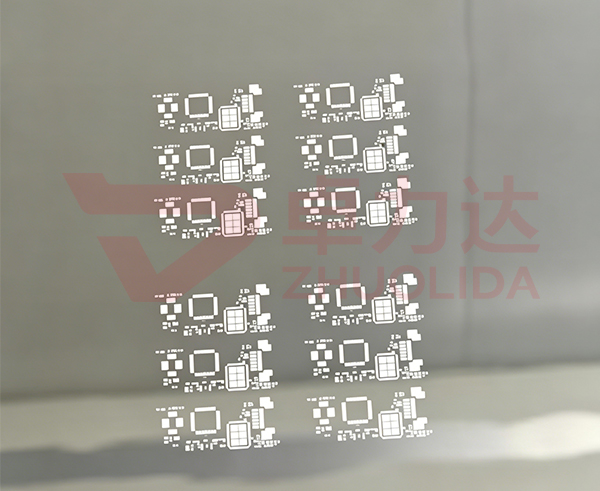
As advanced semiconductor wafer-level packaging, electrical testing, and die sorting processes continue to evolve, and the mass production scale of ultra-thin wafers, high-density bump wafers, and fan-out packaging wafers is expanding. Traditional fixture substrates suffer from insufficient flatness, poor alignment accuracy, and weak temperature resistance and anti-static performance, which can easily lead to defects such as wafer chipping, probe misalignment, packaging alignment failure, and test data drift. As an integrated core fixture for wafer support, positioning, vacuum clamping, and electrical isolation, semiconductor packaging and testing wafer carrier templates are designed to accommodate full-wafer continuous support, zoned positioning, and high-temperature packaging and testing conditions. They are suitable for use throughout the entire process—including wafer transfer, intermediate testing, and ball-attach packaging—and serve as a critical precision component in the back-end packaging and testing process. The manufacturing of semiconductor packaging and testing wafer carrier templates integrates specialized alloy substrate modification, Class 100 cleanroom lithography, controlled chemical etching, global stress leveling, and semiconductor-grade surface coating into a unified process. This approach accommodates both R&D sample customization and large-scale mass production on wafer production lines, meeting the production demands for wafer carrier templates of various sizes and architectures. As a manufacturer of semiconductor packaging and testing wafer carrier templates, we specialize in packaging and testing tooling technology. We have overcome industry challenges such as large-size carrier warpage, micron-level tolerance control for alignment holes, and dimensional drift at high and low temperatures, aligning with the standardized operational requirements of domestic wafer packaging and testing production lines.
The entire production process is implemented in a closed-loop system within a Class 100 semiconductor cleanroom with temperature and humidity control. It comprises: simulation-based design for packaging and testing conditions; selection of specialized low-stress substrates; ultra-clean multi-stage pre-treatment of the substrate surface; high-precision alignment lithography; etching and forming of substrate cavities and alignment holes; cleanroom-based micro-hole purification and demolding; stress relief and functional modification; comprehensive quality inspection against production standards; nine standardized anti-static clean packaging processes. Throughout the entire process, dust, temperature, humidity, and chemical parameters are strictly controlled to prevent four major manufacturing defects: substrate warping, alignment hole misalignment, cavity burrs, and surface static residue. Semiconductor packaging and testing wafer carrier templates are categorized into three main types: full-wafer universal carriers, zoned positioning carriers, and vacuum-suction carriers, designed to meet the diverse wafer-carrying requirements of logic, power, and memory chips. The manufacturing of these templates follows a three-tier process control system—categorized by consumer/commercial packaging and testing, automotive-grade chip packaging and testing, and high-reliability industrial packaging and testing—to ensure precision and durability metrics align with the specific requirements of each chip grade. Manufacturers of semiconductor packaging and testing wafer carrier templates establish dedicated process databases for carrier plates. They dynamically adjust process parameters based on nickel alloy and precision stainless steel substrates to ensure cross-batch compatibility of carrier templates on production equipment.
Wafer operating condition benchmarking and structural simulation design are the primary preliminary steps before the mass production of semiconductor packaging and testing wafer carrier templates. Technical personnel conduct 3D simulation modeling by integrating wafer outer diameter, wafer thickness, die layout, edge dicing grooves, vacuum suction port locations, test equipment reference points, and high-temperature packaging and testing thermal expansion parameters. This process calculates etching compensation values and internal stress distribution on the substrate surface, optimizing the integrated layout of the wafer-holding cavity, reference positioning holes, vacuum vent channels, and edge stop flanges to prevent: obstructing functional areas, or hindering probe insertion. For large-size 12-inch full-wafer carrier substrates, distributed stress-relief grooves are added to mitigate deformation issues during the forming of large-area substrates. After triple verification of load-bearing strength, alignment accuracy, and temperature resistance, the production plan is finalized. Pre-production simulation and validation of semiconductor packaging and testing wafer carrier templates have been completed, enhancing machine compatibility and first-pass yield rates. Manufacturers of these templates align with mainstream wafer-level packaging processes, enabling rapid template revisions and the launch of new products.
The careful selection of specialty substrates and pre-treatment of ultra-clean panel surfaces lay a solid foundation for the quality of wafer carrier templates used in semiconductor packaging and testing. The manufacturing process utilizes special ultra-thin alloy sheets with low inherent stress, resistance to high and low temperature cycling, anti-static properties, and corrosion resistance. Upon arrival, each batch is screened for sheet thickness tolerance, internal grain uniformity, and surface oxidation defects. Raw materials that exceed stress limits, have surface scratches, or exhibit uneven thickness are rejected to prevent deformation, misalignment, or damage to wafer edges after long-term wafer loading. Pre-treatment involves a sequential process of alkaline dust-free ultrasonic degreasing, multi-stage ultra-pure water rinsing, plasma surface activation, and micro-level surface leveling etching. This thoroughly removes oil residues, metal scale, and fine dust impurities from the substrate surface, enhances the adhesion of photoresist dry film lamination, and eliminates defects such as delamination in substrate cavities and alignment hole areas, as well as localized etching defects. For large-size, ultra-thin carrier substrates, an additional low-temperature annealing process is incorporated to relieve residual stress and completely eliminate inherent internal stresses in the substrate material. The processing of semiconductor packaging and testing wafer carrier templates adheres to ultra-high cleanliness control standards specific to the semiconductor packaging and testing industry, preventing impurity contamination of wafer pads and chip circuits. Manufacturers of semiconductor packaging and testing wafer carrier templates optimize pretreatment processes by grade, with carrier templates for automotive-grade chips undergoing a dual plasma activation and cleaning process.
Micron-level high-precision photolithographic pattern transfer ensures the core accuracy of the cavities and apertures in semiconductor packaging and testing wafer substrate templates. Ultra-thin photosensitive dry films are uniformly laminated and cured in a constant-temperature Class 100 cleanroom workstation. Equipped with laser direct-write intelligent alignment equipment, the process simultaneously achieves precise exposure of the wafer-holding cavities, equipment positioning holes, and vacuum suction slots as a single integrated unit. For the dense hole areas at the substrate center and the edge positioning structures, a zone-specific light energy control exposure process is employed to balance development rates across different regions, eliminating process defects such as pattern jaggedness, hole misalignment, and localized resin deficiency. After constant-temperature, uniform development, the protective pattern is cured, with the resin layer covering the substrate material in the coated areas and exposing the areas designated for etched cavities and through-hole structures, thereby fully replicating the design parameters of the packaging and testing substrate. The processing of semiconductor packaging and testing wafer substrate templates achieves synchronized replication of large-area patterns across the entire substrate surface, ensuring uniform structural dimensions throughout the entire substrate. Manufacturers of semiconductor packaging and testing wafer carrier templates have iterated their vision alignment systems, strictly controlling overall alignment errors within the tolerances of the packaging and testing process.
Double-sided, segmented, controlled precision etching is the core forming process in the manufacturing of semiconductor packaging and testing wafer carrier templates. The laminated carrier substrate is fed into a sealed, corrosion-resistant, constant-temperature etching chamber, where a specialized, low-side-etch, environmentally friendly etching solution is prepared. The system maintains constant temperature control over solution concentration, dual-sided spray pressure, and substrate feed rate. By employing a segmented intermittent spray etching process, it balances the etching rate across the entire substrate surface, precisely controlling cavity depth, via diameter, and lateral etching volume. This ensures the inner walls of the substrate cavities are flat, via walls are vertical and smooth, and there are no metal burrs or flared edges. The entire process involves no mechanical stamping, no cutting tools, and no laser thermal damage, eliminating secondary processing stresses in the carrier. This prevents localized stress rebound deformation during wafer handling, making it perfectly suited for the integrated molding of large-size, full-wafer carrier plates. The processing of semiconductor packaging and testing wafer carrier templates is completed in a single step, with cavities, vacuum channels, positioning holes, and edge stop structures formed simultaneously, streamlining production processes. Manufacturers of semiconductor packaging and testing wafer carrier templates employ a multi-cycle chemical filtration system, balancing processing precision, mass production efficiency, and environmental compliance requirements.
Cleanroom-grade demolding purification and anti-static functional modification optimize the long-term service performance of semiconductor packaging and testing wafer carrier templates. After etching, residual photoresist is removed from the substrate surface using neutral, environmentally friendly stripping agents. Through targeted ultrasonic cleaning of cavities, multi-stage high-purity water rinsing, and vacuum low-temperature drying, chemical residues, metal micro-debris, and colloidal residues are thoroughly removed from the internal structures. Considering the high-temperature and electrostatic-sensitive conditions of wafer packaging and testing, the substrates undergo electrolytic polishing, anti-static passivation, and composite temperature-resistant and anti-corrosion coating treatments. This reduces the risk of electrostatic discharge damaging wafer chips and enhances the substrate’s resistance to thermal stress, friction, and aging, making them suitable for continuous cyclic loading operations on packaging and testing production lines. The fabrication of semiconductor packaging and testing wafer carrier templates allows for on-demand adjustment of surface roughness and coating thickness, accommodating both vacuum adsorption and mechanical locking carrier modes. Manufacturers of semiconductor packaging and testing wafer carrier templates integrate etching, cleaning, and coating into a single, streamlined process, thereby shortening delivery times for custom orders.
Benchmark testing on packaging and testing equipment, along with vacuum cleanroom packaging, ensure that quality control standards for semiconductor packaging and testing wafer carrier templates are strictly maintained. We utilize 3D profilometers, flatness testers, and aperture tolerance testers to conduct comprehensive dimensional verification. Simultaneously, we replicate actual wafer packaging and testing line conditions to perform wafer bonding, alignment debugging, and high/low-temperature cycling tests, verifying the carrier’s positioning accuracy, flatness, and operational stability. Qualified finished products undergo anti-static vacuum sealing in Class 100 cleanroom workstations to isolate them from dust and moisture during storage and transportation, preventing oxidation of the alloy surface and micro-deformation of the substrate. The processing of semiconductor packaging and testing wafer carrier templates establishes a “one item, one file” full-inspection traceability mechanism, with item-by-item acceptance and verification against the wafer carrier drawings. Manufacturers of semiconductor packaging and testing wafer carrier templates retain full-process technical parameters to ensure traceability of batch product quality and reproducibility of processes.
Semiconductor packaging and testing wafer carrier templates are widely used in three major packaging and testing scenarios: automotive power chips, high-capacity memory wafers, and logic controller chips. The manufacturing of these templates aligns with the ongoing trend toward larger-scale and higher-precision wafer-level packaging, driving continuous process iteration. Manufacturers are tackling the challenges of processing large-size carriers, thereby empowering the semiconductor packaging and testing industry to improve quality and efficiency.
Application Case: Automotive Power Semiconductor Wafer Packaging and Testing: Automotive-grade power semiconductor wafers feature a wide temperature range and stringent anti-static requirements, demanding substrate materials with exceptional temperature resistance and alignment standards. Substrate templates for semiconductor packaging and testing are coated with anti-static and heat-resistant layers, ensuring dimensional stability even under high-temperature conditions. The manufacturing process incorporates optimized global stress-relief techniques, ensuring the substrates remain distortion-free during long-term use. Manufacturers of semiconductor packaging and testing wafer carrier templates implement automotive-grade quality control systems, meeting the admission standards for automotive chip packaging and testing.
High-Capacity Memory Wafer Packaging and Testing Application Case: Large-size, full-size memory wafers feature extensive surface areas and numerous interconnected die, demanding strict requirements for carrier template flatness across the entire surface. Semiconductor packaging and testing wafer carrier templates incorporate built-in stress-relief grooves to eliminate the risk of warping in large-area panels. Semiconductor packaging and testing wafer carrier templates undergo balanced etching across processing zones, ensuring uniform cavity depth across the entire surface. Manufacturers of these templates optimize spray layout to improve mass production yield for large-size carriers.
Logic controller wafer packaging application case: High-density logic wafers feature dense pin arrays and precise probe test points, requiring extremely high carrier positioning accuracy. Semiconductor packaging and testing wafer carrier templates feature micron-level positioning hole design, ensuring zero deviation in probe alignment. The manufacturing process of these templates employs precise control of cavity tolerances to perfectly conform to the wafer’s contour. Manufacturers optimize the photolithography process to meet the mass production and testing requirements of precision logic chips.
Overall, semiconductor packaging and testing wafer carrier templates are indispensable fixtures for wafer-level packaging and testing. The manufacturing of these templates relies on low-stress precision etching processes to address the challenges of processing large-size carriers. Manufacturers of these templates specialize in precision machining for the semiconductor industry, contributing to the high-quality development of China’s advanced wafer packaging and testing sector.
Contact:赖先生
Phone:+86 18938693450
Tel:0755-2708-8292
Email:yw9@zldsmt.com
Add:深圳市宝安区福永镇新和村福园一路华发工业园A3栋
 Zhuolida