Welcome: Shenzhen Zhuolida Electronics Co.TD
Language:
 ∷
∷

∷
∷
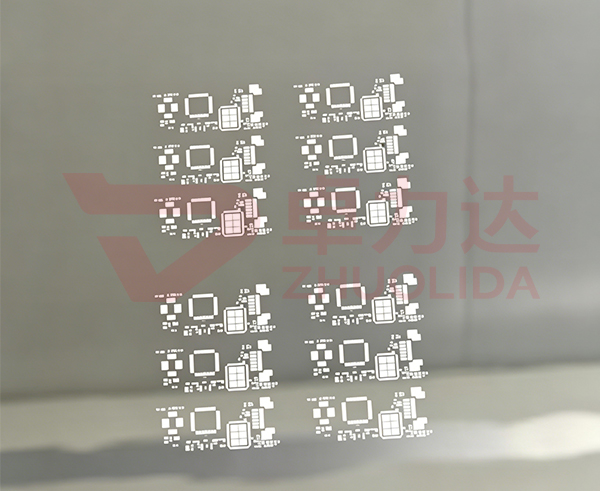
Against the backdrop of rapid technological advancements in the semiconductor industry, chip packaging sizes continue to shrink and test point layouts grow increasingly complex. Standard fixtures struggle to meet the electrical testing requirements of irregularly shaped wafers and chips with special architectures. As core precision fixtures for probe positioning, alignment, and guidance, semiconductor wafer test templates rely on high-precision micro-hole arrays to achieve precise probe alignment. They effectively prevent issues such as probe jamming, die damage, and testing data discrepancies, and have become indispensable components in the wafer reliability testing process. Custom manufacturing of semiconductor wafer test templates is based on the customer’s actual wafer parameters, with the entire process—from structural design to forming processes—tailored to specific needs, catering to both small-batch prototyping for research and development and mass production for chip manufacturing. Custom manufacturing of semiconductor wafer test templates employs chemical etching and Precision Electroforming as core forming methods. This eliminates deformation and burr defects caused by mechanical drilling, leveraging the advantages of stress-free forming to ensure micron-level hole precision and continuously adapt to the diverse testing conditions of various chip types.
The complete production process for semiconductor wafer test templates comprises eight major steps: design, substrate selection, surface pretreatment, photolithographic pattern transfer, precision forming, post-processing modification, multi-dimensional performance testing, and clean packaging. The entire process is carried out in a Class 100 temperature-controlled cleanroom, where environmental temperature, humidity, and dust levels are strictly controlled to minimize defects such as micro-hole blockage and pattern misalignment at the production environment level. Custom production of semiconductor wafer test templates allows for flexible switching between sheet-based and roll-to-roll processing modes based on wafer outer diameter, die layout, and probe diameter. Two sets of quality control standards are established for large-format full-sheet templates and small-format localized irregular-shape templates. Custom processing distinguishes between the characteristics of different substrates, such as stainless steel and nickel-based alloys, dynamically adjusting key parameters like etching solutions and electroforming currents to enable the simultaneous mass production of multiple template specifications.
Requirement analysis and solution design are the primary steps before the mass production of semiconductor wafer test templates. Technical personnel integrate key data such as wafer dimensions, probe pitch, equipment mounting references, and high/low-temperature testing environments. Through simulation of probe pressing trajectories and template stress states, they optimize micro-hole diameters, hole taper angles, edge reinforcement structures, and the positioning of reference holes. For ultra-fine-pitch chips and custom wafers with irregular edges, the micro-hole layout is individually optimized to prevent board warping caused by localized stress concentration during later stages. After multiple rounds of dimensional verification, the production plan is finalized, reducing production defects at the design stage. Custom production of semiconductor wafer test templates relies on a standardized simulation design system, significantly shortening the development cycle for new templates. Custom processing of semiconductor wafer test templates incorporates historical production data from similar products to predict etching side etch rates in advance and reserve dimensional compensation allowances.
Substrate selection and board surface pretreatment are fundamental to ensuring the forming quality of semiconductor wafer test templates. We prioritize ultra-thin alloy sheets with high flatness, low internal stress, and corrosion resistance. Upon arrival, each sheet is individually screened for thickness uniformity and surface finish, and any non-conforming raw materials with scratches, oxidation, or uneven thickness are rejected. The pretreatment process sequentially includes alkaline ultrasonic degreasing, multi-stage purified water rinsing, plasma activation, and micro-etching leveling. This thoroughly removes oil and oxide layers from the substrate surface, enhances photoresist adhesion, and prevents delamination and localized etching defects during the photolithography stage. Ultra-thin substrates with a thickness of less than 0.05 mm undergo an additional low-temperature stress-relief process to eliminate residual stress. Custom production of semiconductor wafer test templates involves selecting appropriate raw materials based on two operating conditions: ambient temperature and high-low temperature cycling. Custom processing of semiconductor wafer test templates adheres to refined, graded cleaning standards, with templates for medical-grade and automotive-grade chips subject to stricter cleanliness control requirements.
Photolithographic pattern transfer and precision molding are core processes in the fabrication of semiconductor wafer test templates. Dry film lamination or spin coating is performed in a cleanroom environment, followed by precise exposure using laser direct writing equipment based on custom drawings. After development at a constant temperature, a corrosion-resistant protective layer is retained, exposing the metal areas where apertures are required. Standard-specification products are manufactured using double-sided simultaneous chemical etching. For ultra-high-precision, ultra-thin templates, an integrated electroforming process is employed to precisely control micro-hole perpendicularity and aperture tolerances, ensuring smooth hole walls without flaring. For zoned micro-holes with significant density variations, segmented controlled-speed etching is used to balance the formation rates between dense and sparse areas. Custom production of semiconductor wafer test templates allows for flexible switching between etching and electroforming processes based on precision requirements. We continuously optimize underetching formulations for custom semiconductor wafer test templates, constantly pushing the boundaries of ultra-micro-hole precision forming technology.
Demolding, cleaning, and surface functionalization are critical steps for optimizing the performance of semiconductor wafer test templates. After demolding with an alkaline solution to remove residual photoresist, the formed parts undergo micro-pore ultrasonic cleaning and vacuum drying to thoroughly remove chemical residues and metal debris from the pores, meeting the high cleanliness standards of semiconductor manufacturing. Based on testing environment requirements, selective processes such as electrolytic polishing, passivation for corrosion resistance, and anti-static coating are applied to enhance the template’s wear resistance and corrosion resistance, thereby reducing accuracy degradation caused by long-term, high-frequency probe friction. For outdoor wide-temperature testing scenarios, the protective coating is thickened during the custom production of semiconductor wafer test templates. Surface treatment process parameters are adjusted according to the chip’s application field during the custom fabrication of semiconductor wafer test templates.
Comprehensive customized inspection and vacuum sealing constitute the final quality control steps before shipment. We abandon generic sampling standards and conduct item-by-item verification against custom drawings for hole diameter, pitch, flatness, and positioning accuracy. In addition to static dimensional inspection, we perform simulated in-machine testing to replicate actual test pressures and ambient temperatures, thereby identifying latent compatibility defects. Products that pass inspection undergo anti-static vacuum sealing in a cleanroom environment to protect them from dust and moisture during storage and transportation. Custom production of semiconductor wafer test templates follows a “one product, one file” quality inspection archiving system, with data retained throughout the entire production process. Relying on a multi-dimensional inspection system, the custom processing of semiconductor wafer test templates continuously improves the product’s shipment pass rate.
Semiconductor wafer test templates are widely used in three major testing fields: automotive power chips, micro-sensor chips, and in-house experimental chips. Custom production of these templates keeps pace with the rapid iteration of chips, enabling us to quickly fulfill various non-standard custom orders. We continuously optimize process details to expand the applicable scenarios for these templates.
In automotive power chip testing, automotive-grade chips face wide temperature variations and irregular probe arrangements, making standard templates prone to thermal deformation and probe jamming. Custom semiconductor wafer test templates incorporate reinforced structures to enhance thermal stability. Custom production optimizes micro-hole layouts to accommodate asymmetrical pads. Custom processing reinforces surface corrosion protection to meet stringent automotive testing standards.
In micro-sensor chip testing, sensor chips feature minute dies and scattered test points, making it highly likely for standard templates to obstruct sensing areas. Semiconductor wafer test templates incorporate custom-designed irregular-shaped clearance grooves as needed. Custom production of these templates employs a zoned micro-hole design. Custom processing utilizes low-stress molding to ensure the entire template meets flatness standards.
In R&D test chip applications, laboratory chips feature variable specifications, small batch sizes, and frequent design revisions. Semiconductor wafer test templates enable rapid redesigns through flexible design capabilities. Custom production of these templates streamlines small-batch manufacturing processes. Flexible scheduling in custom fabrication effectively reduces R&D support costs.
Overall, semiconductor wafer test templates are indispensable precision tooling for differentiated chip packaging and testing. Custom manufacturing of these templates meets diverse industry-specific needs through flexible end-to-end process control. Custom fabrication leverages a combination of etching and electroforming processes to continuously overcome challenges in precision machining, providing a solid foundation for the steady development of China’s semiconductor packaging and testing industry.
Contact:赖先生
Phone:+86 18938693450
Tel:0755-2708-8292
Email:yw9@zldsmt.com
Add:深圳市宝安区福永镇新和村福园一路华发工业园A3栋
 Zhuolida