Welcome: Shenzhen Zhuolida Electronics Co.TD
Language:
 ∷
∷

∷
∷
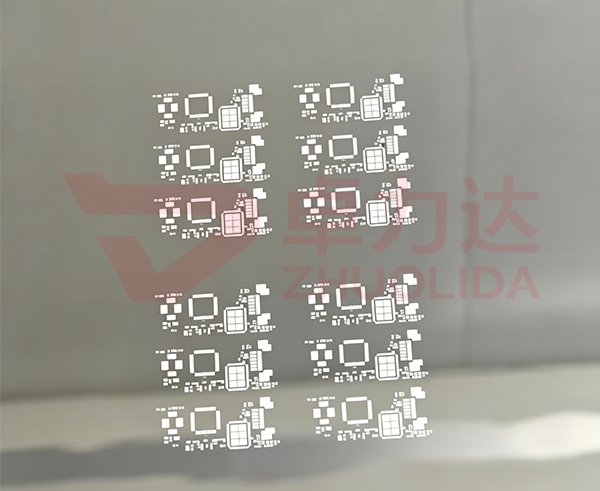
With the rapid evolution of advanced packaging technologies, packaging processes such as FC, BGA, and CSP are continuously moving toward finer pitch and miniaturization. Standardized wafer stencils can no longer meet the diverse production demands of the packaging industry. Semiconductor packaging wafer stencil manufacturers leverage a combination of chemical etching and Precision Electroforming processes to achieve mass production of various custom stencils, making them a critical component of the semiconductor packaging supply chain. Custom semiconductor packaging wafer templates are designed on a one-to-one basis, taking into account wafer size, pad layout, ball placement parameters, and printing conditions. By flexibly adjusting aperture specifications and board reinforcement structures, these templates effectively resolve packaging defects such as solder overflow, missing balls, and material jams. Specializing in the precision forming sector, manufacturers of custom semiconductor packaging wafer templates continuously optimize chemical formulations and production control standards. They support both small-batch prototyping for new products and large-scale mass production, helping to improve the quality and efficiency of packaging processes.
The entire production process consists of eight major steps: confirmation of requirements and solutions, raw material selection, board surface pretreatment, photolithography pattern preparation, precision molding, clean post-processing, multi-parameter performance testing, and dust-free sealing. All processes are completed in a Class 100 temperature-controlled cleanroom, with strict control over temperature, humidity, and dust levels to prevent defects such as aperture deviations, board warping, and residual impurities in apertures. Manufacturers of semiconductor packaging wafer templates customize two types of forming processes—etching and electroforming—based on the physical and chemical properties of different substrates, such as stainless steel and nickel, to accommodate various product categories, including ball placement templates and solder paste printing templates. Custom semiconductor packaging wafer stencils can be produced in two formats—full-size sheets or small, irregularly shaped sections—with production routes adjusted accordingly. Process compensation designs are incorporated for special products requiring ultra-narrow spacing or high-density apertures. Manufacturers of custom semiconductor packaging wafer stencils distinguish between consumer-grade and automotive-grade production standards, refining process parameters for each step to meet the packaging standards of different chip grades.
Requirement analysis and solution design are the first steps in production. Technical staff integrate data such as wafer outer diameter, individual chip pad coordinates, solder ball diameter, equipment printing pressure, and assembly clearance dimensions. Using process simulation, they calculate etching side-etch variations, reserve aperture size compensation, and simultaneously plan the layout of alignment holes, sealing clearance zones, and board stiffeners. For templates designed for ultra-thin wafers, the focus is on optimizing edge reinforcement structures to prevent deformation caused by printing pressure. After multiple rounds of dimensional verification, the final production plan is finalized, reducing machine-related defect rates from the design stage. Semiconductor packaging wafer template manufacturers leverage extensive experience in packaging-related design to quickly overcome design challenges such as irregular cutouts and the dense or sparse arrangement of zones. Custom semiconductor packaging wafer templates can be rapidly adjusted based on customer revision requests, shortening product iteration cycles. Custom semiconductor packaging wafer template manufacturers have established a design data archiving system to continuously optimize design solutions for similar products.
Substrate screening and board surface pretreatment are fundamental processes for ensuring forming accuracy. After raw materials are received into inventory, metal sheets with high flatness and low internal stress are selected. Each sheet is inspected for thickness uniformity, surface scratches, and oxidation defects, and non-conforming materials are rejected. Pre-treatment involves a sequential process of alkaline ultrasonic degreasing, multi-stage purified water rinsing, plasma surface activation, and micro-etching leveling. This thoroughly removes oil and oxide scale from the substrate surface, enhances photoresist adhesion, and prevents delamination and etch leakage after exposure. For ultra-thin substrates with a thickness of less than 0.04 mm, a low-temperature stress-relief process is added to eliminate inherent stresses in the material. Manufacturers of semiconductor packaging wafer templates strictly define cleaning specifications for different materials, rigorously controlling cleaning durations and chemical concentrations at each step. For custom semiconductor packaging wafer templates with high corrosion resistance requirements, corrosion-resistant specialty substrates are selected in advance. Custom manufacturers refine graded quality control indicators to manage finished product yield starting from the raw material stage.
Pattern transfer and precision forming are the core of the entire process. Dry film lamination or photoresist coating is performed in a cleanroom environment. Relying on high-precision alignment and exposure via laser direct writing equipment, a corrosion-resistant protective layer is retained after constant-temperature development, exposing the areas to be processed. Conventional products are formed using double-sided simultaneous chemical etching, while ultra-high-precision thin templates employ an integrated electroforming process. This precisely controls the verticality of apertures and aperture diameter tolerances, limiting dimensional errors to the micrometer level. For composite structures with significant variations in density, zone-by-zone and segment-by-segment processing is used to balance the forming rates between dense and open areas. Manufacturers of semiconductor packaging wafer templates continuously refine low-side-etch formulations to enhance the consistency of apertures in large-area templates. Custom semiconductor packaging wafer templates can be produced using either a single-etching process or a combined etching-and-electroforming solution, depending on requirements. Manufacturers flexibly switch production processes based on product precision specifications.
Stripping, cleaning, and surface enhancement treatments are critical for optimizing the performance of finished products. Formed parts undergo alkaline stripping to remove residual resin layers, followed by multi-stage water circulation cleaning, micro-porous ultrasonic flushing, and vacuum drying to thoroughly remove metal debris and chemical residue from the apertures, meeting the high-cleanliness standards of semiconductor manufacturing. Depending on the specific conditions of ball placement and solder paste printing, selective treatments such as electrolytic polishing, passivation for corrosion resistance, and anti-static coating are applied. These measures reduce the likelihood of solder adhesion and pore blockage, enhance the template’s wear and corrosion resistance, and extend its service life. Manufacturers of semiconductor packaging wafer templates tailor surface treatment solutions to match the specific operating environment. Custom semiconductor packaging wafer stencils can be further customized with personalized surface finishes such as matte or mirror finishes. Custom stencil manufacturers integrate end-to-end supporting processes to provide one-stop custom processing.
Comprehensive precision inspection and cleanroom packaging constitute the final quality control stage before shipment. Laser aperture profilometers, 3D profilometers, and flatness testers are used to inspect aperture size, hole spacing, and overall dimensions item by item. For non-standard custom products, simulated on-machine printing tests are additionally conducted to replicate actual packaging conditions and identify latent compatibility defects. Products that pass inspection undergo anti-static vacuum packaging in a cleanroom environment to prevent oxidation caused by dust and moisture during storage and transportation. The semiconductor packaging wafer template manufacturer has established a system of full-process sampling inspections and specialized re-inspections. For custom semiconductor packaging wafer templates, a separate “one item, one file” inspection standard is established, with acceptance conducted item by item against the custom drawings. The manufacturer has perfected a product quality traceability system to ensure consistent parameters across batch production.
Semiconductor packaging wafer templates are widely used in wafer-level packaging processes for automotive power chips, high-capacity memory chips, and micro-sensor chips. Manufacturers of these templates keep pace with the trend toward miniaturization in packaging and continuously refine precision molding technologies. Custom semiconductor packaging wafer templates are constantly expanding the development scope to include irregularly shaped and ultra-micro-sized templates. Manufacturers of custom semiconductor packaging wafer templates continue to deepen their process R&D efforts, supporting the steady advancement of China’s advanced packaging industry.
Automotive Power Chip Packaging Case Study: Automotive-grade chips feature compact pads and a wide operating temperature range, placing stringent demands on mask stability. Semiconductor packaging wafer mask manufacturers optimize etching and surface passivation processes to enhance the masks’ temperature resistance and resistance to deformation. Custom semiconductor packaging wafer masks are specifically optimized with aperture compensation and edge reinforcement structures. Custom semiconductor packaging wafer mask manufacturers strictly adhere to automotive-grade production standards to ensure stability in mass production.
High-Capacity Memory Chip Packaging Case Study: Memory wafers feature massive arrays and numerous apertures, making them highly susceptible to localized aperture size inconsistencies. Semiconductor packaging wafer mask manufacturers optimize global spray etching parameters to ensure uniform dimensions across the entire mask. Custom semiconductor packaging wafer masks optimize stress distribution on the mask surface to prevent warping in large-area designs. Custom semiconductor packaging wafer mask manufacturers adjust zone-specific forming solutions to improve the yield of large-area mask forming.
Micro-sensor chip packaging case study: Sensor chip die are small in size and feature complex local clearance structures, making it easy for generic masks to obstruct functional areas. Manufacturers of semiconductor packaging wafer templates utilize flexible forming processes to achieve irregular-shaped clearance apertures. Custom semiconductor packaging wafer templates feature zone-specific micro-hole arrays designed to avoid chip sensing points. Custom manufacturers implement precise control of micron-level tolerances to accommodate the precision packaging of microchips.
Overall, semiconductor packaging wafer templates are indispensable precision tooling for advanced packaging. Manufacturers of these templates rely on mature etching and electroforming processes to solve various forming challenges. Custom semiconductor packaging wafer templates utilize flexible designs to meet diverse packaging requirements across various fields. Manufacturers of custom semiconductor packaging wafer templates continuously refine their production processes, providing ongoing support for the high-quality development of the domestic semiconductor packaging industry.
Contact:赖先生
Phone:+86 18938693450
Tel:0755-2708-8292
Email:yw9@zldsmt.com
Add:深圳市宝安区福永镇新和村福园一路华发工业园A3栋
 Zhuolida