Welcome: Shenzhen Zhuolida Electronics Co.TD
Language:
 ∷
∷

∷
∷
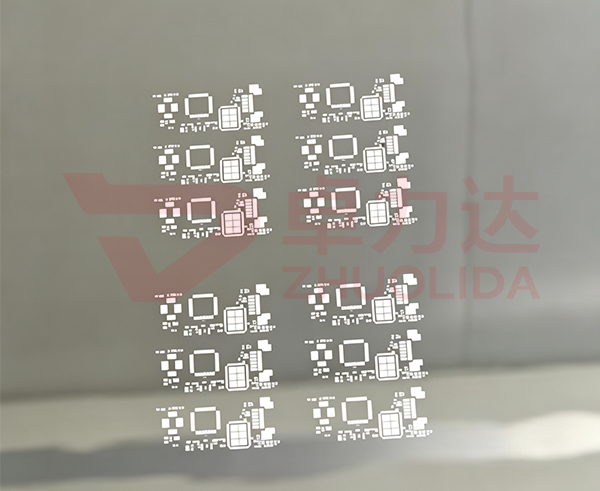
The semiconductor packaging and testing industry is rapidly evolving toward high-density pins, ultra-thin wafers, micron-level alignment, and long-term durability. Traditional machining and laser-cut wafer templates suffer from shortcomings such as rough sidewalls, high surface stress, misalignment of array holes, and poor mass production consistency, making them unsuitable for the full process requirements of wafer ball placement, solder paste printing, and electrical probe testing. Metal etching masks for semiconductor packaging and testing are made from ultra-thin alloy metal substrates and are formed through integrated chemical wet etching. They offer core advantages such as vertical hole walls, burr-free surfaces, absence of mechanical stress, and high array precision. Covering the entire process from wafer in-process testing to back-end packaging and die sorting, these masks serve as essential precision tooling for the semiconductor packaging and testing industry. The manufacturing of semiconductor packaging and testing wafer metal etching masks integrates a unified process encompassing cleanroom pretreatment, micro-nano lithography, zone-controlled etching, stress leveling, and semiconductor-grade post-processing. This approach accommodates both custom prototyping and high-volume standardized mass production, meeting the diverse production needs of various wafer packaging and testing applications. Manufacturers of metal etching masks for semiconductor packaging and testing specialize in precision etching technologies for the packaging and testing industry. By optimizing chemical formulations and automated production line parameters, they address industry pain points such as large-area mask deformation, side etching of ultra-fine pores, and surface cleanliness control, thereby supporting yield improvements on packaging and testing production lines.
The entire processing sequence is completed in a Class 100 temperature-controlled cleanroom. This includes the design of packaging and testing process solutions, the selection of low-stress metal substrates, multi-stage ultra-clean surface pretreatment, high-precision photolithographic pattern transfer, dual-sided zoned metal etching, high-purity cleaning of micro-holes after film removal, stress correction and functional coating, comprehensive testing against packaging and testing standards, and anti-static, dust-free hermetic sealing—forming a closed-loop process. Temperature, humidity, dust levels, and chemical parameters are strictly controlled throughout the entire process to prevent four major manufacturing defects: hole position deviation, substrate warping, residue buildup in micropores, and coating peeling. Metal etching masks for semiconductor packaging and testing wafers are categorized into three major structural types: testing, printing, and ball placement, accommodating different substrate forms such as full wafers, half-cut wafers, and ultra-thin wafers. The processing of these masks adheres to three tiers of process standards—consumer/industrial grade, automotive-grade high-temperature resistance, and high-reliability military grade—to meet the stringent requirements of various chip packaging and testing applications. Manufacturers of metal etching masks for semiconductor packaging and testing wafers maintain dedicated process databases for metal etching. They dynamically adjust process schemes based on two substrate types—stainless steel and nickel alloys—to ensure consistent product performance across batches.
Matching packaging and testing conditions with structural design is the primary core process for the mass production of metal etching masks for semiconductor packaging and testing wafers. Technical personnel conduct simulation modeling by integrating wafer size, die array, pad pitch, probe hole diameter, printing pressure, equipment positioning references, and high-low temperature cycling test environments. This enables precise calculation of metal etching side etch compensation and stress distribution across the board surface, optimizing the layout of functional microvias, positioning reference holes, wafer clearance grooves, and edge reinforcement ribs to resolve issues such as probe jamming, solder paste overflow, and wafer compression damage during the packaging and testing process. For high-density array layouts and large-size full-wafer layouts, stress-dispersing structures were optimized to mitigate post-etching board deformation. After undergoing triple verification for structure, precision, and operating conditions, the final drawings were approved for production. The manufacturing of metal etching templates for semiconductor packaging and testing relies on simulation-based design to optimize processes upfront, thereby improving template machine compatibility and first-pass yield. As a manufacturer of metal etching masks for semiconductor packaging and testing, we align with mainstream FC, QFN, and BGA packaging processes, enabling rapid new product development and layout iterations.
The selection of metal substrates and ultra-clean pretreatment lay the foundation for the quality of finished metal etching masks used in semiconductor packaging and testing wafers. We select ultra-thin nickel alloys and precision stainless steel coils and sheets that feature low internal stress, resistance to acid and alkali corrosion, and excellent thermal stability. Upon arrival, each batch is inspected for sheet thickness uniformity, internal grain structure, and surface oxidation levels. Raw materials that exceed allowable residual stress, exhibit surface scratches, or fail to meet thickness tolerance specifications are rejected. The pretreatment process sequentially includes alkaline ultrasonic degreasing, multi-stage ultra-pure water rinsing, plasma surface activation, and micro-metal pre-etching leveling. This thoroughly removes oil residues, metal scale, and fine dust impurities from the sheet surface, significantly enhancing the adhesion of photoresist dry film and preventing issues such as delamination, etch leakage, and pattern defects in high-density micro-pore areas. An additional low-temperature annealing process is incorporated for ultra-thin metal substrates to relieve inherent internal stresses. The manufacturing of metal etching templates for semiconductor packaging and testing wafers adheres to dedicated ultra-clean control standards for the semiconductor packaging and testing industry, eliminating the risk of impurity contamination of wafers and chip pads. Manufacturers of metal etching templates for semiconductor packaging and testing wafers implement tiered cleaning procedures; high-end automotive-grade packaging and testing templates undergo a dual-stage plasma activation and cleaning process.
Micro- and nano-scale laser pattern alignment and transfer ensure the core precision of the micro-hole arrays on semiconductor packaging and testing wafer metal etching templates. Ultra-thin photosensitive dry film is uniformly laminated and cured within a dust-free, temperature-controlled workstation. High-precision laser direct-write equipment is used to perform integrated alignment exposure for micro-hole arrays, avoidance grooves, and positioning holes. For composite templates with a wide range of density variations, a zone-specific energy-controlled exposure process is employed to balance the development rates between dense micro-hole areas and open border areas, thereby eliminating defects such as jagged edges, micro-hole blockages, and alignment shifts. After uniform, constant-temperature development, the patterns specified in the packaging and testing drawings are perfectly replicated. The areas covered by the adhesive layer form a protective layer, while the exposed metal areas serve as the regions to be etched, ensuring that tens of thousands of micro-hole arrays are arranged in an orderly manner with uniform dimensions. The processing of metal etching masks for semiconductor packaging and testing wafers achieves micron-level pattern replication, meeting the precision testing requirements of fine-pitch chips. Manufacturers of metal etching masks for semiconductor packaging and testing wafers have upgraded their vision alignment systems, strictly controlling overall alignment errors within process tolerance limits.
Controlled segmented double-sided metal etching is the core forming process in the fabrication of metal etching masks for semiconductor packaging and testing wafers. The photolithographed and coated workpiece is loaded into a sealed, corrosion-resistant etching chamber, where a specialized, low-side-etch, environmentally friendly etching solution for semiconductor masks is prepared. the system maintains constant temperature control over solution concentration, dual-sided spray pressure, and substrate feed rate. By employing a segmented intermittent spray etching process, it balances metal corrosion rates across the entire surface, suppresses lateral side etching in micropores, and ensures vertical, smooth inner walls of the micropores—free of flaring or metal burrs. The entire process involves no mechanical compression, no cutting tools, and no laser thermal damage. The metal templates have no secondary processing stresses, and the surface flatness is excellent, ensuring no scratches to the wafer grains or the surface pad plating. The processing of metal etching templates for semiconductor packaging and testing wafers can simultaneously complete contour cutting, functional microvias, and irregular-shaped clearance grooves in an integrated molding process, simplifying production procedures. Manufacturers of metal etching templates for semiconductor packaging and testing wafers have optimized their chemical solution recycling systems to balance processing precision, mass production efficiency, and environmental production requirements at the facility.
Microporous film removal, purification, and functional coating modification are employed to optimize the long-term service performance of metal etching masks for semiconductor packaging and testing wafers. After etching, residual dry film on the substrate surface is stripped using a specialized neutral stripping agent. Through targeted ultrasonic cleaning of the microporous structure, multi-stage high-purity water circulation rinsing, and vacuum low-temperature drying, chemical residues, metal micro-debris, and colloidal residues are thoroughly removed from the interior of the microporous structure. In accordance with packaging and testing process requirements, the templates undergo electrolytic polishing, anti-static passivation, and abrasion-resistant anti-corrosion coating treatments. These processes reduce probe wear and the likelihood of solder adhesion, while enhancing the templates’ comprehensive performance in terms of anti-static properties, high and low temperature resistance, and corrosion resistance, making them suitable for continuous, high-frequency operations on packaging and testing production lines. Customization of surface roughness and coating thickness for semiconductor packaging and testing wafer metal etching templates is available to suit both printing and testing applications. Manufacturers of these templates have integrated etching, cleaning, and coating processes, shortening custom delivery cycles.
Comprehensive testing against industry standards and vacuum packaging ensure that quality control standards for semiconductor packaging and testing wafer metal etching stencils are strictly maintained. We utilize 3D profilometers, flatness testers, and aperture tolerance testers to perform comprehensive dimensional inspections. Simultaneously, we replicate real-world packaging and testing line conditions to conduct simulated tests for on-machine lamination, probe continuity, and solder paste printing, verifying alignment accuracy, sealing performance, and operational stability. Qualified finished products undergo anti-static vacuum packaging at cleanroom workstations to isolate them from dust and moisture during storage and transportation, preventing oxidation and deformation of the metal surface. The processing of metal etching stencils for semiconductor packaging and testing wafers implements a “one-item-one-file” full-inspection traceability mechanism, with item-by-item acceptance against packaging and testing drawings. Manufacturers of these stencils retain full-process technical parameters to ensure the traceability and reproducibility of batch product quality.
Metal etching masks for semiconductor packaging and testing wafers are widely used in three major packaging and testing fields: consumer logic chips, automotive power chips, and memory wafers. The manufacturing of these masks aligns with the continuous optimization of advanced packaging processes. Manufacturers of these masks tackle the challenges of precision machining, empowering the semiconductor packaging and testing industry to improve quality and reduce costs.
Case Study: Consumer Logic Chip Wafer Packaging and Testing: With dense chip pin arrangements and large-scale mass production, these applications demand extremely high consistency in mask aperture positioning. Metal etching masks for semiconductor packaging and testing wafers feature uniformly distributed micro-hole arrays across the entire surface, making them compatible with high-speed automated packaging and testing production lines. Manufacturers optimize etching parameters across the entire mask to eliminate dimensional deviations in large-format masks. Manufacturers of metal-etched stencils for semiconductor packaging and testing implement standardized mass production controls to meet the demands of high-volume chip production.
Case Study: Automotive Power Chip Wafer Packaging and Testing: Automotive-grade chips are subject to significant temperature fluctuations and require strict anti-static protection. Metal etching masks for semiconductor packaging and testing wafers feature reinforced composite protective coatings, offering excellent temperature resistance and deformation resistance. The manufacturing process for these masks includes optimized substrate stress-relief techniques to withstand extreme alternating operating conditions. Manufacturers of metal etching masks for semiconductor packaging and testing wafers implement end-to-end automotive-grade quality control, fully compliant with automotive packaging and testing standards.
High-Capacity Storage Wafer Packaging and Testing Case: These wafers feature large surface areas and a vast number of microvias, making warpage control particularly challenging. Metal etching masks for semiconductor packaging and testing wafers incorporate built-in stress-dissipating structures to ensure long-term flatness without deformation. The fabrication of metal etching templates for semiconductor packaging and testing wafers employs zoned balanced etching to ensure uniform performance across the entire template. Manufacturers of these templates have optimized spray nozzle layouts to improve production yield for large-area templates.
Overall, metal etching masks for semiconductor packaging and testing wafers are indispensable precision metal tooling for the back-end semiconductor packaging and testing process. The manufacturing of these masks leverages chemical etching processes to overcome the limitations of traditional machining. Manufacturers of these masks have deeply cultivated supporting processing technologies for packaging and testing, helping to steadily upgrade the domestic semiconductor packaging and testing industry chain.
Contact:赖先生
Phone:+86 18938693450
Tel:0755-2708-8292
Email:yw9@zldsmt.com
Add:深圳市宝安区福永镇新和村福园一路华发工业园A3栋
 Zhuolida