Welcome: Shenzhen Zhuolida Electronics Co.TD
Language:
 ∷
∷

∷
∷
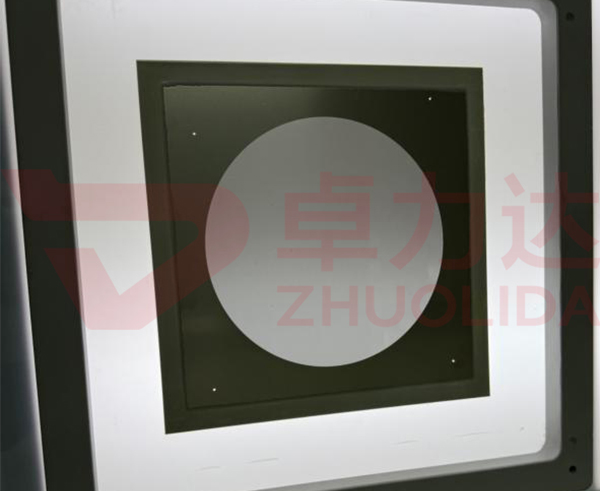
In the high-end precision manufacturing industry, nickel electroforming has become an indispensable part preparation technology for microelectronics, medical devices, optical instruments, and new energy equipment due to its advantages of zero internal stress, high replication accuracy, and the capability of forming ultra-thin and complex microstructures. Nickel electroforming suppliers rely on the electrochemical deposition principle to produce special-shaped, microporous, and ultra-thin nickel components that cannot be achieved by traditional cutting and stamping processes. The finished products feature high hardness, excellent corrosion resistance and electrical conductivity, meeting the service requirements of various harsh working conditions. The processing adopted by nickel electroforming suppliers abandons the mechanical external force forming mode. By means of layer-by-layer reduction and deposition of nickel ions on the master mold surface, it completely replicates the micro-morphology of the master mold and ensures the dimensional consistency and surface quality of parts. Nickel electroforming supplier manufacturers with rich technical experience rely on a sound process management system, optimize electrolyte formulas and electroforming parameters, and realize small-batch trial production and large-scale mass production of customized nickel electroformed parts, providing precision metal component supporting services for various high-end industries.
The processing of nickel electroforming suppliers is a precision forming technology based on electrochemical principles. Compared with traditional metal processing, it causes no mechanical damage such as extrusion and cutting to workpieces, making it suitable for manufacturing ultra-thin nickel parts with complex contours and micropore arrays. The complete processing workflow of nickel electroforming suppliers is closely connected, mainly including seven core procedures: customized master mold preparation, master mold purification and conductive activation, electrolyte deployment, electrochemical deposition forming, dynamic parameter control, non-destructive demolding and post-treatment, and finished product performance testing. Each process step directly affects the dimensional accuracy, mechanical properties and appearance quality of nickel electroformed parts, and serves as a key link for nickel electroforming supplier manufacturers to control product yield.
Customized master mold preparation and purification pretreatment are the basic procedures of processing for nickel electroforming suppliers. Metal or non-metal substrates are selected to fabricate master molds according to the size, contour, micropore arrangement and thickness requirements of part drawings. Metal master molds are polished to reduce surface roughness, while reserved process spaces for conductive treatment are required after the forming of non-metal master molds. After fabrication, the master molds are subjected to degreasing, multiple times of pure water cleaning and defect trimming to remove surface oil stains, dust and oxide layers, avoiding defects such as pinholes and pitting on parts caused by impurities entering the electroforming tank. A continuous and uniform conductive layer is formed on non-metal master molds via chemical plating or sputtering to ensure even deposition of nickel ions on all areas of the master mold. Standardized and rigorous nickel electroforming supplier manufacturers conduct dimensional calibration on each set of master molds to correct subtle contour deviations, reduce forming defects from the source, and guarantee the consistency of batch products.
Master mold conductive activation and electrolyte deployment are vital links to ensure the finished product quality of processing by nickel electroforming suppliers. The pretreated master molds are immersed in special activation solution to activate active sites on the surface, improve the adhesion of nickel ions, and prevent defective phenomena such as local thin deposition, coating delamination and partial material deficiency. Meanwhile, high-purity nickel electroforming electrolyte is deployed in accordance with the design requirements of part hardness, corrosion resistance and thickness. The nickel ion concentration, temperature and pH value of the electrolyte are strictly controlled, tiny impurities are filtered out, and appropriate stress-relieving additives are added to reduce the residual stress inside the electroformed layer. During continuous production, electrolyte components change constantly. Nickel electroforming supplier manufacturers need to sample and test electrolyte indicators regularly, dynamically adjust reagent ratios, maintain a stable electrodeposition environment, and avoid performance fluctuations of batch products.
Electrochemical deposition forming is the core procedure of processing for nickel electroforming suppliers. The activated master mold is placed in the electroforming tank as a cathode, and high-purity nickel plates are used as anodes. Core process parameters including current density, stirring rate and deposition time are precisely set. Driven by an electric field, nickel ions in the electrolyte move toward the cathode, continuously precipitate and reduce on the master mold surface, and grow layer by layer to form nickel metal components. This technology enables the forming of micron-level ultra-thin parts, complex special-shaped contours and high-density microporous structures. The formed nickel parts have controllable internal stress and their surface morphology highly replicates the master mold. Experienced nickel electroforming supplier manufacturers can customize exclusive process parameters for products with different structures and thicknesses, balance forming accuracy, structural strength and production efficiency, and reduce process defects such as pinholes, peeling and deformation.
Non-destructive demolding and precision post-treatment are key steps to improve the comprehensive performance of nickel electroformed parts. After the electroformed layer reaches the preset thickness, mechanical stripping, thermal separation or chemical mold dissolving methods are selected according to the master mold material to gently separate nickel electroformed parts from the master mold, avoiding part deformation and edge damage caused by pulling. The demolded semi-finished products are cleaned by circulating water to remove residual electrolyte, and then subjected to low-temperature stress relief annealing, edge trimming, surface polishing, anti-oxidation protection and other post-treatments to release internal residual stress, eliminate subtle surface flaws, and further improve the corrosion resistance and structural stability of parts. Standardized nickel electroforming supplier manufacturers formulate differentiated post-treatment schemes for ultra-thin and microporous parts to prevent damage to precision structures during post-processing.
Comprehensive finished product inspection is the final quality control link of processing for nickel electroforming suppliers. Multiple dimensional inspection methods including 3D scanning, thickness testing, surface roughness detection, salt spray corrosion resistance testing and hardness mechanical testing are adopted to conduct multi-dimensional inspection on finished products. Products with out-of-size tolerance, surface defects and substandard performance are eliminated to ensure that all delivered nickel electroformed parts meet design specifications and adapt to the assembly requirements of high-end equipment.
With the comprehensive advantages of high precision, excellent corrosion resistance, reliable conductivity and zero mechanical stress, nickel electroformed parts have been widely applied in numerous high-end manufacturing fields. In the microelectronics and semiconductor industry, nickel electroformed parts are used for SMT stencils, chip testing accessories, microwave devices and micro conductive shrapnels, meeting the miniaturization and high-precision assembly needs of electronic equipment. In the field of optical instruments, nickel electroforming can manufacture diaphragms, precision gratings and optical mold cores to replicate high-precision micro optical structures. In the medical device industry, biocompatible nickel electroformed components are applied to microneedle arrays, medical filter screens and minimally invasive equipment accessories, complying with strict cleanliness and safety standards for medical use. In the new energy and aerospace fields, nickel electroformed parts serve as conductive components and precision sensing accessories for energy storage equipment, adapting to complex working conditions such as high temperature and corrosion.
In general, the processing of nickel electroforming suppliers solves the industrial difficulty of manufacturing complex ultra-thin nickel components that cannot be realized by traditional processing, relying on its unique electrochemical deposition forming capability. With the continuous upgrading of domestic high-end equipment, the market demand for high-precision nickel electroformed parts keeps growing, driving the iterative optimization of related processes. In the future, professional nickel electroforming supplier manufacturers focused on precision manufacturing will continuously optimize key links including master mold preparation, electrolyte formula and process control, further improve forming accuracy and production efficiency, and provide solid precision component support for the high-quality development of microelectronics, medical treatment, optics, new energy and other industries.
Contact:赖先生
Phone:+86 18938693450
Tel:0755-2708-8292
Email:yw9@zldsmt.com
Add:深圳市宝安区福永镇新和村福园一路华发工业园A3栋
 Zhuolida