Welcome: Shenzhen Zhuolida Electronics Co.TD
Language:
 ∷
∷

∷
∷
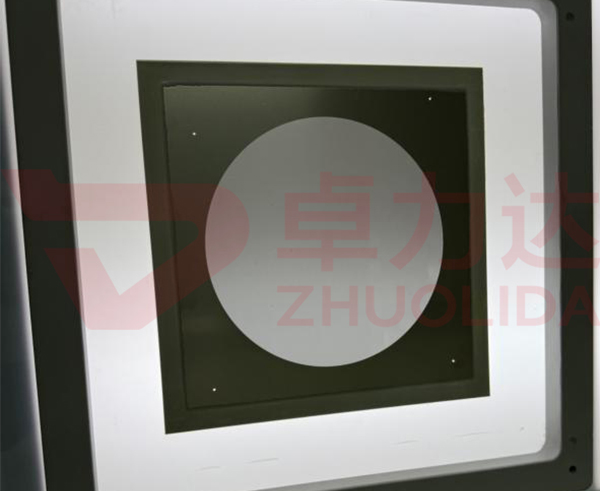
The modern ultra-fine powder processing industry has fully entered the stage of micron-level refinement. Various metallic and non-metallic ultra-fine powders have raised higher requirements for screening accuracy, particle size uniformity and impurity removal purity. Traditional woven and etched screening meshes generally suffer from large pore size deviation, rough mesh surface, easy clogging and insufficient structural strength, which fail to meet the high-precision production demands of micron-level powder screening. Micron powder screening mesh electroforming adopts electrochemical precision deposition molding technology to realize the integrated forming of standard micron-level micropore arrays. Featuring uniform pore size, smooth inner wall, stable opening rate, wear resistance, anti-clogging performance and zero mechanical stress, it has become a core supporting component for current ultra-fine powder precision screening. Micron powder screening mesh Electroforming processing breaks through the limitations of traditional mechanical molding technologies. Adopting a layer-by-layer metal ion deposition mode without stamping or cutting shaping, it can maximally restore precise micropore structures and accurately adapt to the grading and filtration of various micron-level ultra-fine powders. Focusing on precision powder accessory manufacturing, professional micron powder screening mesh Electroforming manufacturers rely on standardized and precise process systems to continuously optimize micropore molding parameters and deliver high-quality screening products for the high-end powder processing industry.
Micron powder screening mesh electroforming processing is a dedicated precision process adapted to the refined production of ultra-fine powders, which effectively solves the industrial pain points of traditional screening meshes such as insufficient accuracy, short service life and poor screening stability. It also serves as a core technical support for the upgrading of current micron-level powder screening equipment. Compared with conventional processing technologies, the screening mesh formed by micron powder screening mesh electroforming processing features extremely small micropore dimensional tolerance, dense and flat mesh structure, excellent toughness and wear resistance, and can adapt to long-term high-frequency and high-precision powder screening operations. The complete workflow of micron powder screening mesh electroforming processing is standardized, closed-loop and fully controllable, mainly including seven core procedures: precision mold customization, mold purification and activation, precise electrolyte deployment, micron-level electrodeposition molding, dynamic parameter adjustment, non-destructive demolding and finishing, and full-range finished product inspection. Every procedure directly determines the service performance of screening meshes and acts as a core control link for micron powder screening mesh electroforming manufacturers to ensure batch product consistency.
Precision mold customization and purification pretreatment are the basic procedures of micron powder screening mesh electroforming processing and the primary prerequisite for regular molding of micron-level micropores. According to the micron pore size, micropore arrangement density, mesh specification and opening rate required for powder screening, high-precision customized forming molds are manufactured. The micropore contour, spacing and flatness of molds are strictly controlled to match micron-level screening accuracy in structure. After preparation, molds undergo multiple purification processes including degreasing, repeated pure water cleaning, fine polishing and defect repair to completely remove surface dust, oil stains and oxide impurities, and avoid molding problems such as micropore blockage, pore size offset and uneven mesh surface. For non-metallic molds, conductive medium is evenly coated to form a continuous and uniform conductive layer, ensuring uniform metal deposition on all inner wall areas of micron-level micropores. Formal micron powder screening mesh electroforming manufacturers conduct micron-level precision calibration on each set of molds to correct subtle structural deviations and avoid molding defects from the source.
Mold activation and refined electrolyte deployment are key steps to improve the finished product quality of micron powder screening mesh electroforming processing. Prequalified molds are placed in special activation solution for surface activation treatment to effectively activate surface active sites and enhance metal ion adhesion, avoiding subtle molding defects such as uneven deposition, local thickness difference and partial material deficiency on the inner walls of micron-level micropores. Meanwhile, high-purity electroforming electrolyte is precisely proportioned according to the wear resistance, corrosion resistance and high-strength requirements of screening meshes. The concentration, temperature, pH value and purity of the electrolyte are strictly controlled, and tiny impurities are filtered to ensure dense, uniform and stable deposition layers. In mass production, electrolyte stability directly determines micropore molding accuracy. Micron powder screening mesh electroforming manufacturers monitor various electrolyte indicators in real time and finely adjust process parameters dynamically to maintain a stable electrodeposition environment and ensure unified quality of batch products.
Electrochemical micron-level deposition molding is the core procedure of micron powder screening mesh electroforming processing, which directly determines the core screening performance of screening meshes. Activated and qualified molds are placed in electroforming equipment as cathodes, with core parameters such as current density, stirring rate and deposition duration precisely set. Under a constant and controllable electric field, metal ions deposit evenly and orderly on the mold surface, gradually forming micron-level micropore screening meshes with regular pore size, uniform arrangement and smooth inner walls. This process can accurately mold various standard micron-level pore sizes, fundamentally solving the problems of ultra-fine powder jamming, powder adhesion, low screening efficiency and uneven particle size grading. Meanwhile, it ensures stable structural strength of the mesh and adapts to long-term continuous screening operations. Experienced micron powder screening mesh electroforming manufacturers customize exclusive deposition parameters according to different powder materials, particle size specifications and screening standards to accurately balance product precision, structural strength and powder permeability.
Non-destructive demolding and precision post-treatment are important links to optimize the quality of micron powder screening meshes. Due to the thin mesh body and precise micropore structure, screening meshes are prone to deformation and damage. Therefore, flexible non-destructive demolding technology is adopted after electrodeposition to gently separate the mesh from the mold and prevent micropore deformation and mesh damage caused by pulling and bending. The demolded semi-finished products undergo a series of post-treatment processes including circulating pure water cleaning, low-temperature stress relief, edge trimming, mesh leveling and anti-oxidation protection to completely remove residual electrolyte and subtle molding defects, optimize mesh flatness and structural stability, and improve product wear and corrosion resistance. Standardized micron powder screening mesh electroforming manufacturers formulate exclusive post-treatment schemes targeting the characteristics of micron-level precision micropores to prevent secondary processing from damaging micropore accuracy.
Precision finished product inspection serves as the final quality control checkpoint of micron powder screening mesh electroforming processing, fully ensuring finished products adapt to high-end screening scenarios. A variety of precision testing methods are adopted, including microscopic pore size detection, dimensional tolerance verification, opening rate testing, structural strength testing, and wear and corrosion resistance testing. The quality of finished products is comprehensively screened, and unqualified products with pore size deviation, micropore deformation and mesh surface defects are strictly eliminated. This ensures that the delivered screening meshes fully meet the refined screening requirements of micron-level ultra-fine powders and effectively improve the grading purity and particle size uniformity of powders.
Endowed with outstanding advantages such as micron-level high precision, high permeability, anti-clogging, wear resistance and strong stability, products formed by micron powder screening mesh electroforming have a wide range of application fields. In the ultra-fine metal powder industry, they are used for grading, impurity removal and filtration of various precision metal micro-powders to ensure uniform powder particle size. In the fields of new materials and powder metallurgy, they adapt to the precision screening of functional ultra-fine powders and provide high-quality raw materials for precision part sintering and new coating material preparation. In the chemical, electronic and scientific research fields, they can meet the experimental screening and industrial refined processing requirements of high-end ultra-fine powders and help upgrade the quality of powder products.
In conclusion, micron powder screening mesh electroforming processing eliminates the precision shortcomings of traditional screening processes with its irreplaceable precision micropore molding advantages and has become the core process for micron-level ultra-fine powder processing. As the powder industry continues to upgrade toward ultra-fineness, high precision and high purity, the market demand for precision screening meshes keeps rising, driving the continuous iteration and optimization of related processing technologies. In the future, micron powder screening mesh electroforming manufacturers dedicated to precision manufacturing will continuously optimize process technologies, improve the molding accuracy and production efficiency of micron-level micropores, and provide reliable precision screening component support for the high-quality development of ultra-fine powder, new materials, precision manufacturing and many other industries.
Contact:赖先生
Phone:+86 18938693450
Tel:0755-2708-8292
Email:yw9@zldsmt.com
Add:深圳市宝安区福永镇新和村福园一路华发工业园A3栋
 Zhuolida