Welcome: Shenzhen Zhuolida Electronics Co.TD
Language:
 ∷
∷

∷
∷
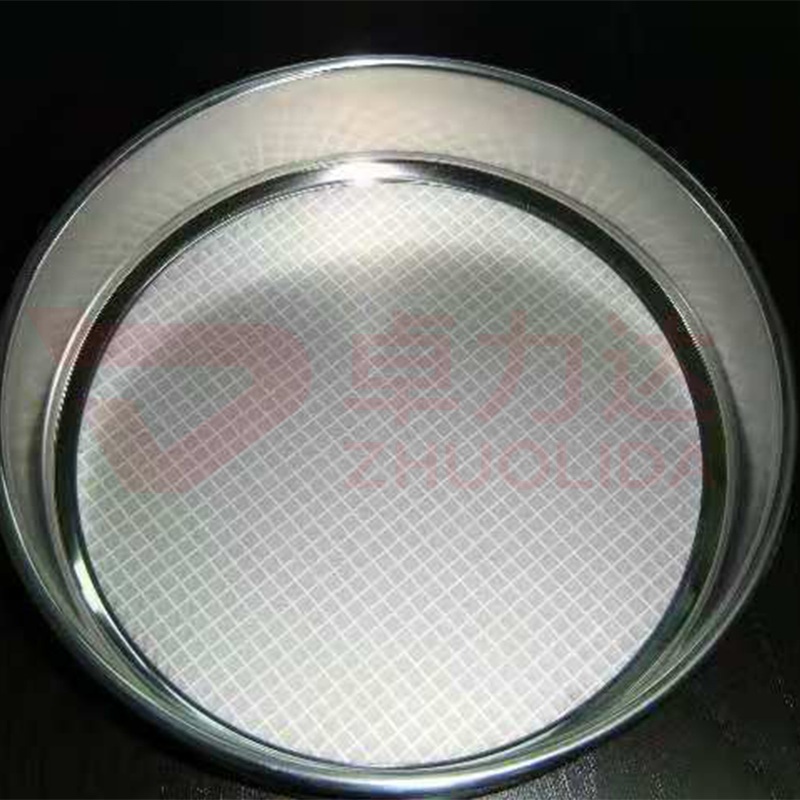
Precision electroformed laboratory sieve meshes are specialised sieving components manufactured using high-precision electrochemical deposition technology. With high-purity nickel and titanium alloys as their core materials, they offer key advantages such as uniform mesh distribution, precise pore sizes, high purity, compact dimensions and the absence of mechanical stress. Capable of reliably producing sub-micron to micron-scale microporous arrays, they are specifically designed for applications such as scientific research, sample analysis and micro-separation. The machining of precision electroformed laboratory sieve meshes is a key process for achieving high-precision forming. Through meticulous parameter control and stringent cleanliness management, it balances small-batch customisation with precision consistency, meeting the high standards required for laboratory research and testing. Manufacturers specialising in precision electroformed laboratory sieve mesh processing have a deep understanding of laboratory requirements. By optimising small-batch precision manufacturing processes, they are driving the evolution of this technology towards customisation, enhanced cleanliness and ultra-fine precision, providing tailored precision sieving solutions for a wide range of research laboratories.
The Precision Electroforming process for laboratory sieves is rigorous and meticulous, tailored to the core requirements of laboratories for small batches, high precision and high cleanliness. It centres on five key stages: master mould customisation, conductive treatment, electroforming deposition, post-demoulding treatment and precision inspection, forming a standardised and traceable production chain. Manufacturers of precision electroformed laboratory sieves strictly adhere to laboratory-grade clean production standards. Building upon this foundation, they reinforce controls over micro-pore precision and cleanliness to ensure that every product meets experimental requirements in terms of mesh size, pore spacing and cleanliness, thereby catering to the diverse research needs of different laboratories.
The first step involves master mould customisation and pre-treatment, laying the foundation for precision electroformed laboratory sieve mesh manufacturing. Manufacturers customise master moulds to meet specific laboratory research requirements, defining the mesh aperture size (0.05–50 μm), aperture spacing, open area ratio and mesh sheet specifications. Master moulds are fabricated using clean materials such as quartz and borosilicate glass. The master mould undergoes micro-patterning via precision photolithography and laser direct writing, with exposure accuracy controlled to within ±0.003 μm, ensuring the master mould’s mesh openings are fully consistent with the experimental design. During the pre-treatment stage, ultrasonic cleaning and plasma purification are employed to thoroughly remove impurities and contaminants from the master mould’s surface, ensuring its cleanliness meets laboratory-grade standards. The precision electroforming of experimental sieves imposes even more stringent requirements on the precision and cleanliness of the master moulds. These must undergo 100% inspection under high-magnification microscopy to eliminate surface scratches, mesh deformation and residual impurities, thereby ensuring the success of the subsequent electroforming process.
The second step involves the conductivisation of the master mould and the preparation of the electrolyte, which ensures the moulding quality of precision electroformed experimental sieve mesh. Manufacturers of precision electroformed experimental sieves subject non-metallic master moulds to a clean conductivisation process, using vacuum sputtering to deposit an ultra-thin conductive layer (0.5–1 μm thick). This ensures the conductive layer is uniform and dense, whilst preventing the introduction of impurities and safeguarding the cleanliness of the precision electroformed experimental sieves. Subsequently, a specialised high-purity electrolyte is prepared using raw materials such as high-purity nickel aminosulphate. The purity of the electrolyte and impurity content are strictly controlled, whilst ion concentration, pH and temperature are precisely regulated. Specialised additives are incorporated to refine the grain structure and reduce internal stress, ensuring the electroformed layer is uniform and clean. This is also the core factor by which manufacturers of precision electroformed experimental sieves ensure their products are suitable for experimental settings, preventing impurities from affecting experimental test results.
The third step is the core electroplating process, which is the critical stage in the manufacture of precision electroformed laboratory sieves. Manufacturers of precision electroformed laboratory sieves place the pre-treated master mould as the cathode and a high-purity metal plate as the anode into a clean electroforming tank. Using pulse electroforming technology, they precisely control the low current density (0.5–2 A/dm²) and maintain a constant temperature (40–50 °C), enabling metal ions to deposit uniformly layer by layer onto the surface of the master mould’s micro-perforated pattern. The entire electroforming process takes place in a Class 1,000 cleanroom, with real-time monitoring of deposition progress. Deposition time is adjusted according to the required thickness of the precision electroformed laboratory sieve mesh to ensure uniform thickness of the electroformed layer, with clear mesh aperture contours free from burrs and residual impurities. The manufacturing of precision electroformed experimental sieves employs meticulous parameter control to reduce internal stress within the electroformed layer, ensuring mesh aperture tolerances are maintained within ±0.005 mm and that the aperture walls are smooth and clean, fully demonstrating the precision machining capabilities of the manufacturer.
The fourth step involves demoulding and post-cleaning treatments to optimise the performance of the precision electroformed laboratory sieves. Once the electroformed layer has reached the designed thickness, the manufacturer employs a gentle demoulding process: metal master moulds are separated without damage by utilising thermal expansion differences caused by temperature gradients, whilst non-metallic master moulds are demoulded using an environmentally friendly chemical dissolution method. This ensures the precision electroformed laboratory sieves remain intact, free from damage and contamination by impurities. Following demoulding, the sieve undergoes multiple stages of cleaning treatment. Through ultrasonic cleaning with pure water and plasma purification, residual electrolyte and minute impurities are thoroughly removed, ensuring the sieve’s cleanliness meets laboratory standards. Electrolytic polishing and passivation treatments are carried out as required to enhance the smoothness of the pore walls and corrosion resistance, thereby extending the sieve’s service life. The manufacturing process for precision electroformed laboratory sieves includes an additional clean packaging step to prevent contamination during storage and transport, thereby meeting the cleanliness requirements for laboratory research and testing.
The fifth step involves precision inspection and calibration, which runs throughout the entire manufacturing process of precision electroformed laboratory sieves. Manufacturers of precision electroformed laboratory sieves are equipped with high-precision testing equipment, including scanning electron microscopes, laser aperture testers and cleanliness testers, to comprehensively inspect parameters such as mesh size, pore spacing, open area ratio, surface roughness and cleanliness. Every single product undergoes 100% inspection to strictly prevent non-conforming items from leaving the factory. The manufacturing process focuses on inspecting the precision of micro-pores and cleanliness levels; high-magnification electron microscopy is used to verify that pore walls are free from cracks and impurities, ensuring the products meet the stringent standards required for laboratory research and testing. This is also a key safeguard for manufacturers to achieve small-batch, precision production.
The application of precision electroformed laboratory sieves is concentrated in various research laboratories. Thanks to their high precision, high cleanliness and customisation capabilities, they are deeply integrated into biological, chemical, materials and environmental testing laboratories, serving as core auxiliary components for laboratory research and testing. Through meticulous process control, the manufacturing of precision electroformed laboratory sieves meets the laboratory’s requirements for small batches and multiple specifications. Relying on technological innovation, manufacturers of precision electroformed laboratory sieves provide customised products, thereby facilitating the efficient conduct of laboratory research.
Biological laboratories represent the core application scenario for precision electroformed laboratory sieves, where the requirements for sieving precision and cleanliness are extremely high. Precision electroformed laboratory sieves are widely used in biological sample filtration, cell separation, nucleic acid purification and microbial screening. For instance, precision electroformed sieves for cell separation can accurately separate cells of different sizes, preventing cross-contamination and ensuring the accuracy of experimental results; nucleic acid purification sieves can trap impurities, enhancing nucleic acid purity and laying the foundation for subsequent experiments. The manufacturing of precision electroformed laboratory sieves employs biocompatible processes to ensure the sieves are free from impurities and non-toxic, meeting the standards of biological laboratories. Manufacturers of precision electroformed laboratory sieves strictly control the production environment to ensure the products meet the requirements of biological experiments.
In the field of chemical laboratories, precision electroformed laboratory sieves play a vital role, meeting the precise filtration and separation needs of chemical experiments. Precision electroformed laboratory screens are used for filtering chemical reagents, separating reaction products and removing trace impurities. For example, precision electroformed screens used for filtering chemical reagents can accurately trap minute impurities within the reagents, ensuring their purity and preventing impurities from affecting the outcome of chemical reactions; screens for separating reaction products can separate products of different particle sizes, thereby aiding experimental analysis and improving data accuracy. The manufacturing of precision electroformed laboratory sieves allows for the customisation of materials and pore sizes to suit the characteristics of chemical reagents, thereby enhancing filtration efficiency. Manufacturers of precision electroformed laboratory sieves continuously optimise their processes to meet the diverse requirements of chemical laboratories.
In materials laboratories, precision electroformed laboratory sieves are used for experiments such as particle size classification, membrane filtration and materials characterisation. For instance, precision electroformed sieves for particle size classification can accurately grade material particles of different sizes, supporting research into material properties; membrane filtration sieves can be used for the precise filtration of material films, ensuring film purity and performance. Precision electroformed laboratory sieve mesh manufacturing can produce sub-micron pores, meeting the refined research requirements of materials laboratories and enhancing the accuracy of experimental data. Manufacturers of precision electroformed laboratory sieve mesh provide customised services across multiple specifications through process optimisation, catering to various materials testing scenarios.
In the field of environmental testing laboratories, precision electroformed laboratory sieves are used for environmental sample filtration and pollutant detection. For instance, in water quality testing, these sieves can precisely filter out minute suspended particles and pollutants from water, providing pure samples for analysis; sieves for atmospheric pollutant detection can intercept fine particulate matter in the air, aiding in the analysis of pollutant composition. Precision electroformed laboratory sieve mesh manufacturing allows for the customisation of pore sizes to suit specific testing requirements, thereby enhancing detection accuracy. Manufacturers of precision electroformed laboratory sieve mesh strictly control product quality to ensure the sieves meet the stringent requirements of environmental testing laboratories.
Furthermore, precision electroformed laboratory sieves are also used in medical laboratories and food testing laboratories for tasks such as sample pre-treatment and micro-sieving. Thanks to their high precision and high cleanliness, they improve experimental efficiency and data accuracy. Precision electroformed laboratory sieves are consistently guided by the research needs of laboratories, continuously overcoming technical bottlenecks. The manufacturing of precision electroformed laboratory sieves is constantly evolving towards greater precision, higher cleanliness and greater customisation. Manufacturers are strengthening technical research and development to drive technological upgrades in precision electroformed laboratory sieves, providing superior precision sieving support for various research laboratories.
Contact:赖先生
Phone:+86 18938693450
Tel:0755-2708-8292
Email:yw9@zldsmt.com
Add:深圳市宝安区福永镇新和村福园一路华发工业园A3栋
 Zhuolida