Welcome: Shenzhen Zhuolida Electronics Co.TD
Language:
 ∷
∷

∷
∷
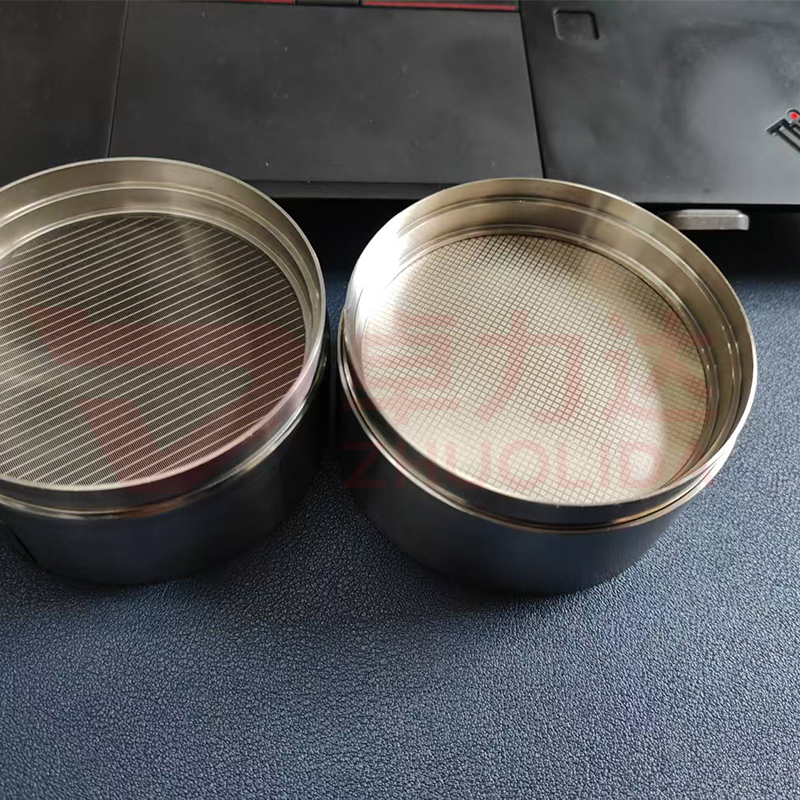
Microporous plate screens are porous structural plates manufactured using precision machining technology. Made primarily from stainless steel, nickel, and titanium alloys, they offer key advantages such as uniform mesh distribution, precise pore sizes, high load-bearing capacity, wear resistance, and ease of cleaning. They enable the stable production of micron-level microporous arrays and are suitable for a wide range of applications, including precision filtration, separation, and flow diversion. The fabrication of microporous plate screens is a critical process for achieving precise screen formation. Through tailored manufacturing techniques that balance pore precision with plate strength, these screens enable mass production with controlled quality, making them core components in high-end manufacturing, environmental protection, and medical fields. Manufacturers of microporous plate screens deeply understand industry needs, continuously optimize process systems and quality control, and drive the advancement of microporous plate screen processing toward ultra-fine pore sizes, complex arrays, and composite materials, providing high-quality precision screening solutions for various industries.
The microporous plate screen processing workflow is rigorous and precise, centered on four core stages: plate pretreatment, microporous forming, post-processing, and quality inspection, forming a standardized and traceable operational chain. Manufacturers strictly enforce end-to-end quality control, using this foundation to enhance pore precision and consistency. This ensures that every batch meets specifications for pore size, spacing, open area ratio, and sheet thickness, catering to the diverse needs of different industries.
The first step involves sheet material selection and pre-treatment, laying the groundwork for micro-perforated screen manufacturing. Manufacturers select appropriate sheet materials and thicknesses based on the application scenario: stainless steel for standard filtration, nickel alloys for corrosion-resistant applications, and titanium alloys for high-temperature and high-pressure environments. During the pre-treatment stage, cutting and surface grinding are performed to control sheet dimensional tolerances within ±0.1 mm and achieve a surface roughness of Ra ≤ 0.2 μm; This is followed by alkaline degreasing, ultrasonic cleaning, and acid pickling and activation to thoroughly remove surface oils, oxide layers, and impurities, ensuring the sheet surface is clean and free of defects, thereby guaranteeing the success of subsequent micro-perforation forming. Micro-perforated screen processing imposes even stricter pre-treatment requirements; ultra-thin sheets require an additional vacuum clamping process to prevent deformation during processing, which is also key to manufacturers ensuring product consistency.
The second step is the formation of the core micro-holes, which is a critical stage in the manufacturing of micro-perforated screens. Manufacturers of micro-perforated screen mesh select appropriate forming processes based on micro-hole parameters (pore diameter 0.1–100 μm, pore spacing, and open area ratio): laser processing is suitable for thin materials and small pore diameters; electrochemical etching is suitable for mass-produced metal micro-hole arrays; and electrical discharge machining (EDM) is suitable for hard, brittle materials and micro-holes with high aspect ratios. During processing, process parameters are precisely controlled: laser processing adjusts beam focal length and power; etching controls chemical solution concentration and temperature; and EDM fine-tunes electrode gap and pulse frequency. This ensures that micro-holes have clear contours, are free of burrs and deformation, and maintain a wall perpendicularity of ≥88°. Micro-perforated plate and screen manufacturing utilizes a fully automated processing and positioning system, controlling positional errors to within ±0.005 mm. This ensures the uniformity of the micro-hole arrays and fully demonstrates the core technical capabilities of the manufacturer.
The third step involves post-processing and finishing to optimize the performance of the micro-perforated plates and screens. After the microholes are formed, the manufacturer performs differentiated post-processing: metal microplate screens undergo electropolishing and passivation to remove burrs from the microhole edges, improve the surface finish of the hole walls, and enhance corrosion and wear resistance; non-metallic microplate screens are cleaned using plasma cleaning and high-pressure water jets to thoroughly remove debris and residual chemicals from the holes. Simultaneously, the screens undergo flatness calibration and dimensional correction to ensure the sheets are free of warping and that the micro-pore dimensions meet design specifications. For certain high-end products, additional nano-level surface treatments are applied to improve fluid throughput and screening accuracy. Through these refined post-processing steps, microporous plate screen manufacturing further enhances product performance to meet the stringent demands of high-end applications, which is also a key strategy for manufacturers to boost product competitiveness.
The fourth step involves comprehensive quality inspection throughout the entire microporous plate screen manufacturing process. Manufacturers are equipped with specialized equipment such as laser interferometers, scanning electron microscopes, pore size analyzers, and tensile testing machines to conduct thorough testing of indicators including pore size, pore spacing, open area ratio, surface roughness, mechanical properties, and corrosion resistance. Batch production follows a 100% sampling inspection model to strictly prevent non-conforming products from leaving the facility. The manufacturing process focuses on verifying pore precision, microscopic pore wall morphology, and array consistency. High-magnification electron microscopy is used to ensure pore walls are free of cracks and pinholes, guaranteeing stable and reliable product quality. Strict control at this stage is a critical safeguard for manufacturers to achieve large-scale production and a core prerequisite for microporous plate screens to be suitable for high-end applications.
Microporous plate screens have a wide range of applications. Leveraging their high precision, stability, and load-bearing capacity, they are deeply integrated into multiple industries—including environmental protection, healthcare, semiconductors, new energy, and fine chemicals—serving as core components for precision filtration and separation. Through precise process control, microporous plate screen manufacturing meets the stringent demands of various sectors. Relying on technological innovation, manufacturers provide customized products and solutions, driving technological upgrades and product iterations across multiple industries.
The environmental protection sector is a core application area for microporous screen plates, where high standards for filtration precision and durability are required. Microporous screen plates are widely used in industrial wastewater treatment, exhaust gas purification, and solid-liquid separation. For example, in industrial wastewater treatment, microporous screen plates can precisely intercept suspended impurities and pollutants in water, thereby improving wastewater treatment efficiency and compliance rates; exhaust gas purification screens can filter out harmful particulate matter to ensure emissions meet regulatory standards. The manufacturing of microporous plate screens can be customized to match the specific characteristics of wastewater and exhaust gases, tailoring pore sizes and materials to enhance filtration performance and service life. Manufacturers of microporous plate screens continuously optimize their processes to drive the green transformation of the environmental protection industry.
In the medical and healthcare sector, microporous plate screens play a vital role, particularly in precision medical devices and biomedical applications. They are used in hemodialysis, medical nebulization, biological sample filtration, and drug purification. For instance, microporous plate screens used in hemodialysis can precisely trap toxins and impurities in the blood, ensuring dialysis safety; The micron-level pores in medical nebulizer screens atomize medication into tiny droplets, enhancing treatment efficacy. Microporous plate screen manufacturing employs biocompatible processes to ensure screens are free of impurities and burrs, meeting medical industry standards. Manufacturers strictly control production environments to guarantee product safety and reliability.
In the semiconductor sector, microporous plate screens meet the industry’s demands for precision manufacturing. They are used for filtering semiconductor wafer cleaning solutions, photoresist filtration, and precision sieving during chip packaging. For example, photoresist filtration screens can trap microscopic particulate impurities, preventing them from affecting lithography accuracy and chip yield. Microporous plate screen manufacturing can produce sub-micron pore arrays, aligning with the semiconductor industry’s trends toward miniaturization and integration, and enhancing the precision and stability of chip manufacturing. Manufacturers of microporous plate screens continuously optimize their processes to meet the rapid iteration demands of the semiconductor industry.
The new energy sector has emerged as a key application area for microporous plate screens, meeting the rapid development needs of the new energy industry. These screens are used in hydrogen fuel cell bipolar plate flow channels, lithium battery electrode material sieving, and silicon wafer cleaning and filtration in the photovoltaic industry. For example, the microporous flow channels in fuel cell bipolar plates ensure uniform gas distribution, thereby improving power generation efficiency; lithium battery sieving screens precisely control the particle size of electrode materials, optimizing battery performance. The manufacturing of microporous plate screens allows for precise control of pore size and open area ratio, thereby optimizing fluid transport efficiency. Through process innovations, manufacturers have enhanced the screens’ resistance to high and low temperatures as well as corrosion, supporting the large-scale development of the new energy industry.
Furthermore, microporous screens are utilized in precision chemical processing, food processing, aerospace, and other sectors—such as the screening of chemical raw materials, food filtration, and fuel filtration for aircraft engines. Leveraging their high precision and stability, they overcome the application limitations of traditional screens. Guided by market demand, the microporous plate screen industry continues to overcome technical bottlenecks. Manufacturing is constantly advancing toward ultra-fine pore sizes, complex arrays, and composite materials. Manufacturers are strengthening R&D and industrial collaboration to drive the evolution of microporous plate screen technology toward greater efficiency, environmental sustainability, and intelligence. In the future, as the high-end manufacturing sector continues to expand, microporous screen mesh will find applications in more emerging fields, providing core support for precision filtration and separation across various industries.
Contact:赖先生
Phone:+86 18938693450
Tel:0755-2708-8292
Email:yw9@zldsmt.com
Add:深圳市宝安区福永镇新和村福园一路华发工业园A3栋
 Zhuolida