Welcome: Shenzhen Zhuolida Electronics Co.TD
Language:
 ∷
∷

∷
∷
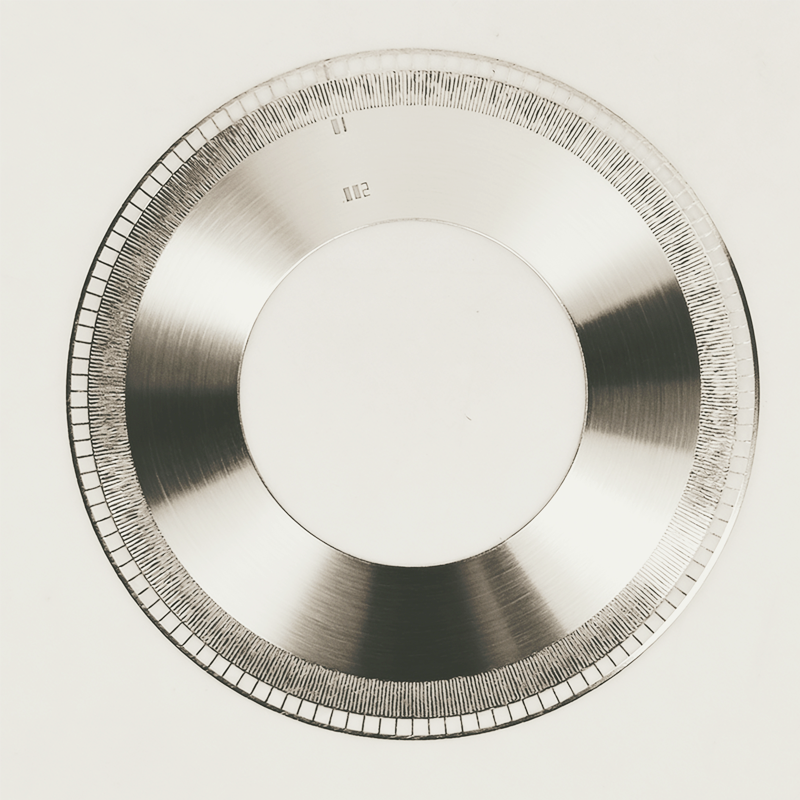
Precision Electroforming is a high-end manufacturing technology based on electrochemical deposition principles, capable of achieving micron-level or even nanometer-level precision forming. It is widely applied across multiple high-end manufacturing sectors. Precision electroforming factories leverage mature process systems and specialized technical capabilities to provide customized processing services for various industries. Meanwhile, precision Electroforming manufacturers continuously push the boundaries of application through ongoing technological innovation, meeting market demands for high-precision components.
The precision electroforming process is rigorous and orderly, with each step directly impacting the final product's accuracy and performance. This reflects the core competitiveness of both precision electroforming factories and manufacturers. The first step is core mold preparation, the foundation of precision electroforming. Based on product design specifications, molds with high-precision surfaces are fabricated using materials such as metal, plastic, or paraffin. Dimensional tolerances must be controlled at the micrometer level to establish a solid foundation for subsequent electroforming.
Following core mold preparation, the process proceeds to conductive treatment—a critical step in precision electroforming. For non-metallic cores, a conductive film is applied via spraying or chemical deposition to impart electrical conductivity. Metal cores undergo passivation treatment to form a protective layer, facilitating subsequent demolding. Precision electroforming manufacturers strictly control the thickness and uniformity of the conductive layer. They also optimize processing techniques to enhance the stability of the conductive layer, ensuring the smooth progression of the electroforming process.
The subsequent electroforming deposition stage constitutes the core process of precision electroforming. The prepared core mold serves as the cathode, while the electroformed metal (e.g., nickel, copper, nickel-cobalt alloy) functions as the anode. Both are immersed in a configured electroforming solution, with a stable direct current applied. Under the influence of the electric field, metal ions from the anode dissolve into the electroforming solution and subsequently deposit layer by layer onto the cathode core mold surface, forming a metal layer that perfectly mirrors the core mold's shape. Precision electroforming manufacturers meticulously control current density, electroforming temperature, and duration. They also optimize the electroforming solution formulation to ensure the purity, hardness, and precision of the deposited layer, achieving high-quality forming in precision electroforming.
Following electroforming deposition, the process proceeds to demolding and post-processing. Depending on the core mold material, methods such as thermal melting, chemical dissolution, or mechanical separation are employed to detach the electroformed layer from the core mold, yielding a preliminary electroformed product. Subsequent post-processing steps—including grinding, polishing, cleaning, and heat treatment—remove surface imperfections, enhance surface roughness and mechanical properties, and ensure the product meets customer specifications. Precision electroforming manufacturers establish stringent post-processing inspection standards, while specialized facilities are equipped with professional post-processing equipment to ensure every electroformed product meets qualification criteria.
Leveraging its ultra-high precision, complex structure forming capabilities, and material performance enhancement advantages, precision electroforming continues to expand its application domains, becoming an indispensable core processing technology in high-end manufacturing. In electronics, precision electroforming manufactures critical components like integrated circuit microbumps and 5G RF connector contacts. Manufacturers precisely meet miniaturization demands while achieving batch consistency through technological upgrades.
In the medical field, precision electroforming produces components like implantable bioelectrodes and vascular stent filters. Its forming precision and biocompatibility meet stringent medical product requirements. Manufacturers strictly adhere to medical industry standards, establishing clean production workshops to ensure products comply with medical-grade quality specifications.
In aerospace, precision electroforming manufactures high-end components like micro heat pipe capillary cores and turbine engine cooling diaphragms. Its resistance to extreme temperatures and wear ensures stable operation of aerospace equipment. Precision electroforming factories possess the capability to process complex three-dimensional structures. Manufacturers optimize electroforming processes to enhance product adaptability in extreme environments. Furthermore, precision electroforming finds extensive applications in optics, new energy vehicles, and other sectors, supporting technological advancement across industries.
With the rapid advancement of high-end manufacturing, market demands for precision electroforming's accuracy and efficiency continue to rise. Precision electroforming factories and manufacturers are continuously innovating. By introducing intelligent equipment, optimizing process flows, and developing new electroforming materials, they are elevating the technical standards of precision electroforming, expanding its application domains, and propelling the industry toward higher quality and greater efficiency. This provides robust support for the progress of high-end manufacturing.
Contact:赖先生
Phone:+86 18938693450
Tel:0755-2708-8292
Email:yw9@zldsmt.com
Add:深圳市宝安区福永镇新和村福园一路华发工业园A3栋
 Zhuolida