Welcome: Shenzhen Zhuolida Electronics Co.TD
Language:
 ∷
∷

∷
∷
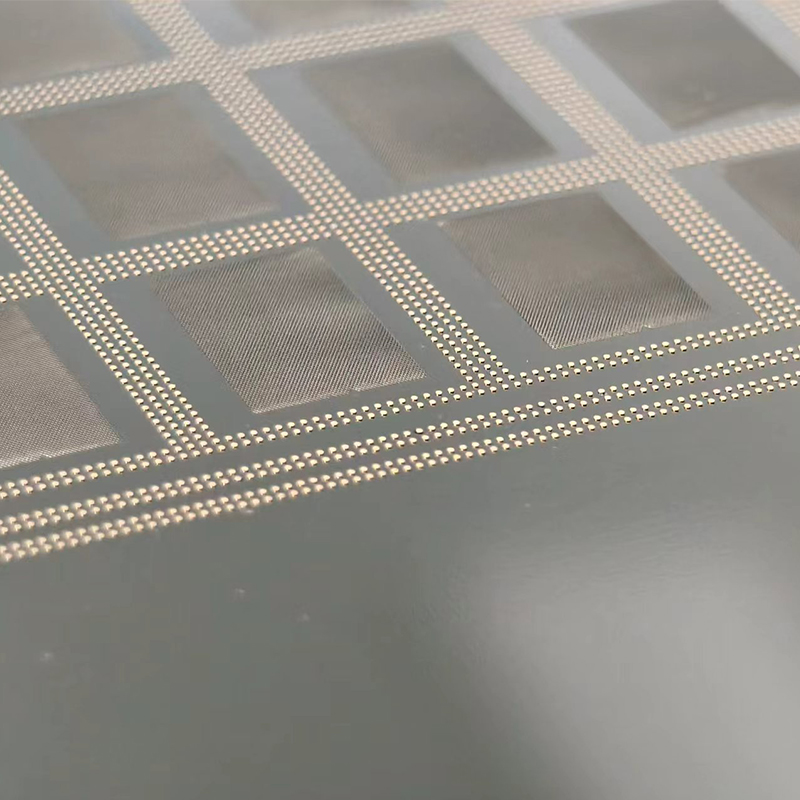
Chengdu electroforming is a high-precision manufacturing technology based on the principles of electrochemical deposition. Thanks to its high replication accuracy, flexible structural shaping capabilities and absence of mechanical stress, it has become a core supporting process for high-end manufacturing in Southwest China. As a high-end branch of this field, Precision Electroforming in Chengdu specialises in the manufacture of micron-level precision structures, whilst Chengdu Electroforming manufacturers utilise mature process systems to drive the industry’s transition towards greater refinement and standardisation. Together, these three elements form the core competitiveness of Chengdu’s electroforming industry.
The electroforming process in Chengdu is rigorous, with every step determining the product’s precision and performance. It is divided into five core stages. Chengdu precision electroforming further enhances precision control on this basis, whilst manufacturers strictly enforce standards throughout the entire process.
The first step is master model preparation and pre-treatment, which forms the foundation of Chengdu electroforming. Manufacturers produce master models based on product design drawings using CNC machining or 3D printing. Materials can be either metallic or non-metallic; metallic master models must be polished to a mirror finish, whilst non-metallic master models require conductive treatment. Pre-treatment involves ultrasonic cleaning, degreasing and rust removal to thoroughly eliminate surface oils and impurities, ensuring the master model’s surface is clean and providing a stable foundation for subsequent electroforming deposition. Chengdu Precision Electroforming places higher demands on master model accuracy, with geometric tolerances required to be controlled within 5μm.
The second step involves conductive treatment to prepare the surface for electroforming. In Chengdu electroforming processes, non-metallic master models require the formation of a uniform conductive layer through chemical silver plating, vacuum coating or graphite coating, whilst metal master models require passivation treatment and the application of a release agent. Chengdu electroforming manufacturers strictly control the thickness and uniformity of the conductive layer to prevent defects in subsequent deposition. In this stage, Chengdu precision electroforming utilises a vacuum sputtering process to ensure the conductive layer is uniform and dense, thereby enhancing the adhesion of the electroformed layer.
The third step is the core electroforming deposition process, which is the key stage in Chengdu electroforming. The pre-treated master model is used as the cathode, with the metal material serving as the anode; both are immersed in a specialised electroforming solution. Under the influence of direct current, metal ions are deposited uniformly onto the surface of the master model. Chengdu electroforming manufacturers precisely control parameters such as current density, temperature and time, enabling the deposited layer to be controlled to a thickness of ±2μm. Chengdu precision electroforming employs a low-current-density, extended-deposition process to reduce internal stresses, ensuring the hardness and uniformity of the electroformed layer to meet the requirements of high-end products.
The fourth step involves demoulding and post-processing to optimise product performance and precision. Once the electroformed layer reaches the designed thickness, non-destructive separation is achieved through thermal peeling, mechanical demoulding or chemical dissolution. Chengdu electroforming manufacturers employ electrolytic polishing and passivation to remove burrs, enhancing surface finish to Ra 0.1 μm whilst calibrating dimensional accuracy. Chengdu precision electroforming additionally incorporates nanoscale surface treatment to enhance product wear resistance and corrosion resistance, thereby extending service life.
The fifth step is quality inspection, which runs throughout the entire Chengdu electroforming process. Manufacturers utilise high-precision microscopes, coordinate measuring machines (CMMs) and laser diameter gauges to inspect parameters such as dimensional accuracy, surface roughness and metal layer density. Chengdu precision electroforming incorporates environmental simulation testing to verify product stability under extreme conditions, ensuring every item meets industry standards and customer requirements.
Thanks to its high precision and reproducibility, electroforming in Chengdu has a wide range of applications. Precision electroforming in Chengdu focuses on high-end applications, with manufacturers providing customised solutions covering sectors such as electronics, aerospace, medical devices and precision moulds.
The electronics sector represents the core application area for Chengdu electroforming. It is utilised in the manufacture of moulds for smartphone camera modules, metal mesh grilles for TWS earphones, semiconductor probes and micro-connectors. Chengdu precision electroforming enables the precise forming of 0.1mm micro-holes and ultra-fine circuits. Manufacturers in Chengdu supply core components for the miniaturisation of the electronics industry, contributing to the development of lighter, thinner and higher-performance electronic devices.
The aerospace sector imposes stringent requirements for precision and stability, and Chengdu electroforming plays a crucial role in meeting these demands. Chengdu electroforming is used to manufacture rocket engine combustion chambers, cooling air film orifice plates for turbine blades, and lightweight honeycomb structural panels. Chengdu precision electroforming ensures dimensional stability under extreme operating conditions; manufacturers strictly adhere to aerospace standards, optimise process parameters, and meet the demands of high-temperature and high-pressure environments to ensure the safe operation of equipment.
The medical device sector prioritises safety and precision, and Chengdu electroforming is well-suited to the industry’s needs. Chengdu electroforming is utilised for components such as the biting tooth modules of minimally invasive surgical forceps, cochlear implant electrode moulds, and biosensors. Chengdu precision electroforming achieves the fine forming of medical components, free from burrs and impurities. Manufacturers adhere to healthcare standards and implement clean production controls to ensure products are non-toxic and sterile, thereby supporting the precise development of the medical industry.
The precision mould sector represents a traditional area of strength for Chengdu electroforming. Chengdu electroforming manufactures optical lens inserts, master moulds for microfluidic chips, injection mould cores, and record pressing moulds. Chengdu precision electroforming can reproduce micron-level details with a replication accuracy of up to 10μm. Manufacturers provide high-hardness, high-wear-resistance moulds, enhancing mould service life and forming precision to meet the demands of precision manufacturing.
Furthermore, Chengdu electroforming is also applied in sectors such as new energy, automotive manufacturing and optical components. In the new energy sector, it is used for flow channel moulds for hydrogen fuel cell bipolar plates; in automotive manufacturing, for the reproduction of high-end vehicle emblems; and in the optical components sector, for metal mirrors and Fresnel lens moulds. Chengdu precision electroforming continues to expand its application boundaries, whilst manufacturers persist in technological innovation to drive the high-quality development of the city’s electroforming industry.
In the future, as high-end manufacturing undergoes upgrading, Chengdu electroforming will continue to overcome technical bottlenecks. Precision electroforming in Chengdu will evolve towards higher precision and more complex structures, whilst manufacturers will strengthen R&D and quality control to drive the industry’s transition towards intelligent and green manufacturing, thereby providing core support for the high-end manufacturing sector in Southwest China and across the nation.
Contact:赖先生
Phone:+86 18938693450
Tel:0755-2708-8292
Email:yw9@zldsmt.com
Add:深圳市宝安区福永镇新和村福园一路华发工业园A3栋
 Zhuolida