Welcome: Shenzhen Zhuolida Electronics Co.TD
Language:
 ∷
∷

∷
∷
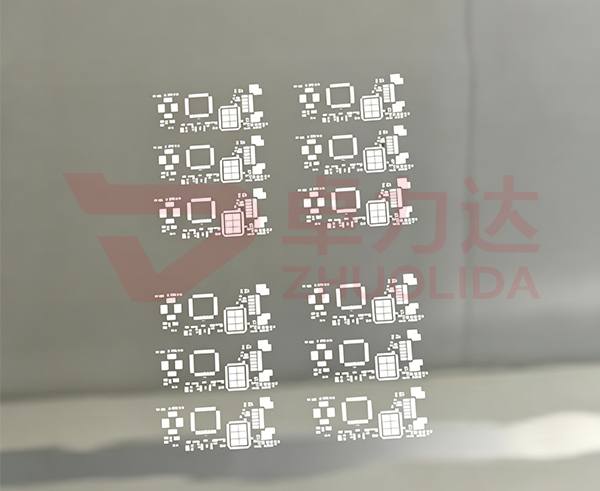
In high-end manufacturing fields such as precision electronics, optical devices, micro molds and new energy precision accessories, the machining accuracy of molds with micro and complex structures directly determines the molding quality and service performance of end products. Traditional mold processing technologies including mechanical cutting, electrical discharge machining and etching have obvious limitations when dealing with ultra-fine textures, thin-walled special-shaped structures and high-precision array structures, such as processing dead angles, rough surfaces, large dimensional deviations and stress deformation, failing to meet the micron-level production standards for precision molds. Electroformed mold manufacturing adopts the electrochemical metal deposition molding principle and realizes integrated molding through master mold replication. It features high replication accuracy, excellent surface finish, zero mechanical stress and 100% structural reduction, enabling the processing of ultra-precision complex mold structures that cannot be achieved by traditional technologies and serving as the core technology for the production of high-end micro molds. Electroformed mold manufacturing processing factories rely on dust-free and constant-temperature standardized production lines to establish a full-process refined management system. By optimizing deposition parameters according to different master mold materials and molding requirements, they effectively solve industrial problems such as distorted mold textures, surface particles and uneven wall thickness, adapting to the trial development and mass replication production of precision molds. Electroformed mold manufacturing manufacturers continuously focus on core electroforming technology, optimize metal grain deposition processes and post-treatment procedures, steadily improve the accuracy level and structural stability of electroformed molds, and provide reliable technical support for the supporting production of precision molds in various industries.
Electroformed mold manufacturing can achieve nanometer-level surface finish and micron-level dimensional accuracy, relying on a standardized, closed-loop and refined complete production process. The whole procedure includes nine core links: precision master mold design and production, master mold surface activation, conductive layer coating, controllable electroforming deposition, low-temperature stress relief, mold separation and demolding, precision trimming and polishing, dimensional accuracy detection and surface hardening protection. Master mold preparation is the basic and core procedure of electroformed mold manufacturing. The final accuracy, texture details and structural morphology of the mold are completely replicated based on the master mold, so the master mold is required to have ultra-high flatness, high dimensional accuracy and delicate surface texture. Precision grinding, optical-grade polishing and structural calibration can completely eliminate surface defects and dimensional errors of the master mold, ensuring the molding accuracy of electroformed molds from the source. Pre-surface activation effectively improves the adhesion of the conductive layer, avoids defects such as peeling, pinholes and loose grains during deposition, and guarantees a dense and uniform mold structure. In the electroforming stage, precise adjustment of current density, solution temperature and circulation flow rate enables orderly, dense and uniform deposition of metal grains, which perfectly replicates the fine textures and complex special-shaped structures of the master mold, producing molds with smooth inner walls, regular structures and no processing dead angles. Electroformed mold manufacturing processing factories strictly refine the parameter standards of each process, formulate exclusive process schemes for micro-texture molds, ultra-thin-walled molds and array micropore molds, and accurately meet the manufacturing requirements of various high-end precision molds. Electroformed mold manufacturing manufacturers continuously optimize master mold processing and conductive layer adhesion technologies, greatly reduce the defective rate of mold molding, and improve the dimensional consistency of batch products.
Controllable electrochemical deposition is the core procedure of electroformed mold manufacturing and the key link to ensure high-precision and high-stability mold molding. Different from the subtractive molding method of traditional mechanical processing, electroforming adopts an additive molding mode with layer-by-layer ion deposition, without mechanical extrusion, high-temperature thermal damage or cutting stress. The finished mold has a dense and uniform internal structure without hidden deformation risks, and is not prone to deformation, wear and accuracy attenuation after long-term repeated use. This technology can perfectly replicate complex structures such as micron-level micro textures, special-shaped curved surfaces, deep cavity thin walls and dense arrays, with an extremely high texture reduction rate. The surface requires no secondary grinding and trimming, directly meeting the usage standards of optical-grade and precision molding-grade molds. Meanwhile, the deposition thickness and structural hardness can be flexibly adjusted according to the working conditions of the mold, balancing molding accuracy and service life to adapt to high-frequency and high-precision mass production. Compared with traditional mold processing technologies, electroforming effectively shortens the mold development cycle, reduces the processing difficulty and production cost of complex molds, and adapts to the development and production of various customized precision molds. Electroformed mold manufacturing processing factories rely on intelligent solution circulation and current control systems to stabilize the deposition environment throughout the process and ensure high consistency in the structure, size and texture of each set of molds. Electroformed mold manufacturing manufacturers continuously iterate pulse deposition technology, optimize the arrangement structure of metal grains, and further improve the surface hardness, wear resistance and structural stability of molds.
Stress relief, non-destructive demolding and precision post-treatment are important closed-loop procedures to consolidate the finished product quality and extend the service life of electroformed molds. After electroforming deposition, semi-finished molds are sent to a low-temperature and constant-temperature chamber for long-term stress relief treatment, which eliminates subtle internal stress generated during molding, improves the structural strength and deformation resistance of molds, and avoids warpage, cracking and accuracy deviation in subsequent use. Subsequently, the flexible non-destructive demolding process is adopted to gently separate the electroformed mold from the original master mold, preventing texture damage, structural deformation and edge breakage caused by forced demolding and completely retaining the precise microstructures of the mold. After demolding, refined treatments such as precision polishing, texture calibration and edge trimming are carried out to further optimize the surface finish and structural accuracy of the mold. Meanwhile, surface hardening protection treatment is applied to improve the wear resistance, corrosion resistance and aging resistance of the mold, adapting to long-term high-frequency mass production working conditions. Finally, full-dimensional precision quality inspection is conducted through coordinate measuring instruments, image measuring instruments and roughness detectors to strictly screen defective products with dimensional deviation, texture distortion and surface flaws, ensuring all finished molds meet the standards. Electroformed mold manufacturing processing factories strictly implement piece-by-piece full inspection and batch sampling inspection systems, establish a complete quality traceability system, and fully guarantee stable and reliable mold quality. Electroformed mold manufacturing manufacturers continuously optimize post-treatment precision processing technology, refine accuracy calibration standards, and steadily improve the comprehensive performance of high-end precision molds.
Featuring high accuracy, excellent texture reduction, zero stress, strong wear resistance and capability of forming complex structures, electroformed mold manufacturing is widely applied in high-end fields including optical molds, precision electronic molds, micro-structure molds, new energy accessory molds and medical device precision molds. In the optical manufacturing field, it can produce molds for optical lens textures, gratings and light guide plate microstructures with high surface finish, meeting the light transmission and imaging accuracy requirements of optical devices. In the precision electronics field, it adapts to molding molds for micro components, micropore array molds and ultra-thin structure molds, effectively improving the molding accuracy and yield of micro electronic accessories. In the new energy industry, it can manufacture micro molds for new energy pole pieces, flow guide structure molds and precision sealing molds to meet the high-precision and high-stability production requirements of new energy equipment. In the medical device field, high-precision and high-cleanliness electroformed molds conform to the molding standards of medical micro accessories and precision pipeline accessories, adapting to the harsh working conditions of medical equipment. Electroformed mold manufacturing can customize and develop various complex precision molds according to different product structures, accuracy requirements and mass production conditions, flexibly adapting to new product trial development and large-scale mass production. Electroformed mold manufacturing processing factories realize standardized mass production of multi-specification and high-precision precision molds to quickly match customized production demands of various industries. Electroformed mold manufacturing manufacturers continuously iterate process parameters based on high-end working conditions of various industries, optimize mold molding accuracy and durability, and empower the quality upgrading of precision manufacturing industry.
In conclusion, electroformed mold manufacturing thoroughly breaks through the technical bottlenecks of traditional mold processing, including structural limitations, insufficient accuracy, stress deformation and low texture reduction, and has become an indispensable core technology in the modern high-end precision mold manufacturing system. The mature and stable electroformed mold manufacturing process can efficiently mass-produce high-precision, high-density and high-wear-resistance complex precision molds, fully meeting the production upgrading needs of high-end precision products in various fields. Adopting a refined, standardized and full closed-loop production management mode, electroformed mold manufacturing processing factories continuously output high-quality precision electroformed molds and ensure unified accuracy and reliable performance of batch products. Electroformed mold manufacturing manufacturers continuously focus on advanced Precision Electroforming technology, optimize deposition processes, accuracy control and post-treatment systems, improve the comprehensive service performance of electroformed molds, and provide solid process guarantee for the high-quality development of high-end manufacturing industries such as precision electronics, optical instruments, new energy and medical devices.
Contact:赖先生
Phone:+86 18938693450
Tel:0755-2708-8292
Email:yw9@zldsmt.com
Add:深圳市宝安区福永镇新和村福园一路华发工业园A3栋
 Zhuolida