Welcome: Shenzhen Zhuolida Electronics Co.TD
Language:
 ∷
∷

∷
∷
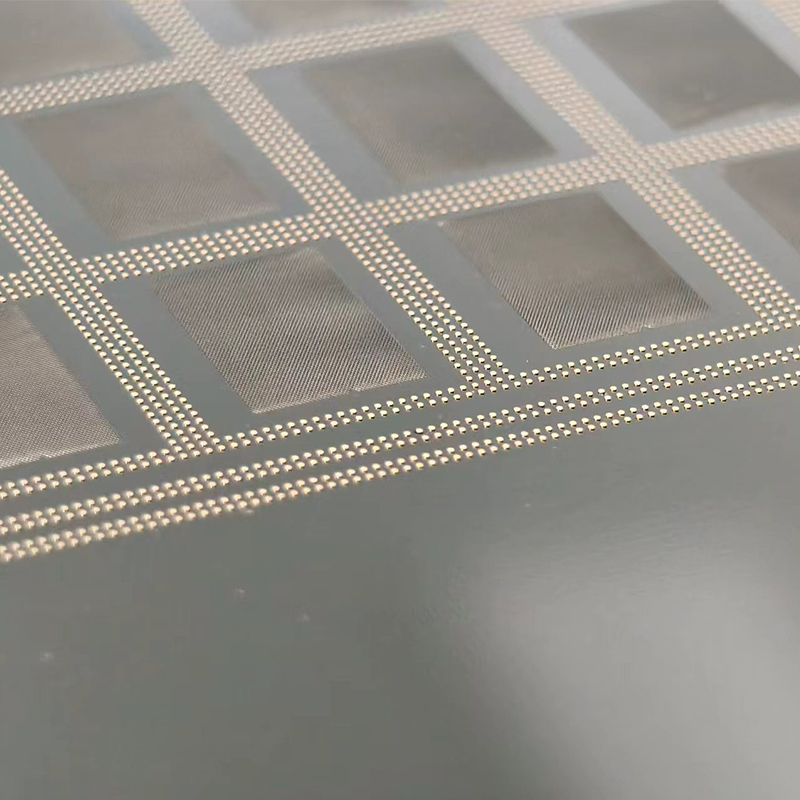
Electroforming of nickel-cobalt alloys is a high-precision manufacturing technique based on the principles of electrochemical deposition, utilising nickel-cobalt alloys as the core substrate. Owing to its key advantages of high hardness, strong corrosion resistance, excellent wear resistance and good toughness, it has become a critical process in fields such as high-end equipment manufacturing and precision instrumentation. Nickel-cobalt alloy Electroforming processing is the core method of implementation for nickel-cobalt alloy electroforming. By precisely controlling electroforming parameters, it achieves uniform deposition of nickel-cobalt alloy ions, forming high-precision components that meet design requirements and satisfy the demands of various industries for components operating under severe conditions. Manufacturers specialising in nickel-cobalt alloy electroforming have been deeply rooted in the industry for many years, focusing on the control of alloy composition ratios and processing precision. They are driving the development of nickel-cobalt alloy electroforming towards higher-end, more stable and more refined applications, providing core support for the high-end manufacturing sector.
The nickel-cobalt alloy electroforming process is rigorous and standardised. Taking into account the material properties of the alloy, it balances precision with the preservation of alloy performance. Specifically, it can be divided into five core steps, each of which directly determines the product’s quality and performance. Firstly, there is the design and preparation of the master mould, which forms the foundation for ensuring the quality of nickel-cobalt alloy electroforming. Manufacturers design precise master mould drawings based on the customer’s requirements for product dimensions, precision and performance. They fabricate the master mould using materials such as quartz, high-precision resin or special metals, employing processes such as laser etching and nano-level polishing to ensure the master mould’s surface is flat and smooth, with clear structural contours. with dimensional tolerances controlled within ±0.005 mm. This lays a solid foundation for the subsequent nickel-cobalt alloy electroforming deposition and is a key prerequisite for achieving high-precision forming in nickel-cobalt alloy electroforming.
The second step involves the pre-treatment of the master model, the key objective of which is to ensure the surface of the master model is conductive and meets cleanliness standards, thereby preventing any adverse effects on the uniform deposition of nickel-cobalt alloy ions and guaranteeing the machining accuracy of the nickel-cobalt alloy electroforming process. Manufacturers of nickel-cobalt alloy electroforming first employ high-precision cleaning methods, such as plasma cleaning and ultra-clean ultrasonic cleaning, to thoroughly remove oil, oxide layers and minute impurities from the surface of the master mould. This ensures the surface is free of any contaminants, thereby preventing any adverse effects on the adhesion and forming accuracy of the electroformed layer. Subsequently, vacuum sputtering or electroless nickel plating processes are employed to deposit an ultra-thin, uniform and dense conductive layer onto the surface of the original mould. The thickness of this conductive layer is strictly controlled, laying a solid foundation for the smooth execution of nickel-cobalt alloy electroforming and serving as a crucial step in enhancing product yield rates.
The third step is the core electroplating deposition stage, which is also the critical process in nickel-cobalt alloy electroplating. The manufacturer uses the pre-treated master mould as the cathode and selects nickel-cobalt alloy sheets as the anode, immersing both in a customised nickel-cobalt alloy electroplating bath. Through a closed-loop control system, core parameters such as current density, electrolyte temperature and deposition time are precisely controlled, The composition of the nickel-cobalt alloy is adjusted according to the product’s performance requirements, enabling the nickel-cobalt alloy ions to deposit uniformly layer by layer onto the surface of the original mould, forming a dense and uniform electroplated layer. Throughout this stage of nickel-cobalt alloy electroforming, the deposition process must be continuously monitored to ensure the electroformed layer has uniform composition and a regular structure, free from burrs and deformation, whilst also guaranteeing the product’s hardness and corrosion resistance. This represents the core technological competitiveness of nickel-cobalt alloy Electroforming manufacturers.
The fourth step involves demoulding and post-processing, primarily aimed at achieving the non-destructive separation of the nickel-cobalt alloy electroformed product from the master mould and optimising its performance. Nickel-cobalt alloy electroforming manufacturers employ gentle methods such as thermal separation and low-force mechanical demoulding to achieve non-destructive separation of the electroformed part from the master mould without damaging the product’s structure or compromising dimensional accuracy, achieving a first-pass yield of over 99%. Following demoulding, high-precision post-processing techniques such as electrolytic polishing and passivation are applied to remove minute burrs from the product surface, enhance surface finish, and further improve the nickel-cobalt alloy’s corrosion resistance and wear resistance, thereby extending the product’s service life. At the same time, the dimensions and precision of the nickel-cobalt alloy electroformed products are precisely calibrated to ensure compliance with industry standards; this is an indispensable final step in the nickel-cobalt alloy electroforming process.
The fifth step is the quality inspection stage, which runs throughout the entire nickel-cobalt alloy electroforming process and is key to ensuring product quality. Manufacturers of nickel-cobalt alloy electroforming utilise specialist equipment such as high-precision laser interferometers, scanning electron microscopes and hardness testers to comprehensively inspect the dimensional accuracy, surface roughness, alloy composition, hardness and corrosion resistance of the products, rigorously screening out any non-conforming items. Particular emphasis is placed on testing the uniformity of alloy composition and mechanical properties to ensure that every product meets the customer’s requirements; this is also a vital safeguard for achieving large-scale production in nickel-cobalt alloy electroforming.
Owing to its outstanding comprehensive performance, nickel-cobalt alloy electroforming is concentrated in high-end, demanding applications, deeply integrated into multiple high-end industries such as aerospace, precision instruments, new energy, and biomedicine. Nickel-cobalt alloy electroforming focuses on the forming of high-precision, high-performance components, with manufacturers providing customised solutions to support high-end equipment manufacturing across various industries.
The aerospace sector represents the core application area for nickel-cobalt alloy electroforming, where component hardness, corrosion resistance and precision are subject to extremely stringent requirements. Components produced via nickel-cobalt alloy electroforming are widely used in aircraft engine blades, satellite navigation structural components and core parts of aerospace instruments. Leveraging the high-temperature resistance and high toughness of nickel-cobalt alloys, these components ensure the stable operation of aerospace equipment under extreme operating conditions. Nickel-cobalt alloy electroforming enables the precise shaping of complex and intricate structures, meeting the aerospace industry’s demands for lightweight and high-precision equipment. Manufacturers specialising in nickel-cobalt alloy electroforming ensure products comply with the sector’s stringent standards by optimising process parameters.
In the field of precision instruments, nickel-cobalt alloy electroforming plays a pivotal role. Core components produced via this process are widely used in precision instruments, laser equipment and high-precision measuring instruments. Thanks to the high hardness, wear resistance and precision of nickel-cobalt alloys, the detection accuracy and operational reliability of these instruments are significantly enhanced. Nickel-cobalt alloy electroforming can replicate complex, precision structures, precisely meeting the miniaturisation and high-stability requirements of precision instruments. Manufacturers of nickel-cobalt alloy electroforming have optimised the electroforming process to meet the needs of the instrument industry, ensuring the stability of product performance.
In the new energy sector, nickel-cobalt alloy electroforming adapts to industry development needs and is widely used in products such as new energy battery electrodes and energy storage equipment components. Thanks to their excellent electrical conductivity and corrosion resistance, nickel-cobalt alloy electroforming enhances the charging and discharging efficiency and service life of batteries. By precisely controlling the thickness and composition of the electroformed layer, nickel-cobalt alloy electroforming processes can be tailored to meet the requirements of various types of new energy equipment. In response to the rapid development of the new energy industry, manufacturers of nickel-cobalt alloy electroforming have optimised their processing workflows and improved production efficiency, thereby providing support for the upgrading of the new energy sector.
In the biomedical sector, nickel-cobalt alloy electroforming is widely used in products such as micro-surgical instruments and biosensors due to its burr-free, impurity-free and biocompatible characteristics. It enables the precision forming of medical components, ensuring the safety and compatibility of medical equipment. Nickel-cobalt alloy electroforming strictly adheres to hygiene standards in the medical industry, implementing ultra-clean control measures during production to ensure products meet the requirements of the biomedical sector. Manufacturers of nickel-cobalt alloy electroforming customise products to meet the specific needs of the medical sector, thereby supporting the development of the biomedical industry towards precision medicine.
Furthermore, nickel-cobalt alloy electroforming is also applied in fields such as precision moulds and high-end cutting tools, where it is used to manufacture moulds and tools with high hardness and wear resistance, thereby extending product service life. Nickel-cobalt alloy electroforming processing remains market-driven, continuously overcoming technical bottlenecks, optimising processing workflows, and enhancing product quality and production efficiency. In the future, as high-end manufacturing continues to upgrade, nickel-cobalt alloy electroforming is set to achieve breakthroughs in more emerging fields. Manufacturers specialising in nickel-cobalt alloy electroforming will continue to strive to advance the technology towards higher precision and superior performance, thereby injecting new vitality into various high-end equipment industries.
Contact:赖先生
Phone:+86 18938693450
Tel:0755-2708-8292
Email:yw9@zldsmt.com
Add:深圳市宝安区福永镇新和村福园一路华发工业园A3栋
 Zhuolida