Welcome: Shenzhen Zhuolida Electronics Co.TD
Language:
 ∷
∷

∷
∷

Nickel mesh electroforming is a precision manufacturing process based on the principle of electrochemical deposition, using high-purity nickel as raw material to achieve precise molding of mesh structures. With core advantages such as uniform mesh holes, smooth hole walls, and strong corrosion resistance, it has become a key processing method in fields such as filtration, electronics, and new energy. As a high-end branch of nickel mesh electroforming, precision nickel mesh electroforming focuses on micrometer-level precision control, adapting to more demanding application scenarios. Manufacturers specializing in nickel mesh electroforming are deeply engaged in the industry, focusing on process optimization and quality control, promoting the refinement, scaling, and upgrading of nickel mesh electroforming to provide high-quality nickel mesh products for various industries.
The nickel mesh electroforming process is rigorous and standardized, combining the material characteristics of nickel with the processing difficulties of mesh structures, balancing versatility and precision requirements. The core process is divided into five major steps. Manufacturers strictly implement standardized operations throughout the entire process, while precision nickel mesh electroforming enhances precision control to ensure consistency and stability in every batch of products.
The first step is the design and pre-treatment of the original mold, which is essential for ensuring the quality of nickel mesh electroforming. Manufacturers design precise original mold drawings based on customer requirements for mesh hole size, hole diameter accuracy, and opening rate, using materials such as quartz, resin, or special metals to create the original mold. Through processes like laser etching and nanoscale polishing, they ensure a smooth surface and clear hole profile. The pre-treatment stage involves processes like ultrasonic cleaning, alkaline degreasing, and acid passivation to thoroughly remove oil, oxidation layers, and impurities from the surface of the original mold. Subsequently, a super-thin conductive layer is formed using vacuum sputtering or chemical nickel plating processes, laying a solid foundation for the uniform deposition of nickel mesh electroforming. Precision nickel mesh electroforming further enhances the accuracy of the original mold, ensuring that hole diameter tolerance is controlled within ±2μm.
The second step is the preparation of the electroforming solution and parameter adjustment, which provides core support for nickel mesh electroforming. Manufacturers select customized electroforming solutions primarily based on nickel sulfamate, adding additives such as boric acid and sodium saccharin, and precisely controlling the main salt concentration and solution purity to ensure uniform deposition of nickel ions and moderate internal stress within the electroforming layer. At the same time, they adjust the parameters of the electroforming equipment, achieving real-time monitoring of parameters through a closed-loop control system to avoid issues such as mesh hole deformation and uneven hole diameters. Precision nickel mesh electroforming further refines parameter control in this phase, maintaining current density and electrolyte temperature within more precise ranges, which is one of the core differences between precision nickel mesh electroforming and standard nickel mesh electroforming.
The third step is the core electroforming deposition phase, which is a key process in nickel mesh electroforming. Manufacturers use the pre-treated original mold as the cathode and a pure nickel plate as the anode, immersing them in the prepared electroforming solution. Through direct current action, nickel ions are deposited layer by layer on the surface of the original mold, forming a dense and uniform nickel mesh structure. The nickel mesh electroforming process requires full monitoring of the deposition process, adjusting the deposition time according to the required mesh thickness to ensure uniform electroforming layer thickness and regular mesh holes. Precision nickel mesh electroforming employs low current density and slow deposition rates, further improving hole precision and wall smoothness, avoiding issues such as burrs and deformation, which is a core technical competitive advantage for manufacturers.
The fourth step is demolding and post-processing, optimizing the performance and precision of the nickel mesh products. Once the electroforming layer reaches the design thickness, manufacturers use gentle methods such as thermal peeling or micro-mechanical demolding to achieve non-destructive separation of the nickel mesh from the original mold without damaging the mesh structure or affecting hole accuracy. After demolding, processes such as electrolytic polishing and passivation treatment are employed to remove tiny burrs from the mesh surface, enhancing surface smoothness and improving the corrosion and wear resistance of the nickel mesh. At the same time, the hole diameter, hole spacing, and flatness of the nickel mesh are precisely calibrated to ensure compliance with industry standards. Precision nickel mesh electroforming also adds nanoscale surface treatment to further optimize product performance, which is an indispensable finishing step in nickel mesh electroforming.
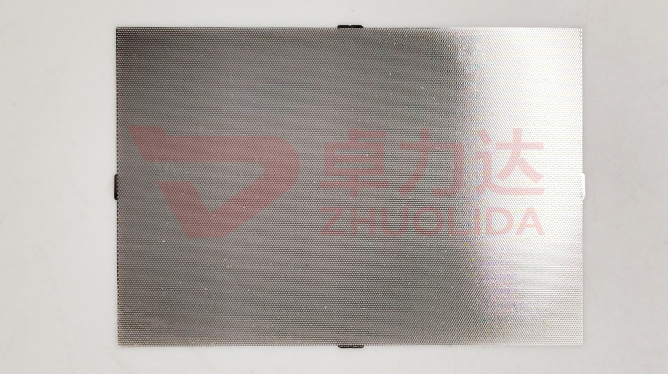
The fifth step is the quality inspection phase, which runs through the entire process of nickel mesh electroforming and is key to ensuring product quality. Manufacturers use high-precision laser interferometers, scanning electron microscopes, and coordinate measuring machines to conduct comprehensive inspections of metrics such as hole diameter accuracy, uniformity of mesh thickness, and consistency of hole spacing, strictly screening out non-conforming products. Precision nickel mesh electroforming includes environmental simulation testing, focusing on the replication accuracy of mesh holes and mechanical properties to ensure that products are suitable for high-end application scenarios, which is also an important guarantee for manufacturers to achieve scaled production of nickel mesh electroforming.
Nickel mesh electroforming has a wide range of applications, covering multiple industries such as semiconductors, new energy, biomedicine, and precision filtration. Precision nickel mesh electroforming focuses on high-end demanding scenarios, and manufacturers provide a full range of nickel mesh products to support the development of various industries.
In the semiconductor field, nickel mesh electroforming is a core application scenario, requiring extremely high mesh hole precision and consistency. Nickel meshes produced through nickel mesh electroforming are widely used in processes such as photoresist filtration and wafer cleaning fluid filtration. With a uniform mesh structure, they precisely intercept tiny impurities, ensuring chip yield. Precision nickel mesh electroforming can achieve controllable hole diameters from 0.1 to 500μm, adapting to the refined needs of the semiconductor industry. Manufacturers optimize processes to ensure compliance with verticality standards for mesh hole sidewalls, avoiding taper issues common in traditional processes.
In the new energy sector, nickel mesh electroforming plays an important role. Nickel meshes produced through nickel mesh electroforming are widely used in new energy battery electrodes, electrolyte filtration, and photovoltaic component protection. With good conductivity and corrosion resistance, they enhance battery charge and discharge efficiency and lifespan. Precision nickel mesh electroforming optimizes fluid throughput by precisely controlling mesh hole size and opening rate, reducing clogging risks. Manufacturers customize different specifications of nickel meshes to meet the diverse usage needs of lithium batteries, photovoltaics, and other scenarios.
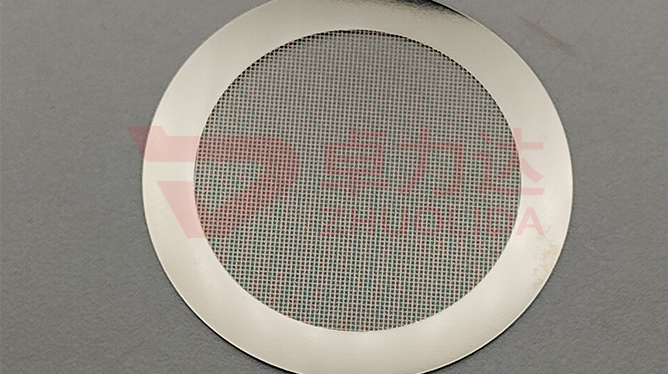
In the biomedicine field, products from nickel mesh electroforming accurately meet industry demands. Nickel meshes produced through nickel mesh electroforming are widely used in biological sample filtration, drug purification, and protection of micro-medical devices. With characteristics such as no burrs and no impurities, they ensure the safety of biomedical products. Precision nickel mesh electroforming strictly adheres to hygiene standards in the medical industry, implementing ultra-clean control during the production process. Manufacturers customize sterile-grade nickel meshes to support the biomedical industry in advancing towards precision medicine.
Additionally, nickel mesh electroforming is applied in fields such as precision chemicals and environmental filtration, used for ink and pigment selection, wastewater treatment, etc. With advantages such as strong corrosion resistance and stable flux, it enhances filtration efficiency and product purity. Nickel mesh electroforming continuously focuses on market demand, breaking through technical bottlenecks, and advancing towards higher precision. Manufacturers strengthen technical research and development, pushing nickel mesh electroforming technology towards more environmentally friendly, efficient, and intelligent directions, injecting new vitality into various high-end equipment industries.
Contact:赖先生
Phone:+86 18938693450
Tel:0755-2708-8292
Email:yw9@zldsmt.com
Add:深圳市宝安区福永镇新和村福园一路华发工业园A3栋
 Zhuolida