Welcome: Shenzhen Zhuolida Electronics Co.TD
Language:
 ∷
∷

∷
∷
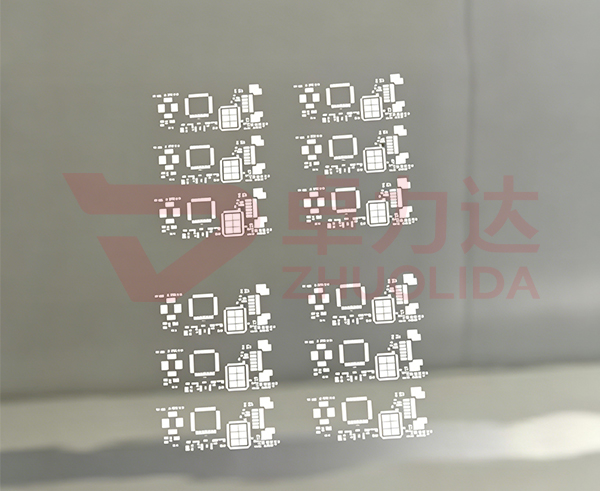
1. Overview of Special-Shaped Electroformed Parts
In the field of high-end precision manufacturing, traditional mechanical processing cannot realize the integrated forming of complex curved surfaces, special-shaped hollow structures and micro-structured special-shaped components. In contrast, special-shaped electroformed parts feature strong forming plasticity, high dimensional accuracy, zero mechanical processing stress and excellent structural integrity, filling the manufacturing gap of non-standard special-shaped precision parts. Capable of reproducing various complex micro and macro special-shaped structures and breaking the shape limitations of traditional mold and cutting processes, special-shaped electroformed parts have become core accessories in precision electronics, precision instruments, aerospace and other industries. Special-shaped electroformed parts processing adopts the electro-deposition forming principle and applies customized processes to meet the production requirements of various non-standard special-shaped structures. Different from the processing mode of standard parts, it boasts outstanding customized adaptation capabilities. Professional special-shaped electroformed parts processing manufacturers in the industry rely on mature customized process systems to accurately produce various complex special-shaped structures and ensure the accuracy and operational stability of finished parts.
Compared with traditional processing technologies, the biggest advantage of special-shaped electroformed parts processing is that it does not require integral cutting or stamping shaping. It forms parts layer by layer through metal ion electrodeposition, which can perfectly reproduce various irregular special-shaped, hollow, thin-walled and concave-convex composite structures. Without extrusion and tensile damage to parts, it fundamentally guarantees the structural integrity and dimensional accuracy of special-shaped electroformed parts. The complete processing flow has been optimized for the structural particularity of special-shaped products, including six core procedures: custom mold preparation, mold surface treatment, conductive activation deposition, special-shaped structure Precision Electroforming, non-destructive demolding and shaping, and precision testing, with each procedure precisely adjusted according to the forming difficulties of special-shaped structures.
2. Complete Processing Flow of Special-Shaped Electroformed Parts
Custom mold preparation is the primary basic procedure of special-shaped electroformed parts processing. Different from regular molds for standard parts, molds for special-shaped electroformed parts are customized according to non-standard drawings and structural parameters to accurately reproduce complex curved surfaces, special-shaped holes and irregular contours. Mold materials including resin, metal and silica gel can be selected according to precision requirements to ensure that mold textures and structural dimensions fully match the finished special-shaped electroformed parts. Formal special-shaped electroformed parts processing manufacturers conduct pre-production mold precision calibration to correct tiny structural deviations, avoid finished product deformation and dimensional errors from the source, and lay a solid foundation for subsequent forming.
Mold surface treatment and conductive activation are key procedures to ensure the uniform forming of special-shaped electroformed parts. Customized special-shaped molds usually have fine textures and surface impurities, which need degreasing cleaning, precision polishing and defect repair to achieve a clean and flat surface. For non-metallic special-shaped molds, a uniform conductive coating is sprayed on the surface to form a consistent conductive layer on complex curved surfaces, corners and hollow areas, preventing local material accumulation, material shortage and uneven thickness during electrodeposition. Meanwhile, activation solution treatment is applied to activate surface active sites, enabling metal ions to adhere evenly to every detail of the special-shaped structure and ensuring regular structure and complete details of special-shaped electroformed parts.
Electrodeposition precision forming is the core procedure of special-shaped electroformed parts processing. The treated special-shaped mold is placed as a cathode in an electroforming tank, with special electrolyte deployed according to material requirements. Core parameters including current density, electrolyte temperature and stirring speed are accurately set. For vulnerable forming positions such as corners, thin walls and hollow parts of special-shaped structures, zoned parameter control is adopted to dynamically adjust the deposition rate, so that metal ions can be evenly deposited on complex special-shaped structures to form complete special-shaped electroformed parts. This technology supports micron-level precision forming and reproduces various complex non-standard structures, which is irreplaceable by traditional processing methods. High-quality special-shaped electroformed parts processing manufacturers adopt intelligent parameter control systems to monitor the deposition status in real time and fine-tune parameters for difficult forming positions, greatly improving the qualified rate of finished products.
Post-forming non-destructive demolding and precision shaping directly determine the final quality of special-shaped electroformed parts. Due to the complex and irregular contours of special-shaped structures, demolding is prone to tensile deformation and corner damage. Therefore, flexible non-destructive demolding technologies are adopted according to mold materials and structural characteristics to separate parts from molds gently and maximize the integrity of special-shaped structures. After demolding, fine polishing, corner trimming and stress relief treatments are carried out to remove surface burrs and deposition residues and correct slight deformation, so as to optimize the surface finish and structural stability of special-shaped electroformed parts. Professional special-shaped electroformed parts processing manufacturers formulate exclusive post-treatment schemes for different special-shaped structures to avoid secondary damage caused by conventional shaping processes to non-standard structures.
Precision testing is the final quality control procedure. Targeting the non-standard characteristics of special-shaped electroformed parts, comprehensive testing methods including 3D scanning, dimensional tolerance detection, structural integrity verification and mechanical performance testing are adopted to accurately check the dimensional accuracy, wall thickness uniformity and structural strength of complex special-shaped structures. Defective products with tiny deviations and structural flaws are eliminated to ensure all finished parts meet the assembly and application requirements of high-end equipment.
3. Main Application Fields of Special-Shaped Electroformed Parts
Benefiting from excellent non-standard forming capabilities, special-shaped electroformed parts are widely used in multiple high-end precision manufacturing fields. In the precision electronics industry, special-shaped electroformed parts are applied to special-shaped shielding covers, micro special-shaped conductive terminals and non-standard circuit substrates, meeting the production needs of miniaturized and special-shaped electronic equipment and ensuring stable and accurate operation of electronic devices. In the precision optics industry, they are used to produce special-shaped optical gratings, special-shaped reflectors and micro optical special-shaped accessories, satisfying the high-precision requirements of high-end optical instruments and testing equipment for special structural components.
In the aerospace and high-end equipment industry, special-shaped electroformed parts serve as non-standard sensing accessories, special-shaped thin-walled precision components and aerospace micro special-shaped connectors. Featuring zero processing stress and high precision, they adapt to the strict working conditions of high-end equipment. In the medical precision equipment industry, various special-shaped microneedles, medical special-shaped filter screens and minimally invasive equipment accessories are precisely formed through special-shaped electroformed parts processing, meeting the high standards of cleanliness, accuracy and safety required for medical equipment.
4. Industry Development Summary
In summary, special-shaped electroformed parts processing is a core technology for non-standard precision manufacturing, which effectively solves the industry pain points of difficult forming, low accuracy and easy deformation of complex special-shaped precision components. As equipment in various industries develops toward precision, customization and specialization, the market demand for special-shaped electroformed parts continues to grow, driving the continuous upgrading and optimization of electroforming technology. In the future, dedicated special-shaped electroformed parts processing manufacturers will keep optimizing customized processing technologies, improving the forming accuracy and production efficiency of complex special-shaped structures, providing strong technical support for the high-end non-standard precision manufacturing industry and boosting the iterative upgrading of high-end precision equipment in various fields.
Contact:赖先生
Phone:+86 18938693450
Tel:0755-2708-8292
Email:yw9@zldsmt.com
Add:深圳市宝安区福永镇新和村福园一路华发工业园A3栋
 Zhuolida