Welcome: Shenzhen Zhuolida Electronics Co.TD
Language:
 ∷
∷

∷
∷
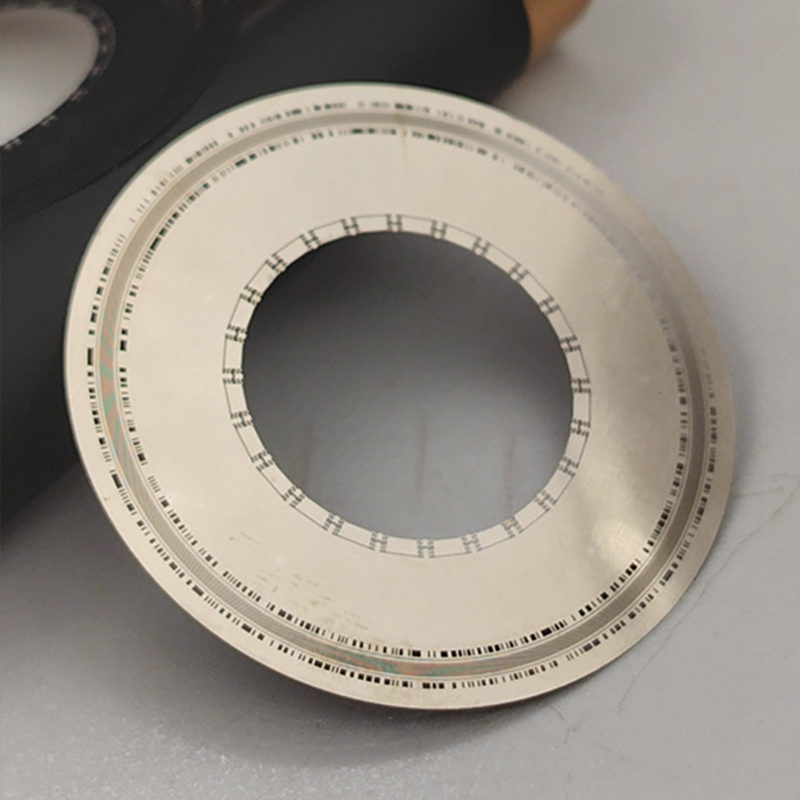
Electroforming is a high-end manufacturing technology that utilises the principles of electrochemical deposition to achieve the precision shaping of metallic materials. With its key advantages of high shaping accuracy, the absence of mechanical damage, strong structural replication capabilities, and the ability to accommodate complex structures, it has become a vital pillar of high-end equipment manufacturing and the production of precision components. Precision Electroforming, as a high-end branch of the electroforming process, focuses on micrometre- and even nanometre-level precision control, catering to more demanding application scenarios. Manufacturers specialising in electroforming have deepened their expertise in the industry, concentrating on process optimisation and quality control. They are driving the evolution of electroforming towards greater refinement, scalability and intelligence, providing high-quality electroformed products and technical support to various industries.
The electroforming process follows a rigorous and standardised workflow. By incorporating the common characteristics of various metal substrates, it balances versatility with specificity. The core process comprises five key stages. Manufacturers strictly adhere to standardised operations throughout the entire process, whilst precision electroforming further enhances precision control to ensure the consistency and stability of every batch of products, thereby meeting the diverse requirements of different industries.
The first step involves master mould design and pre-treatment, which forms the foundation for ensuring the quality of the electroforming process. Manufacturers produce master moulds using technologies such as CNC engraving and laser etching, in accordance with the client’s product design requirements. Materials may be either metallic or non-metallic; metallic master moulds must be polished to a mirror finish, whilst non-metallic master moulds require prior conductive treatment. During the pre-treatment stage, processes such as ultrasonic cleaning, degreasing and rust removal are employed to thoroughly eliminate oil, oxidation layers and impurities from the master mould’s surface. This ensures a clean, flawless surface, enhances the adhesion of the subsequent electroplated layer, and lays a solid foundation for the uniform deposition of the electroplated layer. Precision electroforming places higher demands on the accuracy of the master mould, with geometric tolerances required to be controlled within 5μm, thereby providing the necessary prerequisites for high-precision electroformed parts.
The second step is the conductive treatment, which creates the necessary conditions for the smooth execution of the electroforming process. For non-metallic master moulds, Electroforming manufacturers employ processes such as electroless plating and vacuum sputtering to form a uniform and dense conductive layer, ensuring that metal ions can be deposited evenly; for metallic master moulds, passivation treatment and the application of a release agent are required to prevent the electroformed layer from adhering to the master mould. The conductive treatment in precision electroforming is more meticulous; vacuum sputtering is employed to enhance the density of the conductive layer, whilst the thickness tolerance of the conductive layer is strictly controlled to avoid compromising the subsequent precision deposition results. This is also one of the key differences between precision electroforming and standard electroforming processes.
The third step is the core electroforming deposition stage, which is also the critical process in the electroforming procedure. The electroforming manufacturer uses the pre-treated master mould as the cathode and selects suitable metals such as pure nickel, copper or titanium alloys as the anode. These are immersed in a customised electroforming solution, and under the influence of direct current, metal ions are deposited uniformly layer by layer onto the surface of the master mould. The electroforming process requires precise control of parameters such as current density, electrolyte temperature and deposition time to ensure that the electroformed layer is dense in structure, uniform in dimensions, free from burrs and free from deformation. Precision electroforming employs a closed-loop control system to monitor the deposition process in real time throughout the entire procedure. It utilises low current density and slow deposition rates to reduce internal stresses within the electroformed layer, ensuring forming accuracy down to the micrometre level; this represents the core technological competitiveness of electroforming manufacturers.
The fourth step involves demoulding and post-processing to optimise the performance and precision of the electroformed product. Once the electroformed layer reaches the designed thickness, manufacturers employ gentle methods such as thermal separation or precision mechanical demoulding to achieve non-destructive separation of the electroformed part from the original mould, thereby preventing damage to the product’s structure. Following demoulding, the electroforming process employs techniques such as electrolytic polishing and passivation to remove surface burrs, enhance surface finish, and improve the product’s corrosion and wear resistance. Precision electroforming further incorporates nanoscale surface treatments to enhance product accuracy and surface quality, thereby extending the product’s service life. Concurrently, both processes require precise calibration of dimensional accuracy to ensure compliance with industry standards, which constitutes an indispensable final stage of the electroforming process.
The fifth step is the quality inspection phase, which runs throughout the entire electroforming process and is key to ensuring product quality. Electroforming manufacturers utilise specialised equipment such as high-precision microscopes, coordinate measuring machines and hardness testers to comprehensively inspect indicators including dimensional accuracy, surface roughness and metal layer density. Electroforming processes focus on inspecting dimensional consistency and basic mechanical properties, whilst precision electroforming processes focus on inspecting micron-level precision and surface finish. Non-conforming products are rigorously screened out to ensure that every single product meets customer requirements; this is also a vital safeguard for electroforming manufacturers to achieve large-scale production.
Electroforming has a wide range of applications, spanning multiple high-end industries including electronics, aerospace, biopharmaceuticals, precision instruments and precision moulds. Precision electroforming focuses on high-end, demanding applications, whilst manufacturers offer a full range of electroformed products and customised solutions, providing robust support for the development of various industries and driving the transformation and upgrading of high-end manufacturing.
The electronics sector represents the core application area for both electroforming and precision electroforming. Electroforming is utilised to manufacture fundamental precision components such as electronic connectors, chip packaging components and electronic heat sinks, ensuring stable signal transmission and efficient heat dissipation; precision electroforming, meanwhile, is employed to produce high-end components such as semiconductor probes, micro-sensors and chip masks, enabling the formation of structures at the micrometre and even nanometre scale. In response to the evolving demands of the electronics industry, electroforming manufacturers are continuously optimising their processes to enhance product precision and production efficiency, thereby supporting the trend towards miniaturisation and high performance in electronic devices.
In the aerospace sector, the electroforming process plays an irreplaceable role. The electroforming process is used to manufacture essential components such as aeroengine parts and satellite structural components; thanks to its ability to avoid mechanical damage, it ensures the stable performance of these components. Precision electroforming, meanwhile, is employed to produce core components for aerospace instruments, micro-navigation structural parts and aeroengine blades, meeting the demands of ultra-high precision and extreme operating conditions. Electroforming manufacturers strictly adhere to aerospace industry standards and optimise precision electroforming processes to ensure products meet the operational requirements of high-temperature, high-pressure and highly corrosive environments.
In the biomedical sector, the application of electroforming and precision electroforming processes precisely meets industry requirements. Electroforming is used to manufacture basic conductive components for medical devices and precision filtration components; precision electroforming is used to manufacture micro-surgical instruments, biosensors and implantable medical components. With their burr-free, impurity-free and biocompatible characteristics, these processes ensure the safety and suitability of medical devices. Electroforming manufacturers strictly adhere to the hygiene standards of the medical industry and implement cleanroom controls to ensure products meet the requirements of the biomedical sector.
Furthermore, electroforming is also applied in fields such as precision moulding and new energy, where it is used to manufacture mould inserts and new energy battery electrodes; precision electroforming, meanwhile, is used to produce high-precision moulds, optical components and micro-gears, thereby expanding the scope of electroforming applications. Electroforming remains market-driven, continually overcoming technical bottlenecks. Precision electroforming continues to advance towards ever-higher levels of accuracy, whilst manufacturers are strengthening their R&D efforts to drive the process towards greater environmental sustainability, efficiency and intelligence. In the future, as high-end manufacturing undergoes upgrading, electroforming will achieve breakthroughs in more emerging fields, injecting new vitality into various high-end equipment industries.
Contact:赖先生
Phone:+86 18938693450
Tel:0755-2708-8292
Email:yw9@zldsmt.com
Add:深圳市宝安区福永镇新和村福园一路华发工业园A3栋
 Zhuolida