Welcome: Shenzhen Zhuolida Electronics Co.TD
Language:
 ∷
∷

∷
∷
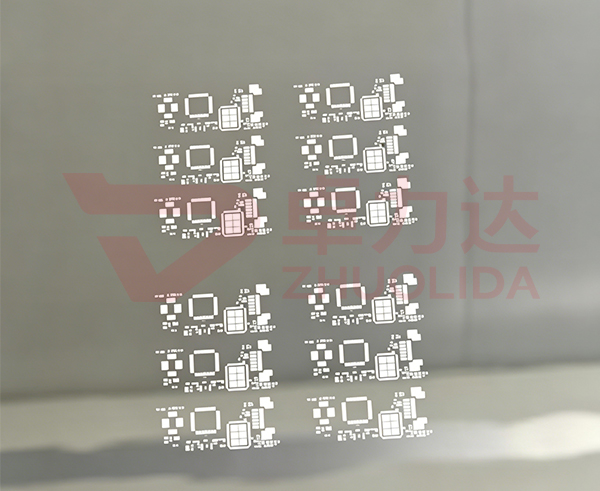
With the continuous miniaturization and high-precision development of industries such as optical detection, precision instruments, laser equipment, and photoelectric sensing, core structures including optical path control, beam limiting and aperture positioning have raised higher requirements for the accuracy, flatness and structural consistency of supporting components. As core precision components for restricting beam aperture, adjusting luminous flux and blocking stray light, metal aperture diaphragms directly determine the imaging accuracy and detection stability of optical equipment in terms of aperture roundness, plate flatness and wall thickness uniformity. Traditional stamping and laser cutting processes for machining aperture diaphragms tend to cause defects such as aperture burrs, edge ablation, plate deformation, residual stress and aperture eccentricity, failing to meet micron-level optical assembly standards. Metal aperture diaphragms are integrally formed through electroforming additive manufacturing based on the directional deposition of metal grains, featuring high aperture roundness, smooth inner walls, burr-free surface and stress-free deformation, making them the preferred accessories for high-end optical equipment.Metal aperture diaphragm processing adopts an ultra-clean and constant-temperature electroforming process to solve typical technical problems of ultra-thin diaphragms including easy deformation, uneven aperture and rough edges, catering to the needs of customized small-batch production and large-scale precision mass production. Metal aperture diaphragm electroforming processors continuously optimize electroforming solution ratio, pulse deposition parameters and microstructure compensation technology, improve the forming accuracy and structural stability of aperture diaphragms, and provide reliable technical support for the upgrading of the optoelectronic precision manufacturing industry.
Metal aperture diaphragms are mostly ultra-thin special-shaped structures with tiny apertures, high concentricity requirements and fragile thin plates, which allow extremely low machining tolerance and require stringent standards for production environment and process control. The entire electroforming process is completed in a closed-loop manner in a hundred-level ultra-clean, constant-temperature and light-shielded workshop, covering nine core procedures: precision master mold preparation, substrate ultra-clean activation, conductive film coating, pulse electroforming deposition, stress relief annealing, non-destructive demolding, precision polishing modification, full-dimensional precision inspection, and anti-static vacuum packaging. During production, current density, solution temperature and circulation rate are dynamically adjusted in real time to precisely control the growth rhythm of metal grains and avoid processing defects such as elliptical apertures, rough inner walls, plate warpage and uneven thickness. Metal aperture diaphragms are applicable to various materials including nickel alloy, pure nickel and copper alloy, with accurate light transmission apertures and excellent light shielding performance, widely used in laser equipment, optical instruments, photoelectric sensors and other fields. Metal aperture diaphragm processing adopts three levels of processing standards (civil optical grade, industrial laser grade and scientific research precision grade) according to different working conditions of equipment, and adjusts deposition thickness and microstructure accuracy parameters in a targeted manner. Metal aperture diaphragm electroforming processors have established a dedicated electroforming process database for optical components, solidifying processing parameters for diaphragms with different apertures and thicknesses to ensure highly consistent concentricity, flatness and light transmission stability of mass-produced products.
Precision master mold preparation and ultra-clean pretreatment are pre-core procedures that guarantee the quality of metal aperture diaphragm processing. The aperture accuracy and concentricity of diaphragms are completely determined by the master mold structure. Before production, high-precision negative master molds are designed according to optical drawings, and standard aperture and outline contours are reproduced through precision photolithography and micro-carving to ensure regular mold structure and zero dimensional deviation. Master molds are fabricated from high-flatness, low-expansion and high-stability substrates, which undergo multi-stage degreasing, ultrapure water rinsing and plasma activation to thoroughly remove surface oil stains, dust and oxide impurities. The ultra-clean and smooth mold surface lays a solid foundation for uniform metal deposition. Microstructure compensation design is adopted for tiny aperture structures to avoid tiny dimensional deviation during electroforming deposition. Metal aperture diaphragms realize micron-level control of aperture roundness and concentricity based on high-precision master mold reproduction. Metal aperture diaphragm electroforming processors refine the preparation and maintenance procedures of master molds to prevent batch defective products caused by mold defects.
Conductive film coating and pulse electroforming deposition are the core forming procedures of metal aperture diaphragm processing. The pretreated master mold is coated with an ultra-thin and uniform conductive film in an ultra-clean workstation to form a dense and uniform conductive substrate, which ensures uniform adhesion and growth of metal grains and avoids local deposition fracture, uneven thickness and incomplete apertures. The master mold is placed in a sealed constant-temperature electroforming tank filled with low-stress electroforming solution dedicated for optical components. High-precision pulse current control technology is applied to enable slow, dense and ordered stacking growth of metal grains. The layered intermittent deposition mode effectively releases forming stress, delivering diaphragm plates with flat surfaces, vertically smooth aperture inner walls and no grain looseness or concave-convex defects. This additive manufacturing process involves no mechanical contact or high-temperature thermal damage, producing finished products free of residual stress, structural deformation and aperture offset during long-term operation. Metal aperture diaphragms require no secondary polishing after integral forming and can be directly adapted to precision optical path assembly requirements. Metal aperture diaphragm electroforming processors continuously optimize pulse deposition parameters to solve industrial pain points such as uneven deposition and rough edges of tiny apertures.
Stress annealing, non-destructive demolding and surface modification are key procedures to improve the service performance of metal aperture diaphragm processing. After the metal deposition reaches the preset thickness, the semi-finished products are subjected to vacuum constant-temperature stress annealing to completely eliminate subtle internal stress generated during metal deposition, greatly improving the structural stability, deformation resistance and flatness of diaphragms, and preventing structural offset caused by equipment vibration and temperature difference changes during subsequent operation. A mild non-destructive demolding process is adopted to separate diaphragms from master molds stably, avoiding aperture stretching, edge damage and plate wrinkles caused by forced demolding. After demolding, ultra-clean cleaning, micro-polishing and anti-oxidation passivation are carried out to remove trace surface impurities, optimize the finish of aperture inner walls, and improve the light shielding stability and weather resistance of products. With optimized stress treatment, metal aperture diaphragms can adapt to long-term high-frequency and continuous working conditions of precision optical equipment. Metal aperture diaphragm electroforming processors finely control the entire post-processing process to comprehensively improve the optical adaptability and service life of aperture diaphragms.
Full-dimensional precision inspection and ultra-clean packaging are the final quality control links of metal aperture diaphragm processing. High-precision image detectors, aperture roundness testers, laser flatness detectors and concentricity testing equipment are used to verify the outline dimension, aperture accuracy, roundness, concentricity and plate flatness one by one, strictly eliminating defective products with excessive precision error, structural flaws and surface defects. For diaphragms dedicated to laser equipment, additional tests on light transmission uniformity and stray light shielding performance are conducted to ensure accurate and stable optical path transmission. Qualified products undergo anti-static and moisture-proof vacuum packaging in a hundred-level ultra-clean workstation to isolate dust and moisture during storage and transportation, preventing surface oxidation, aperture blockage and precision attenuation. After multiple quality inspections, metal aperture diaphragms fully meet the precision assembly standards of high-end optical equipment. Metal aperture diaphragm electroforming processors implement a full-process traceable quality control system to ensure consistent precision and stable performance of each batch of products.
Featuring accurate apertures, smooth inner walls, stress-free deformation and stable light shielding performance, metal aperture diaphragms are widely applied in three core fields: high-precision laser equipment, optical detection instruments and photoelectric sensing components. Metal aperture diaphragm processing continuously iterates electroforming technologies to adapt to the miniaturization, high precision and high stability development trend of optical components. Metal aperture diaphragm electroforming processors delve into the field of optical Precision Electroforming, continuously improve the forming technology system of high-end aperture diaphragms, and boost the upgrading of the optoelectronic precision manufacturing industry.
In the field of high-precision laser equipment, metal aperture diaphragms are mainly used for laser beam calibration, aperture restriction and stray light filtration, ensuring accurate focusing and uniform energy output of laser beams. Metal aperture diaphragm processing strictly controls aperture concentricity and inner wall finish, effectively reducing laser scattering and energy loss and improving equipment processing accuracy. Metal aperture diaphragm electroforming processors optimize the low-stress forming process to ensure no deformation or offset of diaphragms during long-term high-frequency operation.
In the field of optical detection instruments, metal aperture diaphragms are applied to the optical path adjustment structure of imaging equipment and spectral detection devices, which accurately control luminous flux and improve imaging and detection accuracy. Metal aperture diaphragm processing delivers flat and deformation-free plates with high assembly fitting degree, avoiding optical path deviation. Metal aperture diaphragm electroforming processors strictly implement ultra-clean production standards to prevent dust and impurities from affecting optical detection results.
In the field of photoelectric sensing components, metal aperture diaphragms are used for optical path limiting and light shielding protection of micro sensors to improve the recognition accuracy and stability of sensing signals.Metal aperture diaphragm processing supports integral forming of ultra-tiny apertures, meeting the lightweight design requirements of micro sensing equipment. Metal aperture diaphragm electroforming processors continuously optimize microstructure forming technology to adapt to the iteration and upgrading needs of photoelectric components.
In conclusion, with the unique advantages of electroforming technology, metal aperture diaphragms break through the precision and performance bottlenecks of traditional mechanical processing and become indispensable core components of modern precision optoelectronic equipment. Metal aperture diaphragm processing realizes stable mass production of high-precision optical diaphragms through a standardized ultra-clean, constant-temperature and low-stress electroforming process. Metal aperture diaphragm electroforming processors continuously explore precision electroforming technology, optimize the forming accuracy and optical performance of aperture diaphragms, and provide solid precision processing support for the high-quality development of high-end industries including laser equipment, optical instruments and photoelectric sensing.
Contact:赖先生
Phone:+86 18938693450
Tel:0755-2708-8292
Email:yw9@zldsmt.com
Add:深圳市宝安区福永镇新和村福园一路华发工业园A3栋
 Zhuolida