Welcome: Shenzhen Zhuolida Electronics Co.TD
Language:
 ∷
∷

∷
∷
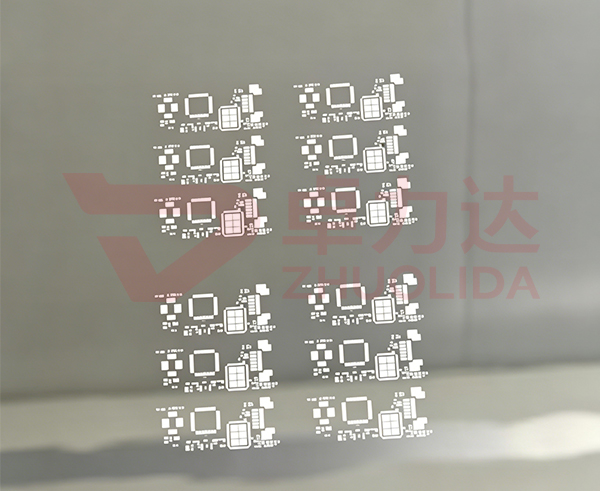
Against the backdrop of rapid advancement in the high-end precision manufacturing industry, sectors such as aerospace, precision instruments, new energy semiconductors, and smart industrial control have set extremely high standards for the precision, hardness, corrosion resistance, and structural consistency of metal components. Nickel alloys offer advantages such as high strength, resistance to acid and alkali corrosion, good thermal stability, and controllable magnetic properties, making them the core materials for high-end precision components. Traditional machining, etching, and stamping processes used to manufacture nickel alloy components are prone to issues such as stress deformation, insufficient structural precision, surface roughness, and the inability to form microstructures, making it difficult to meet the demands of micron-level precision assembly. Precision Electroforming of nickel alloys relies on the principle of electrochemical ion-directed deposition and falls under additive manufacturing processes. The entire process involves no mechanical extrusion or high-temperature thermal damage, enabling the high-precision replication of complex microstructures, ultra-thin irregularly shaped components, and high-density arrays of micropores. The finished products feature high dimensional accuracy, dense and uniform grain structure, and no residual stress, making it the core technological solution for the current production of high-end precision nickel alloy parts. Precision electroforming of nickel alloys is carried out on a Class 100 cleanroom production line with constant temperature and closed-loop control. The process encompasses the entire workflow—from master mold preparation, conductive surface treatment, precision photolithography, pulse electroplating, non-destructive demolding, stress optimization, surface modification, to comprehensive quality inspection—and can meet the demands of high-end prototype R&D, small-batch customization, and industrial-scale mass production, effectively overcoming the forming limitations of traditional processes. Our company specializes in precision electroforming of nickel alloys, continuously optimizing electrolyte formulations, pulse deposition parameters, and temperature-pressure control systems. We have overcome industry challenges such as uneven nickel alloy deposition, stress-induced warping, and low texture fidelity, providing high-quality precision support services to the high-end manufacturing industry.
Nickel alloys are characterized by high hardness and high deposition sensitivity, requiring extremely stringent control over the electroforming production environment and process parameters. The entire production process must be completed in a closed-loop system within a temperature-controlled, light-shielded, ultra-clean workshop, The core process comprises nine standardized steps: digital modeling and master mold fabrication, ultra-clean pretreatment of the substrate, photolithographic pattern transfer, surface conductive activation, segmented pulse electroforming deposition, gentle and non-destructive demolding, vacuum stress-relief annealing, precision surface modification, and high-precision inspection and packaging. During production, the concentration of the electrolyte, bath temperature, pulse current density, and deposition rate are adjusted in real time to precisely control the growth thickness and structural morphology of the nickel alloy layer, thereby avoiding manufacturing defects such as loose grain structure, uneven thickness across the surface, microstructural deformation, and texture distortion. Precision electroforming of nickel alloys is compatible with various materials, including nickel-cobalt alloys, nickel-manganese alloys, and pure nickel alloys, and can be used to form complex parts such as ultra-thin sheets, precision filters, micro-terminals, irregularly shaped structural components, and high-precision grids. Precision electroforming of nickel alloys is categorized into three process standards—instrument precision grade, aerospace industry grade, and high-end semiconductor grade—based on the operating conditions of the parts, with deposition thickness, stress compensation parameters, and surface protection schemes adjusted accordingly. The company has established a dedicated electroforming process database for nickel alloys, standardizing production parameters for components of different structures and thicknesses to ensure consistent precision and stable performance across batch production.
Digital modeling, master mold preparation, and ultra-clean pretreatment are the preliminary processes essential for ensuring the precision of nickel alloy electroforming. Technical personnel conduct 3D simulation modeling based on part drawing parameters to precisely design microstructural layouts, array aperture sizes, and irregular contours. They calculate in advance the metal ion deposition compensation and global stress distribution to optimize the forming structure and avoid issues such as deformation, uneven stress distribution, and assembly deviations during subsequent use. Specialized substrates with high flatness and stability are carefully selected to fabricate the electroforming master molds. These undergo precision leveling, dust-free degreasing, ultra-pure water rinsing, and plasma activation treatment to thoroughly remove surface oil, dust, and oxide impurities, ensuring the master mold surface is clean and flat—thereby laying a solid foundation for subsequent pattern transfer and metal deposition. High-quality master mold pretreatment processes can significantly improve the accuracy of nickel alloy texture reproduction and eliminate forming defects. Precision electroforming of nickel alloys, supported by pre-processing simulation and master mold optimization, significantly improves the fit rate and operational stability of finished products. Companies specializing in precision electroforming of nickel alloys keep pace with the evolving demands of high-end manufacturing, rapidly adapting to the custom production of new ultra-fine, high-density, and large-sized nickel alloy components.
Photolithographic pattern transfer and conductive activation treatment directly determine the microstructural replication accuracy of precision nickel alloy electroforming. Photoresist is uniformly applied and cured at a constant temperature in an ultra-clean, light-shielded workstation. Leveraging high-precision laser direct-writing equipment, the process accurately replicates various precision patterns, micro-pore arrays, fine textures, and irregular contour structures. For composite structures with significant variations in density, zone-specific dynamic exposure and development technology is employed to balance development rates across different areas, eliminating defects such as jagged edges, misalignment, and gaps in the patterns, and forming well-defined insulation protection zones and electroforming zones. Subsequently, the molding areas of the master mold undergo a conductive treatment to form a uniform, dense conductive film, ensuring uniform adhesion and deposition of nickel alloy ions while preventing localized deposition discontinuities and thickness variations. This process enables the complete replication of micrometer-level precision structures, far surpassing the forming capabilities of traditional manufacturing processes. Precision electroforming of nickel alloys strictly controls pattern alignment errors and the uniformity of the conductive layer to ensure overall structural consistency. Companies specializing in precision nickel alloy electroforming continuously refine high-definition photolithography and conductive treatment technologies to consistently improve the forming accuracy of complex nickel alloy components.
Segmented pulse electroforming at a constant temperature is the core forming process in precision nickel alloy electroforming. The finished master mold is placed in a temperature-controlled, sealed electroforming tank. Using an environmentally friendly, low-stress nickel-aminosulfonic acid alloy-specific electrolyte, the process dynamically regulates the tank temperature, pulse current density, and electrolyte circulation rate. Through a layered, intermittent pulse deposition process, nickel alloy ions are allowed to grow slowly, uniformly, and densely. Compared to conventional direct-current electroforming, the pulsed electroforming process refines the metal grain size, enhances the density and structural strength of the alloy layer, effectively reduces internal stress, and prevents warping and deformation of the surface after forming. The resulting nickel alloy components feature intact structures, clear textures, vertical and smooth side walls, and are free of burrs or defects, with excellent mechanical and corrosion resistance properties. This additive manufacturing process involves no mechanical contact or material loss, enables the one-piece forming of complex, irregular structures, eliminates the need for secondary finishing, and significantly shortens the production cycle. Precision nickel alloy electroforming allows for precise control of component thickness and structural accuracy, meeting the stringent operational requirements of various high-end equipment. The company specializing in precision electroforming of nickel alloys has optimized a multi-stage filtration and recycling system for the electrolyte, stabilizing the solution’s activity, eliminating deposition deviations in batch production, and ensuring consistent quality in mass-produced parts.
Non-destructive demolding, stress relief, and precision quality inspection are the key final processes for enhancing the in-service performance of precision electroformed nickel alloy components. Once the nickel alloy deposition thickness meets specifications, a low-temperature, gentle, and non-destructive demolding process is employed to smoothly separate the alloy component from the master mold, thereby preventing structural stretching, deformation, and damage caused by forceful demolding. After demolding, the finished products undergo vacuum isothermal annealing to thoroughly eliminate residual deposition stresses within the components, thereby enhancing structural strength, resistance to deformation, and dimensional stability. Subsequently, ultra-clean ultrasonic cleaning, mirror polishing, and anti-corrosion passivation are performed to remove trace impurities from the surface and improve the components’ corrosion resistance and surface finish. Finally, comprehensive precision inspections are conducted using 3D profilometers, laser dimensional measuring instruments, and flatness testers to rigorously verify core metrics such as dimensional accuracy, structural integrity, and surface flatness. Qualified products are stored in anti-static vacuum packaging. The precision electroforming process for nickel alloys establishes a full-process traceability and quality control system that strictly adheres to high-end industrial acceptance standards. The company implementing precision electroforming of nickel alloys exercises meticulous control over the entire post-processing workflow, comprehensively ensuring the operational reliability of high-end nickel alloy components.
Thanks to its core advantages of high precision, high density, low stress, and corrosion resistance, precision electroforming of nickel alloys is widely applied in three high-end manufacturing sectors: precision instrument components, new energy industrial components, and micro-parts for aerospace and industrial control. Precision electroforming of nickel alloys continuously iterates its processes to adapt to the industry trends toward miniaturization, high durability, and high precision in high-end components. Companies specializing in this field have deeply rooted themselves in the precision electroforming sector, continuously refining the technical framework for precision nickel alloy forming to support the localization and upgrading of the high-end manufacturing industry.
Applications in precision instrument components: precision nickel alloy filters, grating components, and micro-positioning parts used inside testing instruments and optical equipment, which demand stringent requirements for precision, flatness, and stability. Nickel alloy precision electroforming produces micro-pores that are uniformly permeable and feature high texture fidelity, ensuring accurate and stable instrument measurement data. Precision electroforming of nickel alloys employs low-stress forming, making the parts resistant to deformation during long-term use and suitable for the steady-state operating conditions of instruments. The company’s meticulous parameter control ensures compliance with the stringent production standards of high-end precision instruments.
Application Areas for New Energy Industrial Components: Energy storage equipment, hydrogen energy equipment, and nickel alloy current collectors, current-gathering components, and corrosion-resistant precision thin sheets for lithium-ion batteries require resistance to acids and alkalis, stable electrical conductivity, and structural durability. The nickel alloy precision electroforming layer is dense and corrosion-resistant, with excellent electrical and thermal conductivity. The uniform and controllable thickness of nickel alloy precision electroforming makes it suitable for the long-term, complex operating conditions of new energy equipment. Precision electroforming companies specializing in nickel alloys have optimized anti-corrosion modification processes, effectively extending the service life of new energy components.
Applications of micro-parts in aviation and industrial control: automated industrial control equipment, micro-nickel alloy terminals for aviation, and precision sensor components, which require high strength, high stability, and fatigue resistance. Precision electroformed nickel alloys offer high structural strength, no residual stress, and outstanding resistance to vibration and deformation. Precision electroforming of nickel alloys offers strong consistency in batch production, making it suitable for the large-scale mass production of high-end equipment. Companies specializing in this process continuously optimize pulse deposition techniques to ensure stable quality output for high-end industrial control components.
Overall, precision electroforming of nickel alloys is an indispensable advanced forming process in today’s high-end precision manufacturing sector, overcoming the precision and stress limitations of traditional machining. Relying on standardized and refined electrochemical additive manufacturing processes, precision electroforming of nickel alloys enables the mass production of high-precision, high-density, and highly stable nickel alloy components. Companies specializing in this technology focus on meeting the needs of high-end industries such as precision instruments, new energy, and aerospace industrial control, continuously optimizing core electroforming technologies to drive the high-quality development of China’s high-end precision metal components industry toward greater refinement, higher-end applications, and greater self-reliance.
Contact:赖先生
Phone:+86 18938693450
Tel:0755-2708-8292
Email:yw9@zldsmt.com
Add:深圳市宝安区福永镇新和村福园一路华发工业园A3栋
 Zhuolida