Welcome: Shenzhen Zhuolida Electronics Co.TD
Language:
 ∷
∷

∷
∷
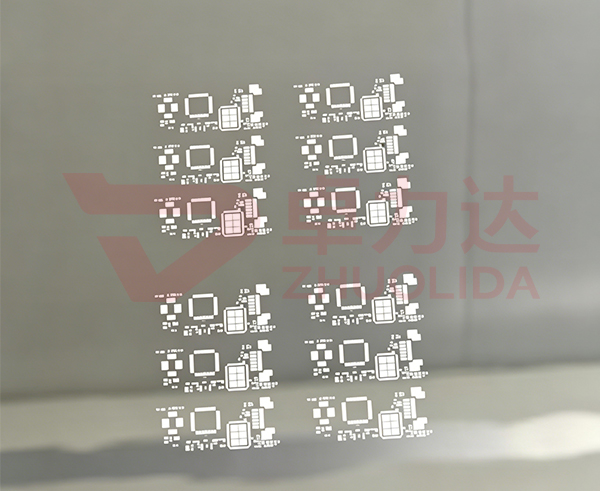
With the continuous upgrading of industries including precision filtration, fluid purification, biomedicine and intelligent screening, traditional woven screens and stamped screens generally suffer from uneven mesh holes, large wire diameter deviation, rough surfaces, easy deformation and insufficient accuracy, which fail to meet the process standards of micron-level precise screening and high-precision fluid filtration. Formed by electroforming additive manufacturing technology, polymer microporous screens have core advantages of uniform aperture, smooth mesh wall, stable structure and controllable accuracy, making up for many shortcomings of traditional screen processing and becoming core functional accessories in high-end precision screening and filtration fields. Polymer microporous screen processing adopts a non-mechanical contact and low-stress electroforming forming process, which can realize the integrated forming of ultra-micron aperture arrays and effectively solve the industrial problems of easy deformation, hole blockage and poor screening consistency of microporous structures. Polymer microporous screen electroforming processors continuously optimize electroforming deposition parameters, micropore compensation processes and surface modification technologies, improve the forming accuracy and working condition adaptability of screens, and provide stable process support for the upgrading of precision filtration systems in various industries.
Polymer microporous screens are mostly ultra-thin dense microporous structures. Their aperture accuracy, mesh verticality and overall flatness directly determine the screening and filtration effect, requiring extremely high standards for processing accuracy and production environment control. The entire electroforming process is completed in a closed-loop manner in a constant-temperature, ultra-clean and light-shielded dust-free workshop, covering nine core procedures: high-precision master mold preparation, substrate ultra-clean activation, uniform conductive layer coating, pulse Precision Electroforming deposition, low-temperature stress relief, non-destructive demoulding, micropore shaping and passivation, full-dimensional precision inspection, and dust-free packaging and storage. Current density, solution temperature and circulation flow rate are intelligently adjusted throughout the process to precisely control the growth rhythm of metal grains and avoid processing defects such as elliptical mesh holes, aperture deviation, mesh warpage and uneven thickness. Polymer microporous screens are applicable to various working conditions of fluid filtration, particle screening and gas-liquid separation, featuring corrosion resistance, anti-blocking performance and stable screening accuracy.Polymer microporous screen processing can customize screen structures with different apertures, hole types and thicknesses according to different application scenarios to meet the refined and diversified needs of industrial production.Polymer microporous screen electroforming processors have established a dedicated electroforming process system for micropores, solidifying production parameters of various precision screens to ensure uniform accuracy and stable performance of mass-produced products.
High-precision master mold preparation and ultra-clean pretreatment are the pre-core processes to guarantee the quality of polymer microporous screen processing. The microporous array accuracy of the screen is completely replicated based on the master mold structure. Before production, a dedicated master mold is designed according to screening process parameters, and precision photolithography and micro-nano shaping technologies are adopted to create regular and uniform microporous structures, fundamentally eliminating hole position deviation and uneven apertures. High-stability and low-deformation substrates are selected for master mold fabrication. Multi-stage degreasing, ultrapure water circulating rinsing and plasma activation purification are carried out to thoroughly remove surface oil stains, dust and oxide impurities, ensuring an ultra-clean mold surface and laying a solid foundation for uniform metal ion deposition. For ultra-dense microporous structures, micro-size compensation design is adopted in advance to offset tiny lateral erosion deviation during electroforming and guarantee micropore regularity. Polymer microporous screens realize micron-level precise control of apertures based on high-precision master mold replication. Polymer microporous screen electroforming processors standardize master mold preparation and maintenance procedures to reduce the defective rate of screen forming from the source.
Conductive coating and pulse electroforming deposition are the core forming links of polymer microporous screen processing. The pretreated master mold is coated with a uniform and dense conductive film in an ultra-clean workstation to build a stable conductive substrate, ensuring uniform adhesion and ordered growth of metal ions and avoiding local deposition fracture, incomplete micropores and uneven mesh thickness. The master mold is placed in a sealed constant-temperature electroforming tank filled with low-stress special electroforming solution, and a high-precision pulse current control system is matched to realize slow and dense stacking forming of metal grains. The layered intermittent deposition mode can effectively release forming stress, producing screens with flat overall surfaces, vertically and smoothly polished micropore walls, and no grain protrusions or burr defects. Free of mechanical extrusion and high-temperature thermal damage, the formed products have no residual stress and will not deform or collapse after long-term use. Polymer microporous screens are integrally formed without secondary hole polishing and can be directly applied to high-precision screening and filtration working conditions. Polymer microporous screen electroforming processors continuously optimize pulse deposition parameters to solve process pain points such as uneven forming of dense micropores and rough hole walls.
Stress relief, non-destructive demoulding and surface modification are key processes to improve the service performance of polymer microporous screen processing. After the electroforming deposition reaches the preset thickness, the semi-finished products are subjected to low-temperature constant-temperature stress relief treatment to completely eliminate subtle internal stress generated by metal deposition, improve the overall structural stability and deformation resistance of the screens, and prevent mesh deformation and aperture deviation caused by long-term fluid impact. A mild non-destructive demoulding process is adopted to stably separate screens from the master mold, avoiding micropore stretching, mesh damage and structural distortion caused by forced demoulding. After demoulding, ultra-clean cleaning, micropore dredging and anti-oxidation passivation are performed to remove trace impurities inside micropores, optimize hole wall smoothness, reduce particle adhesion and hole blockage probability, and improve the fluency and stability of filtration and screening. With multiple modification treatments, polymer microporous screens adapt to complex industrial working conditions such as acid, alkali and humid environments. Polymer microporous screen electroforming processors finely control the post-processing process to comprehensively improve the service life and working stability of screens.
Full-dimensional precision inspection and dust-free packaging are the final quality control links of polymer microporous screen processing. High-precision image detectors, aperture uniformity testers and flatness testing equipment are used to comprehensively verify the screen aperture accuracy, hole spacing consistency, mesh flatness and micropore verticality, strictly eliminating defective products with excessive precision errors, structural flaws and deformation damage. For screens dedicated to high-precision screening scenarios, special tests on micropore permeability and filtration uniformity are added to ensure stable and reliable screening effects. Qualified products undergo anti-static and moisture-proof vacuum packaging in dust-free workstations to isolate dust and moisture during storage and transportation and prevent micropore blockage and surface oxidation. After multiple quality inspections, polymer microporous screens fully meet the high-end industrial precision filtration standards. Polymer microporous screen electroforming processors implement a full-process quality control system to ensure stable and controllable quality of each batch of products.
Featuring accurate apertures, stable structure, anti-blocking performance and strong corrosion resistance, polymer microporous screens are widely used in three core fields: biomedical filtration, precision fluid purification and industrial particle screening. Polymer microporous screen processing continuously iterates electroforming technologies to adapt to the high-precision and high-stability development needs of the precision filtration industry. Polymer microporous screen electroforming processors delve into the field of microporous electroforming, continuously optimize forming technologies, and promote the quality improvement and upgrading of the precision screening industry.
In the field of biomedical filtration, polymer microporous screens are used for liquid medicine purification, microbial screening and reagent filtration to ensure fluid purity. Polymer microporous screen processing features uniform precision and no residual impurities, complying with biomedical clean production standards. Polymer microporous screen electroforming processors optimize the dust-free forming process to meet the medical-grade precision filtration requirements.
In the field of precision fluid purification, polymer microporous screens are applied to impurity filtration of electronic pure water and precision oil products with stable screening accuracy. Polymer microporous screen processing delivers smooth mesh walls and high permeability, which can effectively improve fluid purification efficiency.Polymer microporous screen electroforming processors strengthen the anti-blocking process to enhance the continuous operation capacity of screens.
In the field of industrial particle screening,polymer microporous screens are used for ultra-fine powder classification and precise particle screening to effectively improve product purity. Polymer microporous screen processing has stable structure and good deformation resistance, adapting to long-term continuous screening operation. Polymer microporous screen electroforming processors optimize the stress balance process to ensure stable long-term working performance of screens.
In conclusion, polymer microporous screens break through the technical bottlenecks of traditional screen processing such as low precision, poor consistency and easy hole blockage, and serve as core supporting components of the modern precision filtration industry. Polymer microporous screen processing realizes stable mass production of microporous screens relying on low-stress, ultra-clean and high-precision electroforming processes. Polymer microporous screen electroforming processors continuously optimize core technologies to provide strong support for the high-quality development of high-end industries including biomedicine, fluid purification and precision screening.
Contact:赖先生
Phone:+86 18938693450
Tel:0755-2708-8292
Email:yw9@zldsmt.com
Add:深圳市宝安区福永镇新和村福园一路华发工业园A3栋
 Zhuolida