Welcome: Shenzhen Zhuolida Electronics Co.TD
Language:
 ∷

∷
∷
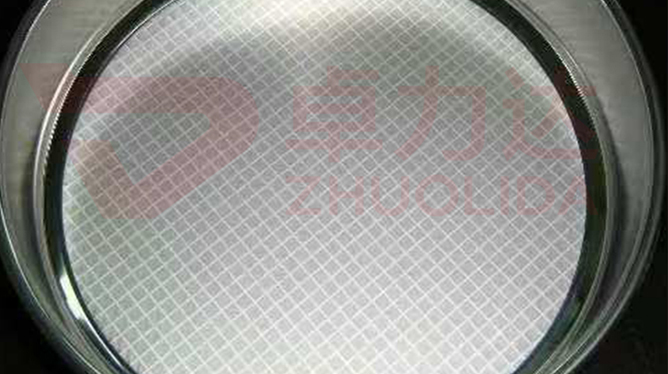
A micro-hole array is a field of small holes laid out in a fixed pattern across a thin metal sheet — round, square, oblong, hexagonal, or slot-shaped. What it does is simple: let some things pass and hold others back. Filtration, sieving, venting, acoustic absorption, atomization, electrodes — all follow that logic. It sounds like drilling, but the difficulty lies in the hole edges and the regularity of the pattern. A burr at the hole mouth catches material. Uneven diameters let oversize particles through. A disturbed pitch ruins the classification accuracy of the whole sheet.
Each conventional method has its own wall. Stamping is fast, but hole size is bounded by the tooling — punches break below a certain diameter — and the hole edge keeps a rollover and burr, which is worse in thin stock. Laser drilling reaches small holes, but the hole is tapered, larger at entry than exit, and the heat-affected zone needs descaling. Etching is the most common route for micro-holes, and its problem is undercut: etchant bites in from both faces, so the wall bulges into a barrel or bell shape. The deeper the hole and the smaller the diameter, the larger that deviation becomes and the lower the achievable open area. Electroforming turns the problem around: stand the holes up on a mandrel first, then grow nickel into the metal around them. After demolding, the hole is the shape of the mandrel pillar. The wall is metal built up layer by layer — vertical, smooth, burr-free — and the hole shape can be anything you can pattern.
Requirements on perforated metal have been climbing. Bipolar plates and electrode meshes in fuel cells and electrolyzers need high open area with low flow resistance. Waterproof breathable membranes in consumer electronics need a support mesh that is thin yet stiff. Food and pharmaceutical screening needs hole diameters accurate to a few microns, because anything looser fails to separate cleanly. What these share is large area, dense small holes, and clean edges — squarely inside electroforming's comfort zone. High density micro-hole array electroforming is not limited to round holes either; oblong holes, slot shapes, and graded pitches that stamping and etching handle poorly replicate just as faithfully.
Parameter Window
• Hole diameter: 20 µm–1 mm, down to the low teens of microns
• Sheet thickness: 10–300 µm, thin enough to laminate and conform
• Open area: 20%–80%; high open area depends on vertical walls
• Pitch accuracy: ±3 µm, setting classification accuracy
• Common materials: electroformed nickel, copper, nickel-cobalt
• Hole shapes: round, square, hexagonal, oblong, slot, and combinations
Manufacturing Process (8 Steps)
1. Mandrel preparation — lithography defines the pillar array, fixing diameter, pitch, and hole shape.
2. Conductive treatment — a conductive layer on pillars and base ensures plating starts at the root.
3. Electroforming fill — nickel deposits between pillars until the target thickness is reached.
4. Planarization — excess plating is removed from the back to hold uniform thickness.
5. Demolding — slow release of the pillars avoids distorting thin-walled regions.
6. Inspection — measure hole diameter, pitch, open area, and edge integrity.
7. Clean and passivate — remove residue and passivate, with hydrophobic or hydrophilic treatment as needed.
8. Cut and pack — cut to outline or blank the profile, then pack clean and flat.
Core Advantages
1. Vertical walls — no undercut, no bell mouth; straight walls hold even at high aspect ratio.
2. Burr-free edges — formed in one step with no deburring, so nothing catches or damages product.
3. Free hole geometry — round, square, oblong, or slot as the mandrel dictates, beyond punch limits.
4. High open area — ligaments between holes can be very narrow, well above what etching achieves.
5. Consistent diameter — one replication of the whole array keeps variation low within and between parts.
6. Thin and large-area — sheets a dozen microns thick hold together over large formats.
Typical Applications
• Precision sieving and classification — pharmaceuticals, powder metallurgy, and abrasives separated by strict particle size.
• Fuel cell and electrolyzer electrodes — high open area cuts concentration polarization and flow resistance.
• Waterproof vent support mesh — thin but stiff enough to keep the membrane from collapsing.
• Acoustic absorbers — micro-hole arrays form Helmholtz resonant absorbing surfaces.
• Food and beverage filters — smooth hole mouths resist fouling and clean easily.
• Battery current collectors — thin, light, with enough conductive cross-section.
Design and Selection Points
1. Set hole diameter and sheet thickness together; the higher the aspect ratio, the harder the plating fill.
2. Do not push ligament width to the limit — narrow ligaments lose sheet strength fast and tear during handling.
3. Higher open area is not automatically better; calculate flow resistance and structural strength together.
4. State up front whether hole mouths need chamfering or radiusing — the demold face and the working face behave differently.
5. Where filtration rating matters, specify diameter by maximum passing particle, not by average.
6. Laminated meshes need flatness and thickness tolerances called out; stacked error will breach the seal.
7. For acid, alkali, or high-temperature service, select material and surface treatment together, not hole size alone.
High density micro-hole array electroforming solves an old problem: how to make holes in thin metal that are dense, accurate, and clean at the same time. Stamping is bounded by tooling, laser brings taper and a heat-affected zone, and etching cannot escape undercut — while electroforming replicates from a mandrel and gets wall verticality and edge smoothness right in a single pass. That is why micro-hole metal mesh electroforming is increasingly common where open area and classification accuracy are critical. Judging a precision micro-hole array is not about how small the holes are, but how uniform, how straight-walled, and how consistent batch to batch. Once the holes are right, flow resistance, separation accuracy, and service life can actually be discussed.
Contact:赖先生
Phone:+86 18938693450
Tel:0755-2708-8292
Email:yw9@zldsmt.com
Add:深圳市宝安区福永镇新和村福园一路华发工业园A3栋
 Zhuolida