Welcome: Shenzhen Zhuolida Electronics Co.TD
Language:
 ∷
∷

∷
∷
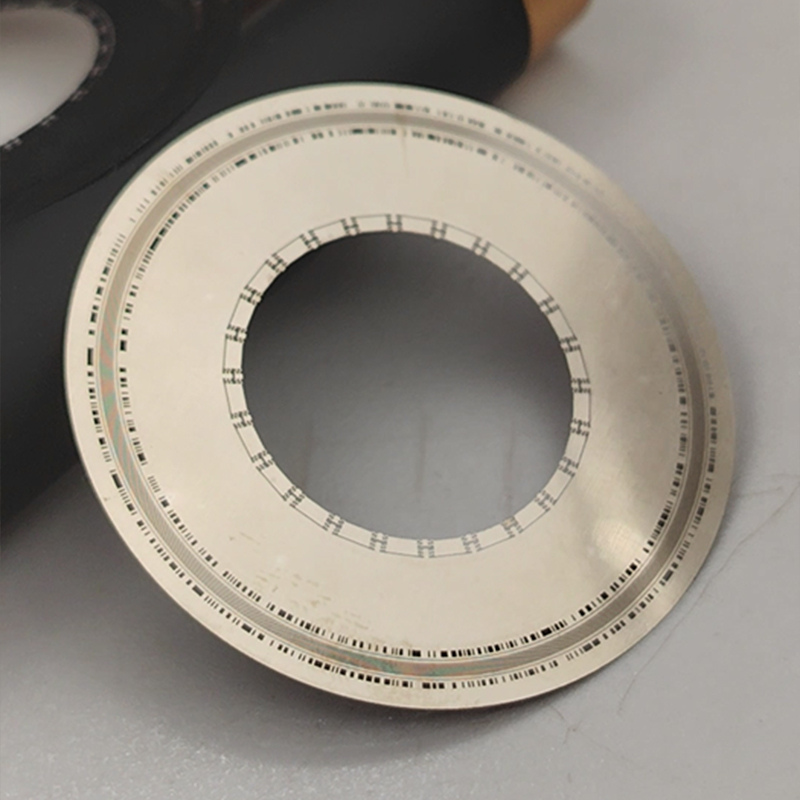
Electroformed grating fabrication is a high-end manufacturing process that utilises the principles of electrochemical deposition to produce high-precision grating structures. Thanks to its key advantages—uniform grating lines, high diffraction efficiency, high dimensional accuracy and wear resistance—it has become a critical fabrication method in fields such as optics, electronics and aerospace. Precision electroformed gratings, as the high-end products of this manufacturing process, focus on the control of micron- and even nanometre-scale grating lines, catering to more demanding optical applications. Manufacturers specialising in electroformed grating production have deepened their expertise in the industry, concentrating on process optimisation and precision control. They are driving the advancement of electroformed grating manufacturing towards greater refinement, scalability and high-end applications, providing high-quality electroformed grating products to various industries.
The electroformed grating manufacturing process is rigorous and complex, with the core objective being the precise replication and uniform formation of grating lines. Taking into account the material properties of suitable metals such as nickel and copper, the process is divided into five key stages. Manufacturers strictly adhere to standardised procedures throughout the entire process, whilst precision electroformed gratings further enhance accuracy control to ensure the consistency and stability of the grating structure in every product.
The first step involves the design and pre-treatment of the grating master mould, which forms the foundation for ensuring the quality of electroformed grating production. Manufacturers design precise master mould drawings based on the customer’s requirements for grating line spacing, line width, diffraction efficiency, to design precise master mould drawings. The master mould is fabricated from quartz, glass or specialised metals, and high-precision techniques such as laser interferometric lithography and electron beam lithography are employed to create a clear, uniform grating master on the surface of the master mould, ensuring that grating line tolerances are controlled to the nanometre level. During the pre-treatment stage, processes such as ultrasonic cleaning, alkaline degreasing, and acid pickling are employed to thoroughly remove oil, oxide layers and impurities from the master’s surface. Subsequently, a vacuum sputtering process is used to form an ultra-thin conductive layer, laying a solid foundation for the uniform deposition required in electroformed grating production. This is also a key prerequisite for achieving high-precision forming in precision electroformed gratings.
The second step involves the preparation of the electroforming solution and parameter adjustment, which provides the core assurance for the electroformed grating process. Electroformed grating manufacturers utilise customised electroforming solutions primarily composed of nickel aminosulphate and copper sulphate, supplemented with specialised additives. They precisely control the concentration of the main salt, solution purity and pH value to ensure uniform metal ion deposition and moderate internal stress within the electroformed layer, thereby preventing deformation of the grating lines. Concurrently, the parameters of the electroforming equipment are fine-tuned, with a closed-loop control system monitoring key indicators such as current density and electrolyte temperature in real time. For precision electroformed gratings, parameter control is further refined to ensure the straightness and uniformity of the grating lines; this is also one of the core technical aspects for manufacturers of electroformed gratings.
The third step is the core electroforming deposition process, which is also the key stage in the production of electroformed gratings. Electroformed grating manufacturers use the pre-treated grating master as the cathode and a suitable metal sheet as the anode, immersing both in a prepared electroforming solution. Under the influence of direct current, metal ions are deposited uniformly layer by layer onto the surface of the master’s grating lines, forming a dense and uniform electroformed grating structure. Electroformed grating processing requires continuous monitoring of the deposition process. The deposition time is adjusted according to the required grating thickness to ensure that the electroformed layer is uniform in thickness, the grating lines are clear, and there are no burrs or distortions. For precision electroformed gratings, a low current density and slow deposition rate are employed to reduce internal stress within the electroformed layer, further enhancing the precision of the grating lines and surface finish, and ensuring that diffraction efficiency meets specifications.
The fourth step involves demoulding and post-processing, which optimise the performance and precision of electroformed grating products. Once the electroformed layer has reached the designed thickness, the manufacturer employs gentle methods such as thermal peeling and low-force mechanical demoulding to achieve non-destructive separation of the electroformed grating from the original mould without damaging the grating structure or compromising line precision; the yield rate can reach over 99%. Following demoulding, processes such as electrolytic polishing and passivation are employed to remove minute burrs from the grating surface, improve surface finish, and enhance the electroformed grating’s corrosion and wear resistance. Concurrently, the line spacing, width and flatness of the electroformed grating are precisely calibrated to ensure compliance with industry standards. Precision electroformed gratings undergo an additional nanoscale surface treatment to further optimise their diffraction performance; this is an indispensable final step in the electroforming process.
The fifth step is the quality inspection phase, which runs throughout the entire electroformed grating manufacturing process and is key to ensuring product quality. Manufacturers utilise specialised equipment such as high-precision laser interferometers, scanning electron microscopes and grating testers to comprehensively inspect parameters including line spacing, width accuracy, surface roughness and diffraction efficiency. Precision electroformed gratings undergo rigorous testing of nanometre-level line accuracy and the stability of diffraction efficiency, with non-conforming products strictly screened out to ensure that every item meets the customer’s requirements. Strict control at this stage is a vital safeguard for manufacturers to achieve large-scale production and is the core manifestation of the quality of precision electroformed gratings.
Electroformed gratings have a wide range of applications, focusing on high-end industries such as optics, electronics and aerospace. Thanks to their ultra-high precision, precision electroformed gratings are suitable for even the most demanding application scenarios. Manufacturers of electroformed gratings provide a full range of products and customised solutions, supporting technological upgrades across various industries.
The optical sector represents the core application area for electroformed gratings, where demands for grating precision and diffraction efficiency are exceptionally high. Gratings produced through this process are widely used in spectrometers, projectors, laser equipment and optical sensors. Through their uniform grating lines, they enable the diffraction, dispersion and modulation of light, thereby ensuring the imaging quality and measurement accuracy of optical equipment. Precision electroformed gratings are utilised in high-end spectrometers, lidar systems and similar equipment, enabling nanometre-level control of line width to enhance the resolution and stability of the equipment. Manufacturers of electroformed gratings continuously optimise their production processes in response to the evolving demands of the optical industry.
In the electronics sector, electroformed grating manufacturing plays a vital role. Gratings produced through this process are widely used in semiconductor chip manufacturing, liquid crystal displays and electron microscopes, serving as core optical components to ensure precise signal transmission and imaging. Precision electroformed gratings can achieve high-density, fine-line grating structures, meeting the refined requirements of the semiconductor industry. By optimising their processes, manufacturers of electroformed gratings ensure the consistency of grating lines, thereby supporting the development of electronic devices towards miniaturisation and high performance.
In the aerospace sector, electroformed gratings are precisely engineered to meet the demands of extreme operating conditions. These gratings are widely used in space-based remote sensing equipment, satellite navigation systems and aviation optical instruments. Thanks to their resistance to high and low temperatures, wear resistance and stable precision, they ensure the normal operation of equipment in extreme environments. Through rigorous process control, precision electroformed gratings achieve ultra-high-precision structural formation, meeting the stringent requirements of aerospace equipment. Manufacturers of electroformed gratings strictly adhere to aerospace industry standards to ensure products comply with specifications for use in extreme environments.
Furthermore, electroformed gratings are also applied in fields such as biomedicine and precision measurement, serving in applications including bio-spectral analysis and high-precision measuring instruments. Their high precision and stability enhance the detection accuracy and reliability of such equipment. Electroformed grating manufacturing remains market-driven, continuously overcoming technical bottlenecks. Precision electroformed gratings are evolving towards ever-higher precision and diffraction efficiency, whilst manufacturers are strengthening R&D to drive the technology towards more environmentally friendly, efficient and intelligent solutions. In the future, as high-end manufacturing undergoes upgrading, electroformed grating manufacturing will achieve breakthroughs in more emerging fields, injecting new vitality into various high-end equipment industries.
Contact:赖先生
Phone:+86 18938693450
Tel:0755-2708-8292
Email:yw9@zldsmt.com
Add:深圳市宝安区福永镇新和村福园一路华发工业园A3栋
 Zhuolida