Welcome: Shenzhen Zhuolida Electronics Co.TD
Language:
 ∷
∷

∷
∷
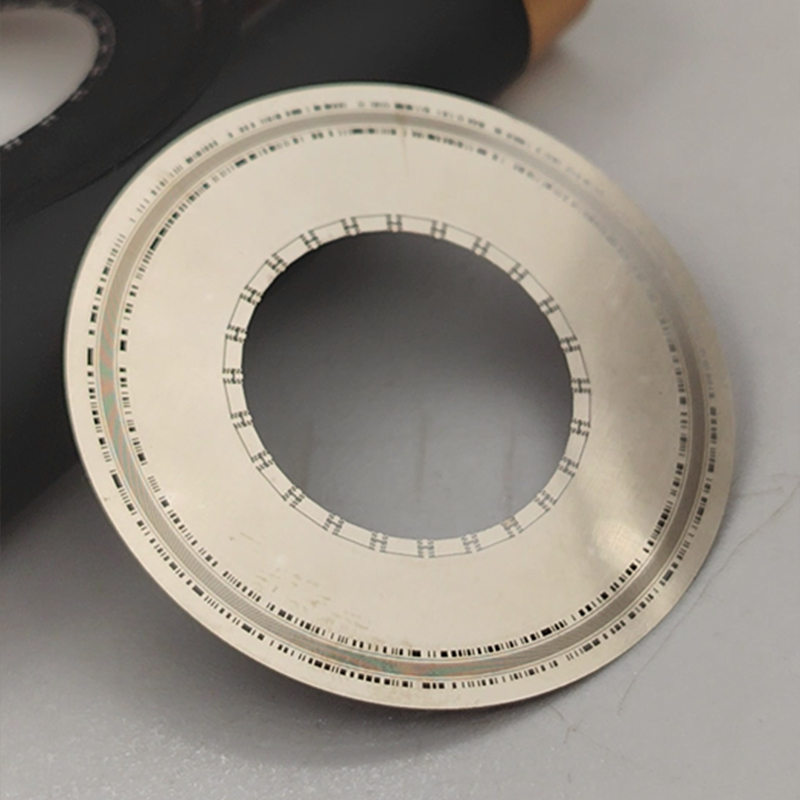
Dongguan electroformed microporous structures represent a precision technology that combines electrochemical deposition with micro- and nano-manufacturing. Leveraging the strengths of Dongguan’s industrial clusters in electronics, new energy and medical devices, this technology enables the consistent production of metal microporous structures with pore sizes ranging from 1 to 100 μm, offering advantages such as high precision, excellent consistency and the absence of mechanical stress. Dongguan electroformed micro-hole processing utilises nickel, copper and nickel-cobalt alloys as core materials, and is suitable for the mass production of complex structures such as micro-hole arrays, irregularly shaped holes and holes with high aspect ratios. It is a key process in the manufacture of high-end precision components. Dongguan electroforming micro-hole processing manufacturers have deeply engaged with regional industrial needs, continuously optimising electroforming formulations and process control. They are driving the advancement of Dongguan’s electroforming micro-hole processing towards ultra-fine pore sizes, ultra-high precision and composite materials, providing core support for high-end manufacturing in Dongguan and the surrounding areas.
Dongguan’s electroforming micro-hole processing workflow is precise and rigorous, centring on five key stages: master mould preparation, conductivisation treatment, electro-deposition moulding, post-demoulding treatment, and precision inspection, thereby forming a standardised and traceable operational chain. Dongguan electroformed micro-hole manufacturers strictly enforce quality control throughout the entire process. Building on this foundation, they have strengthened the closed-loop control of micro-hole precision to ensure that every batch of products meets specifications for hole diameter tolerance, positional accuracy and wall quality, thereby meeting the micro-hole fabrication requirements of various applications.
The first step involves the design and fabrication of the micro-hole master mould, which lays the foundation for Dongguan electroforming micro-hole processing. Manufacturers select master mould materials based on micro-hole parameters (aperture, pitch, depth and arrangement). Metal master moulds are made from stainless steel or aluminium alloy, undergo precision CNC machining, grinding and polishing, with geometric tolerances controlled to ≤5μm; Non-metallic master moulds are made from silicon wafers, glass or epoxy resin, with micro-hole patterns fabricated using photolithography or laser direct writing technology, achieving an exposure accuracy of ±0.2μm to ensure the master mould’s micro-holes are identical to the design. The surface roughness of the master mould must be controlled to Ra ≤ 0.2μm, with no scratches or defects, as the precision of the master mould directly determines the precision of the electroformed micro-holes. Dongguan electroforming micro-hole processing imposes even more stringent requirements on master moulds, which must undergo 100% inspection using high-magnification microscopes and coordinate measuring machines to ensure the microstructure of the master mould is free from deviation, thereby guaranteeing the subsequent sub-micron electroforming process.
The second step involves the electrification and pre-treatment of the master mould to ensure the moulding quality of the micro-hole electroforming process in Dongguan. Manufacturers of micro-hole electroforming in Dongguan subject non-metallic master moulds to a conductivisation process, employing magnetron sputtering for gold plating (50–100 nm) or electroless nickel plating (1–2 μm) to form a uniform, dense conductive layer. This reduces the resistivity to below 10⁻⁴ Ω·cm, ensuring uniform current distribution during electroplating and preventing uneven deposition at the edges of the micro-holes. Metal master moulds undergo degreasing, ultrasonic cleaning and activation to remove surface oils, impurities and oxide layers, thereby enhancing the adhesion of the electroformed layer. Concurrently, a specialised electrolyte is formulated; for nickel electroforming, a nickel aminosulphate system is employed, with precise control of Ni²⁺ concentration, pH, temperature and additive ratios. These additives serve to refine grain size and reduce internal stress. Dongguan electroforming micro-hole processing requires high-precision filtration of the electrolyte and real-time monitoring of its composition to ensure the purity and stability of the electrolyte parameters, thereby providing a pristine environment for subsequent precision deposition. This is also the key to ensuring product consistency for Dongguan electroforming micro-hole processing manufacturers.
The third step is the core electro-deposition moulding process, which is the critical stage of Dongguan electroforming micro-hole processing. Manufacturers of micro-hole electroforming in Dongguan use the pre-treated master mould as the cathode and the corresponding metal material as the anode. These are placed together in the electroforming tank containing the electrolyte. A direct current power supply is connected, and pulsed reverse electroforming technology is employed, controlling the forward current density at 2–3 A/dm² and the reverse current density at –0.5 to –1 A/dm². with the temperature maintained at 50±0.3°C, to enable metal ions to deposit layer by layer onto the surface of the master mould. The electroforming duration is set according to the product thickness, ranging from several hours to several dozen hours. The thickness of the deposited layer can be precisely controlled to within ±2 μm, with real-time monitoring of the deposition process to prevent defects such as thickness inconsistencies, pinholes and pitting. Dongguan electroforming micro-hole processing employs low current densities and precise parameters to reduce internal stress within the electroformed layer, ensuring hole diameter tolerances are controlled to ±0.005 mm and wall roughness Ra ≤ 0.05 μm, thereby replicating micro- and even sub-micron-scale micro-hole structures.
The fourth step involves demoulding and precision post-processing to optimise the performance of the micro-hole electroforming products. Once the electroformed layer reaches the designed thickness, manufacturers employ appropriate demoulding methods: metal master moulds are separated using thermal expansion (heated to 120°C to exploit thermal expansion differences), whilst non-metallic master moulds are demoulded via chemical dissolution or oxygen plasma etching, ensuring the micro-hole electroformed sheets are removed without damage. Following demoulding, the product is cleaned to remove residual electrolyte. Heat treatment (annealing at 200–300°C) is carried out as required to eliminate internal stresses and enhance mechanical properties. Subsequently, electrolytic polishing and magnetorheological polishing are employed to remove minute burrs, improve the surface finish of the pore walls, and enhance wear and corrosion resistance. Dongguan electroformed micro-perforated processing incorporates additional nano-scale surface treatments, such as ion beam sputtering coatings, to further enhance product functionality and stability, meeting the specific requirements of high-end applications.
The fifth step involves comprehensive quality inspection, which is carried out throughout the entire micro-hole machining process at Dongguan Electroforming. Dongguan electroforming micro-hole processing manufacturers are equipped with specialist equipment such as laser interferometers, scanning electron microscopes, coordinate measuring machines and pore diameter testers to comprehensively inspect indicators including pore diameter, positional accuracy, roundness, perpendicularity, surface roughness and porosity. For batch production, a 100% inspection of samples is carried out to strictly prevent non-conforming products from leaving the factory. Dongguan electroformed micro-hole processing places particular emphasis on inspecting sub-micron hole diameter accuracy, the microscopic morphology of hole walls, and the stability of mechanical properties. High-magnification electron microscopy is used to verify that hole walls are free from cracks and pinholes, whilst data is retained and traceable throughout the entire process to ensure consistent and reliable product quality.
Dongguan electroformed micro-hole processing has a wide range of applications and is deeply integrated into Dongguan’s leading industries, such as semiconductors, new energy, healthcare, and precision optics, serving as a key pillar of the region’s high-end manufacturing sector. Thanks to its ultra-high precision, Dongguan electroformed micro-hole processing meets the demands for high-end core components across various sectors. Manufacturers in Dongguan leverage the region’s industrial synergy to provide customised electroformed micro-hole services, supporting technological upgrades and product iterations across multiple industries.
The semiconductor and electronic information sectors represent the core application areas for Dongguan electroformed micro-hole processing, aligning with the development needs of the city’s semiconductor industry cluster. The micro-hole structures produced by Dongguan electroforming are widely used in precision components such as semiconductor gas distribution plates, wafer polishing screens, SMT stencils, 5G filters and high-frequency connectors. For instance, the micro-hole arrays on the surface of gas distribution plates are used to precisely control the distribution of process gases, ensuring uniformity in wafer film deposition and etching accuracy. Dongguan electroforming micro-hole processing can produce sub-micron micro-holes, aligning with the trend towards miniaturisation and integration in electronic devices, and enhancing the precision and stability of electronic components. Manufacturers of Dongguan electroforming micro-hole processing continuously optimise their processes to meet the iterative upgrade requirements of the electronics industry.
The new energy sector has become a key application area for Dongguan electroforming micro-hole processing, meeting the rapid development needs of the new energy industry. Dongguan electroforming micro-hole processing is used in micro-channel flow paths for hydrogen fuel cell bipolar plates, current collectors for lithium-ion battery electrodes, heat dissipation components for new energy vehicles, and photovoltaic screens. For example, the precision micro-channel flow paths in fuel cell bipolar plates ensure uniform gas distribution and improve power generation efficiency. Dongguan electroforming micro-hole processing enables precise control over porosity and pore size consistency, optimising fluid transport efficiency and heat dissipation performance. Through process innovation, manufacturers in Dongguan enhance the energy efficiency and stability of new energy components, supporting the large-scale development of the new energy industry.
Demand for Dongguan electroforming micro-hole processing is strong in the medical and healthcare sector, focusing on precision medical devices and biomaterials. Micro-holes produced by Dongguan electroforming are used in products such as haemodialysis filters, medical nebuliser plates, sustained-release drug carriers, minimally invasive interventional electrodes and microfluidic chips. For example, the 5–20 μm micro-holes in medical nebuliser plates enable the precise atomisation of medication into minute droplets, thereby improving pulmonary deposition rates and therapeutic efficacy. Dongguan electroforming micro-hole processing utilises biocompatible materials to produce micro-hole structures with high cleanliness, free from burrs and defects, thereby preventing damage to human tissue. Manufacturers in Dongguan strictly adhere to medical industry standards to ensure product safety and reliability, supporting the development of more precise and minimally invasive medical devices.
In the fields of precision optics and instrumentation, Dongguan electroformed micro-hole processing meets the demands for ultra-high precision and complex structures. The micro-holes produced by this process are used in optical apertures, laser nozzles, sensor micro-hole assemblies, and precision optical filters. For instance, the micron-scale micro-holes in optical apertures feature smooth edges and precise dimensions, ensuring beam quality and imaging accuracy in optical systems. Dongguan electroforming micro-hole processing can replicate nano-scale micro-hole structures, with surface form error controlled within λ/10. The resulting components are wear-resistant and age-resistant, ensuring the stable operation of optical instruments in high-precision applications. Manufacturers of Dongguan electroforming micro-hole processing strictly control product quality, thereby contributing to technological advancement in the precision optics industry.
Furthermore, Dongguan electroforming micro-hole processing is also applied in fields such as aerospace, automotive electronics and precision filtration, including micro-holes for aircraft engine fuel nozzles, micro-holes for automotive LiDAR heat dissipation, and industrial precision filtration screens. Thanks to its high precision, high reproducibility and absence of mechanical stress, it overcomes the limitations of traditional machining processes. Dongguan electroforming micro-hole processing remains market-driven, continuously overcoming technical bottlenecks. The industry is constantly evolving towards ultra-fine pore sizes, complex structures and composite materials. Manufacturers are strengthening technical R&D and industrial collaboration to drive the technology towards greater efficiency, environmental sustainability and intelligence. In the future, as Dongguan’s high-end manufacturing sector continues to expand, electroformed micro-hole processing will find applications in an increasing number of emerging fields, injecting new vitality into the high-quality development of the regional economy.
Contact:赖先生
Phone:+86 18938693450
Tel:0755-2708-8292
Email:yw9@zldsmt.com
Add:深圳市宝安区福永镇新和村福园一路华发工业园A3栋
 Zhuolida