Welcome: Shenzhen Zhuolida Electronics Co.TD
Language:
 ∷

∷
∷
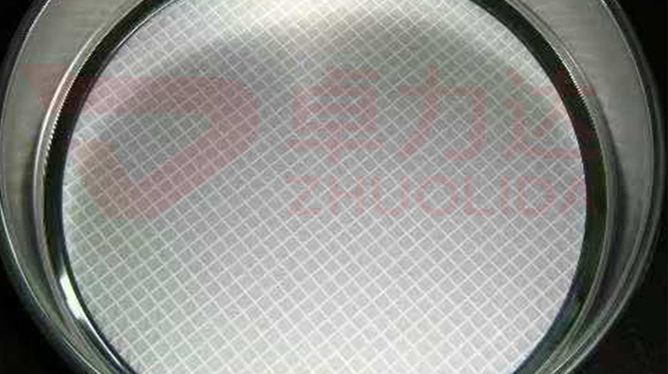
Nickel-cobalt alloy deposition for nickel mesh does not tune a single knob like current or temperature; it tunes how much cobalt sits in the nickel. Pure nickel mesh is soft and wears only moderately; add cobalt and the grain refines, hardness rises, and the sheet survives high-frequency vibration and repeated scraping. But more cobalt also drags internal stress up, so thin foils curl at release and dimensions spring back during framing. The job is to find a composition point inside the 450–550 Hv band that wears well without blowing the stress budget, then hold the whole bath and the whole lot on that point. Composition control sounds like a recipe task; in practice it is ampere-hours, replenishment rate and current density watched together on the line.
The weak spot is replenishment rhythm. Mix the bath to an opening cobalt concentration, plate a few loads, and the level drifts down with drag-out and anode consumption; if nobody doses by ampere-hours, the first sheets sit in the hardness band while later ones quietly slide out of 450–550 Hv and wear life only passes in patches. The second failure is chasing hardness with cobalt alone: the number looks good, stress climbs with it, and 15–30 μm foils roll into tubes after release that even annealing cannot flatten. Let current density wobble and the cobalt co-deposition ratio moves with it, so centre and edge of one sheet differ in composition and the web between holes cracks after a few bends. Let bath temperature and pH drift unattended and the deposit turns grey and brittle; such sheets may pass a hardness test yet fail first in service. The difficulty of nickel-cobalt alloy deposition for nickel mesh is that composition is invisible and can only be inferred from coupons and records.
Parameter Window
• Nickel alloy hardness target 450–550 Hv; tune cobalt content to the hardness band, do not chase a single peak value.
• Bath current density 1–4 A/dm²; a change in current shifts the cobalt co-deposition ratio, and composition uniformity suffers first.
• Stencil thickness 15–200 μm; thin foils are more stress-sensitive, so composition control leaves a lower stress margin.
• Minimum aperture ≥25 μm, pitch ≥120 μm, web ≥50 μm; segregation at the web between holes is what starts micro-cracks.
• Position accuracy ±7 μm and aperture accuracy ±3 μm; dimensional drift from stress release moves position before anything else.
• Aperture wall roughness ≤0.01 μm and wear-resistant coating must both hold; do not buy hardness with extra brightener alone.
Manufacturing Process (8 Steps)
1. Bath make-up — mix nickel and cobalt salts to the target band, log opening cobalt concentration, pH and temperature.
2. Artwork and pre-treatment — LDI defines the pattern, substrate cleaned and conductivised, mandrel face passivated.
3. Development — open the apertures with steep resist sidewalls, no scum, no resist on the rim.
4. Coupon calibration — plate a coupon first, measure hardness and cobalt content, map 450–550 Hv to a specific current and dosing rate.
5. Nickel-cobalt co-deposition — staged 1–4 A/dm² control, dose cobalt salt by ampere-hours, keep bath filtered and agitated.
6. Composition sampling — pull a sheet per bath for hardness and composition, correct as soon as a reading leaves the band, never at final judgement.
7. Release and anneal — peel the whole sheet from a low-stress corner, low-temperature anneal relieves deposition stress.
8. Inspection and delivery — vision system, flash measurement and automatic checker for position and aperture, hardness tester logs 450–550 Hv.
Core Advantages
1. Repeatable hardness — dosing by ampere-hours keeps the bath inside 450–550 Hv from make-up to the last load.
2. Stable wear life — with composition even, no soft zone at the web or edge wears out ahead of the rest.
3. Thin foils stay flat — the composition point respects stress, so 15–30 μm sheets still lay flat after release.
4. Position does not drift — with stress held down, ±7 μm position accuracy is not wrestled back by annealing.
5. Traceable anomalies — hardness, cobalt concentration and dosing logged per bath, so a life complaint traces to a run.
6. Fast band changes — shifting hardness band only means a new dosing rate and current, master and fixtures stay put.
Typical Applications
1. Semiconductor material grading screens under long vibration, where the wear-resistant coating from nickel-cobalt alloy deposition for nickel mesh decides how long the hole shape lasts.
2. BGA and Mini LED printing stencils, where a squeegee crosses the face repeatedly and soft deposits fuzz first.
3. Wafer-level ball-placement masks with over a million openings, which must survive release and cleaning without distortion.
4. Probe positioning templates and test fixture parts, where repeated insertion makes a hard demand on surface wear.
5. Nebuliser plates and micro-hole meshes, thin parts where hardness and stress have to be capped together or they curl to scrap.
6. Composite stencils with post height or local thickening, where composition spread shows most at the step.
Design and Selection Notes
1. Fix the hardness band first; do not chase higher values mid-run, the lower end of 450–550 Hv is steadier for most uses.
2. Dose cobalt by ampere-hours, not by bath count or shift, since drag-out scales with open area.
3. Hold current density in one segment of 1–4 A/dm²; changing segment means a fresh coupon curve.
4. For foils under 30 μm, move the composition point toward lower stress rather than copying a thick-foil recipe.
5. Keep one coupon per bath for hardness and composition; data beats the feel of the bath.
6. Do not buy hardness with brightener; 450–550 Hv should come from cobalt content and current.
7. Fix opening concentration, dosing factor and current segment at sampling stage, then run to that card.
Put nickel-cobalt alloy deposition for nickel mesh back on the whole line and it governs the narrow path of 'hard enough, still flat'. Opening concentration gives the start, ampere-hour dosing gives no drift, steady current gives even composition across a sheet; only with all three is 450–550 Hv more than a number on a coupon. The hard part on the line is not pushing hardness up, but keeping the first and last dozen sheets of one bath, and the next bath after it, inside the same band. For orders specifying electroformed nickel-cobalt composition control, write cobalt concentration, dosing factor and current segment into the process card at sampling stage, then dose and sample to that card in production, far cheaper than sorting hardness sheet by sheet at the end. That is where nickel-cobalt alloy deposition for nickel mesh earns its keep: turning an invisible variable into a logged, reviewable parameter.
Contact:赖先生
Phone:+86 18938693450
Tel:0755-2708-8292
Email:yw9@zldsmt.com
Add:深圳市宝安区福永镇新和村福园一路华发工业园A3栋
 Zhuolida