Welcome: Shenzhen Zhuolida Electronics Co.TD
Language:
 ∷

∷
∷
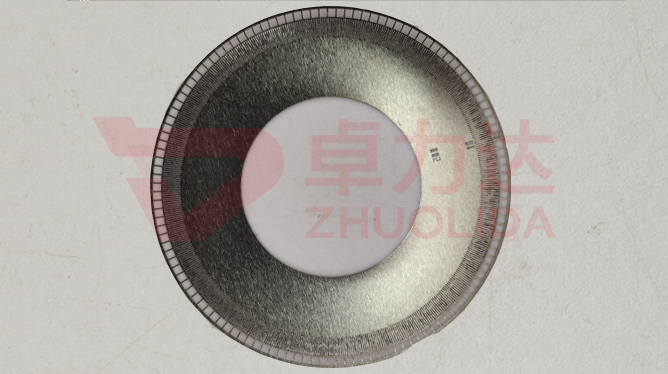
An electroformed nickel microchannel heat sink is a cooling device that grows micron-scale channels directly inside a nickel body by electroforming. It differs from machining grooves or etching channels: a core mandrel carrying micro-protrusions is made first, nickel is plated to thicken the channel walls around it, and after demolding the mandrel's footprint becomes enclosed microchannels. Coolant flows with forced convection through channels only tens to hundreds of microns wide, where the heat-transfer coefficient is several times that of conventional fins — well suited to the ever-hotter chips and power devices that need cooling.
The heat flux of chips and power devices has risen sharply in recent years. AI accelerator cards, SiC modules, lasers, and radar transceiver assemblies see local heat flux of several hundred watts per square centimeter, which air cooling and heat pipes can no longer handle, leaving liquid cooling as the only option. The key to liquid cooling is the flow channel in the cold plate — the narrower the channel and the higher the aspect ratio, the stronger the heat transfer, but the harder the fabrication. Machined microgrooves are limited by tool radius, so channel width cannot go small and aspect ratio cannot go high, and burrs are easy to leave. Etching deep channels struggles to balance sidewall verticality and depth uniformity, and falters as aspect ratio rises. Diffusion-bonded multilayer stacks can form complex channels, but interfacial thermal resistance and cost are painful. Electroformed nickel microchannels sidestep these limits: channel shape is set by the mandrel, so it can be as narrow or deep as needed; walls are smooth with low flow resistance; nickel resists corrosion and works with most coolants; and the part is an integrated structure with fewer interfaces, so thermal resistance is naturally low. The hard parts are mandrel removal and lid bonding — the finer the channel, the more these two steps test craftsmanship.
Parameter Window
• Channel width: 50–500 µm; narrower means stronger heat transfer and higher pressure drop
• Aspect ratio: up to 5:1, balancing heat-transfer area and flow resistance
• Wall thickness: 20–200 µm, balancing pressure tolerance and stiffness
• Heat flux: handles above 300 W/cm²
• Common materials: electroformed nickel, nickel-cobalt alloy, balancing corrosion resistance and conduction
• Wall roughness: Ra < 1 µm, lowering flow resistance and suppressing scaling
Manufacturing Process (8 Steps)
1. Mandrel preparation — photolithography or micro-milling builds the channel positive, controlling width, depth, and routing.
2. Conductive treatment — a conductive layer is applied so nickel strikes uniformly.
3. Electroforming encapsulation — nickel deposits layer by layer around the mandrel, growing to the design wall thickness to enclose the channels.
4. Mandrel removal — dissolve or strip the mandrel, leaving through, enclosed microchannels.
5. Lid bonding — weld a lid over the channels to form the complete cold-plate cavity.
6. Leak and pressure test — pressure-test for leaks, confirming channels neither cross nor leak and meet pressure ratings.
7. Thermal performance test — measure thermal resistance and pressure drop against design values.
8. Clean and store — rinse residue, dry, and clean-pack for use.
Core Advantages
1. High aspect ratio — narrow, deep channels give a large heat-transfer area and stronger cooling.
2. Smooth walls — electroformed walls are smooth, lowering flow resistance and pump power.
3. High heat-transfer coefficient — microchannel convection far exceeds fins per unit area.
4. Shape freedom — variable cross-section and bio-inspired channels can be made to fit hot-spot distribution.
5. Nickel corrosion resistance — compatible with many coolants, resisting corrosion over long runs.
6. Integrated low thermal resistance — one-piece forming with fewer interfaces conducts heat more directly.
Typical Applications
• AI/GPU chip liquid cooling — concentrated hot spots on high-compute chips, held down by microchannel cold plates.
• Power modules — IGBT and SiC modules with high-current heating; nickel heat sinks tolerate temperature and corrosion.
• Laser heat sinks — pump sources and gain media; fine channels transfer heat fast.
• Radar T/R modules — densely packed phased-array elements need compact cold plates.
• Data centers — server liquid-cooling loops where microchannels raise per-volume cooling.
• Aerospace electronics — high-power-density payloads need lightweight, efficient cooling.
Design and Selection Points
1. Balance channel width between heat transfer and pressure drop; too narrow overwhelms the pump.
2. Decide mandrel removal early — dissolution suits fine channels, stripping suits shallow grooves.
3. Control coating stress and adhesion, or thick plating cracks or delaminates.
4. Match lid bonding to nickel; welding temperature must not damage the micro-structure.
5. Choose a coolant compatible with nickel to avoid long-term corrosion or scaling blockages.
6. Prevent fine-channel clogging with upstream filtration and periodic flushing.
7. Set leak and pressure standards in advance; a microchannel that leaks even slightly is scrap.
Electroformed nickel microchannel heat sinks hold their ground in high-power cooling because they make channels narrow, deep, and smooth-walled, driving heat flux down by strong convection. Against machining, etching, and diffusion bonding, they win on aspect ratio, flow resistance, and integration at once, and nickel's corrosion resistance makes long runs worry-free. As AI compute, SiC power devices, and phased-array radar raise cooling demands year after year, the value of electroformed nickel microchannel heat sinks will only grow clearer. Choosing an electroformed nickel heat sink means buying a combination of high heat transfer, low thermal resistance, and long life — the fundamental difference from conventional cold-plate processes. As devices get denser and heat flux piles higher, guarding the cooling ceiling at the channel-forming step is often more useful than stacking fans or vapor chambers later, and better supports the baseline for stable operation of high-power products.
Contact:赖先生
Phone:+86 18938693450
Tel:0755-2708-8292
Email:yw9@zldsmt.com
Add:深圳市宝安区福永镇新和村福园一路华发工业园A3栋
 Zhuolida