Welcome: Shenzhen Zhuolida Electronics Co.TD
Language:
 ∷

∷
∷
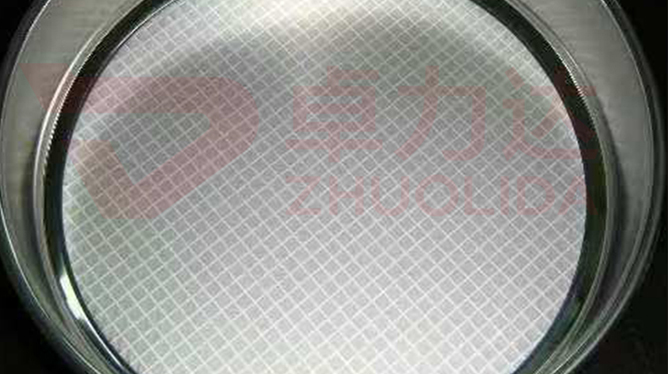
Roll-to-roll continuous electroforming is an additive manufacturing method that grows metal onto a moving carrier. A coiled conductive carrier or metal base strip passes steadily through the plating bath, and nickel, copper, and other metals deposit along the strip length under the electric field, yielding precision metal foil or strip with highly uniform thickness. Its biggest difference from sheet electroforming is the word continuous: the latter places parts in the bath one by one, while the former keeps the strip moving so deposition never stops. Because the process avoids the subtractive thinking of stamping and etching from the root, foil is made end to end with no cutting and no stress buildup, which suits functional metal strip that must be long, thin, and uniform across the whole coil. For lines that need large volume, low cost, and long-precision foil, roll-to-roll continuous electroforming is almost a required route, and the key to driving unit price down.
In many electronics and new-energy scenarios, metal foil must be as thin as a few microns yet stay thickness-stable across hundreds of meters of coil, and conventional methods increasingly fall short. Stamped foil is formed by dies; changing spec means changing dies, and below a certain thickness die cost and yield break down, while complex patterns are impossible. Etched foil can do micro-holes and patterns but is subtractive, carrying edge burrs, stress deformation, and material waste, with uniformity hard to hold at long length and end and edge thickness drift nearly impossible to eliminate. Roll-to-roll continuous electroforming turns deposition into a pipeline: the strip grows copper and nickel as it moves, thickness locked precisely by current density and line speed, want thicker add current, want thinner drop speed, change parameters without changing any hard tooling. This continuous additive approach improves long-foil thickness uniformity, material utilization, and per-meter cost at once, which is exactly why it spreads fast in battery current collectors, shielding foil, and precision strip. At bottom, continuity solves the large-volume-and-stable hurdle that subtractive processes cannot clear.
Parameter Window
• Usable metals: nickel, copper, Ni-Co alloy; multi-layer composite for functional gradient
• Foil thickness: 5–100 µm, adjustable online in real time
• Strip width: common 100–600 mm, segmented power for wide format
• Line speed: 0.5–5 m/min, tuned to target thickness
• Thickness uniformity: within ±5% across the coil, far better than sheet end drift
• Single coil length: up to several hundred meters, continuous winding, no batching
Manufacturing Process (8 Steps)
1. Unwind and edge guide — base strip feeds out at constant speed with auto centering for stable, edge-straight travel.
2. Pre-treatment cleaning — degrease and activate so the strip has uniform deposition conditions and avoids poor adhesion.
3. Seed / conductivization — non-conductor carriers get a thin conductive layer first, or metal base strip is polished and activated directly.
4. Continuous electroforming deposit (core step) — strip crosses the bath, metal adds along its length, thickness locked by current and line speed.
5. Online thickness gauging — non-contact gauge gives real-time feedback, closed-loop adjusting deposition to prevent thick-thin variation.
6. Post-treatment — anneal to release stress, passivate against oxidation, plate functional layers or alloys as needed.
7. Wash and dry — thorough wash and dry to avoid residual liquid corroding the strip or contaminating downstream.
8. Rewind and slitting — wind neatly and slit to spec, inspect thickness and appearance coil by coil before release.
Core Advantages
1. Continuous efficiency — non-stop deposition; single-line capacity far above sheet batch electroforming, lower unit energy.
2. Long-format consistency — uniform thickness across the whole coil, fundamentally solving subtractive end and edge drift.
3. No stress, no burr — additive forming with no stamping burrs and no etch side-etch; strip is flat and ready to use.
4. High material utilization — almost zero cutting waste; metal transfers nearly fully into foil, clear cost edge.
5. Fast spec change — adjust current and line speed to swap thickness; no hard tooling dependency, economic even for small batches.
6. Multi-layer composite — stack different metals on one line for functional gradient or shielding composite foil, multi-use machine.
Typical Applications
• Battery current-collector foil — ultra-thin copper and nickel foil for Li-ion and solid-state batteries, continuous feed cuts cost and lifts consistency.
• EMI shielding foil — shielding layer for electronic devices; long coils cut and laminate efficiently across whole units.
• Flexible-circuit base — flexible metal carrier supporting flex circuits, sensors, and wearables.
• Precision filter strip — continuous micro-hole strip for screening, fluid filtration, and gas diffusion.
• Decorative and functional foil — textured surface or alloy foil balancing appearance and physical performance.
• Micro-hole and patterned strip — roll-to-roll perforated or patterned metal strip, stable yield at volume.
Design and Selection Points
1. Thickness and line speed must match; too thin at high speed under-deposits, too thick at low speed hurts capacity, compute the window first.
2. Base conductivity decides whether a seed layer is needed first; non-conductor carriers must get a thin conductive layer.
3. Width relates to bath uniformity; wide format needs segmented power to avoid center-edge difference and color shift.
4. Post-anneal must be moderate; over-anneal changes foil hardness and elongation, hurting downstream processing.
5. Long-coil winding tension must stay constant; tension fluctuation introduces wrinkles and thickness ripple that are hard to rework.
6. Multi-layer composite needs each layer's potential matched to avoid poor inter-layer bonding or later layers dissolving earlier ones.
7. Validate the process window on a small coil before scaling to target width and length to avoid total batch scrap.
Roll-to-roll continuous electroforming has become the main process for precision metal foil because it turns electroforming into an uninterrupted continuous line, taking thickness uniformity, stress-free state, and low cost together at long format. As new-energy current collectors and flexible electronics scale demand for ultra-thin long foil, the value of roll-to-roll continuous electroforming in battery, shielding, and precision strip will keep rising. Choosing roll-to-roll continuous electroforming essentially locks in three gains at the production stage: efficiency, consistency, and material utilization. That is also the fundamental difference from subtractive routes like stamping and etching. As foil gets thinner and orders get longer, securing whole-coil quality from the continuous deposition side is often easier than remediation at slitting, and better supports the rhythm and quality floor of large-volume delivery.
Contact:赖先生
Phone:+86 18938693450
Tel:0755-2708-8292
Email:yw9@zldsmt.com
Add:深圳市宝安区福永镇新和村福园一路华发工业园A3栋
 Zhuolida