Welcome: Shenzhen Zhuolida Electronics Co.TD
Language:
 ∷

∷
∷
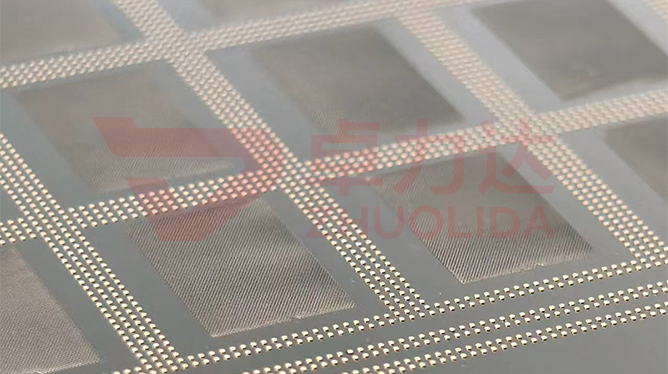
Residue on a stencil comes from two ends. One is photoresist left by incomplete developing before shipment, a thin film stuck to the aperture walls and bottoms; the other is flux and paste dried inside the holes after printing, handled by wiping on the customer's line. The removal window is the set of conditions made up by cleaner concentration, bath temperature, soak time, and ultrasonic or spray intensity: too gentle and a film stays at the bottom, too aggressive and a 15μm thin sheet warps and the walls get pitted. Electroformed stencil cleaning residue control turns this often-treated-as-support step into reproducible parameters, so delivered condition and press performance agree. Measured together with aperture accuracy ±3μm and wall roughness ≤0.01μm, it shows whether cleaning has damaged the sheet.
Cleaning faults rarely surface at delivery visual inspection. One fine-pitch lot looked clean leaving the shop, yet the customer starved solder by the third board; side lighting after stripping showed a resist film pressed into the aperture bottoms, with aperture remeasurement still inside ±3μm. After switching cleaner lot, the walls bloomed with hazy white patches and grabbed paste badly, while dimensions gave nothing to flag. The costliest case came from chasing throughput: ultrasonic power turned up and time stretched, a 30μm thin sheet collapsed at the aperture mouths, and the surface wrinkled the moment tension hit 40N — the whole lot had to be scrapped and remade. A checker measures aperture outlines; it cannot read film thickness or pits eaten into the walls. Electroformed stencil cleaning residue control means putting eyes on the aperture bottoms and sidewalls that visual inspection never lights.
Parameter Window
• Post-develop residue: no continuous film on walls or bottoms, sampled per lot under a 100x microscope
• Cleaner concentration and bath temperature classed by resist type; thin sheet takes a low-temperature short-time window
• Stencil thickness 15–200μm; no high-power ultrasonics below 30μm
• Minimum aperture ≥25μm, pitch ≥120μm, web ≥50μm; small holes hide residue most easily
• Aperture accuracy ±3μm, wall roughness ≤0.01μm, each measured before and after cleaning
• Post-print flux residue reviewed against the wipe cycle within a 15000-print life
Manufacturing Process (8 Steps)
1. Data and drawing — produce the master from the aperture map, mark cleaning-sensitive points in fine-pitch zones.
2. Pretreatment — clean and conductivize the base, passivate the mandrel face to reduce starting nodules that trap resist.
3. Lamination and LDI — 8μm/8μm resolution, double-side alignment ±5μm; an even resist layer strips cleanly.
4. Developing — control concentration and time to clear residue to the aperture bottom in one pass, not by brute-force washing later.
5. Electroforming — current density 1–4A/dm² in stages; smooth walls hold less paste later.
6. Demolding — peel the whole sheet from a low-stress corner, keep release agent out of the apertures.
7. Inspection — checker measures apertures, imager and flash gauge verify positions, microscope samples residue.
8. Mounting and packing — aluminum frame bonded with AB adhesive, tension set in 10–55N steps before shipment.
Core Advantages
1. Clean at delivery — hold electroformed stencil cleaning residue control to a film-free aperture bottom and on-press shortage drops clearly.
2. No thin-sheet damage — 15–30μm stock takes a low-temperature short-time window, no collapsed mouths or wrinkles.
3. Size and cleanliness managed apart — ±3μm goes to the checker, residue to microscope sampling.
4. More durable walls — cleaning that does not bite leaves Ra≤0.01μm walls less prone to paste grab.
5. Honest life — no residue at delivery means fewer wipes approaching 15000 prints.
6. Traceable — each bath logs cleaner concentration, temperature and soak time for lot lookup.
Typical Applications
1. Mini LED and 01005 fine-pitch printing stencils, where small holes hide residue most easily.
2. 4–12 inch WLP ball-drop templates, where a million openings allow no film anywhere.
3. ABF substrate Ball and Flux plates, where flux residue directly drags down deposit.
4. Precision sieves for semiconductor material classification, where micro-hole residue plugs holes outright.
5. Composite plates with Post or local thickening, where step roots pool cleaning liquid.
6. Large-format grids such as photovoltaic stencils, where whole-sheet cleaning uniformity drives consistency.
Design and Selection Notes
1. Clear residue in the developing stage, do not count on brute-force washing later to cover it.
2. Bar high-power ultrasonics on thin stock — below 30μm one shake collapses edges and wrinkles the sheet.
3. Class cleaner by resist type; sample a new lot before running volume.
4. Measure aperture and wall before and after cleaning; pits show up on the spot.
5. Set up a separate station for electroformed stencil cleaning process validation; visual inspection cannot replace a 100x microscope.
6. Set tension in 10–55N steps and never mix classes in one lot.
7. Write wipe advice into the delivery card; when flux type changes, recalibrate the window.
Laid out, electroformed stencil cleaning residue control lives half in the developer tank and half in the plating bath: how evenly the resist coats and whether develop time is long enough decide if a film stays in the first place, and how grains and walls grow decide whether paste grabs later. Cleaning itself only makes up the account left unfinished, and overdoing it damages thin stock instead. Log the bath by resist type, check concentration and temperature twice per shift, hold soak time inside the window the process card gives, run ultrasonic power only on stock above 30μm, and dump the whole bath the moment conductivity drifts out of spec. What is hard is not washing one spotless sample, but keeping a dozen sheets from one bath and several consecutive lots film-free at the bottom and white-patch-free on the walls — only then does ±3μm aperture accuracy match before and after cleaning. For orders with hard fine-pitch requirements, fix develop time, cleaner concentration, bath temperature and ultrasonic class in the process card at the sampling stage and sample production to it; that is cheaper than letting the customer wipe endlessly and swap cleaners after delivery. On paper electroformed stencil cleaning residue control is a set of concentrations and times; on the line it is every sheet releasing no paste from the very first board.
Contact:赖先生
Phone:+86 18938693450
Tel:0755-2708-8292
Email:yw9@zldsmt.com
Add:深圳市宝安区福永镇新和村福园一路华发工业园A3栋
 Zhuolida