Welcome: Shenzhen Zhuolida Electronics Co.TD
Language:
 ∷
∷

∷
∷
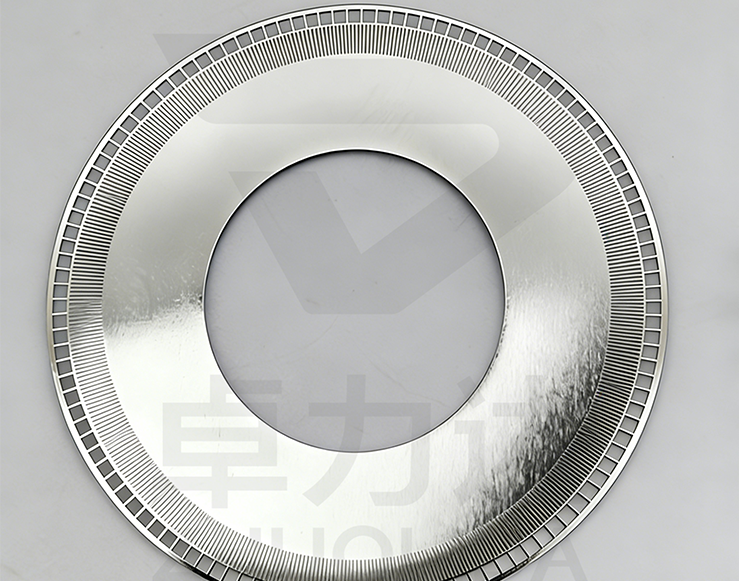
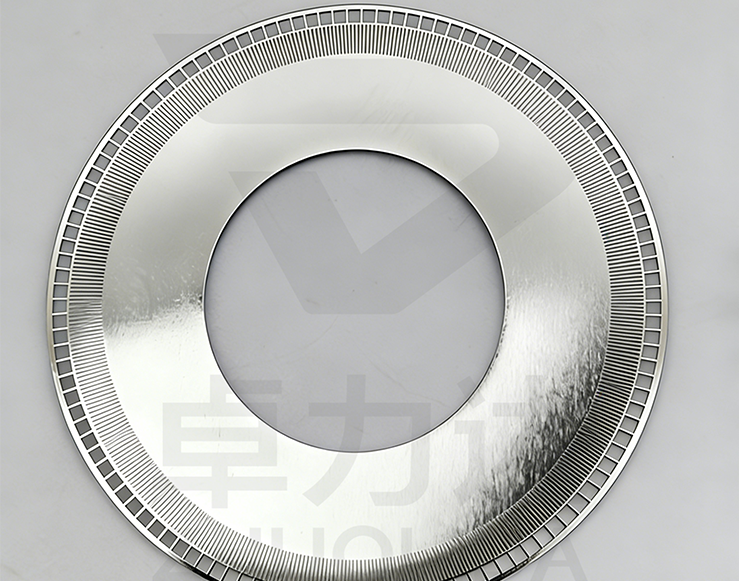
Electroforming of encoder discs is a specialized manufacturing process that leverages the principle of metal electrolytic deposition to achieve high-precision custom production of encoder discs. It serves as the mainstream technology for fabricating core components of high-precision encoders. By integrating photolithography masks with electrodeposition, this process precisely replicates code track structures at the micrometer to nanometer scale without mechanical cutting, effectively avoiding residual stresses and microcracks inherent in traditional machining methods. The process supports customization in various materials including copper, nickel, and titanium alloys. It can form complex patterns such as multi-turn absolute encoders and Gray codes according to customer requirements. Widely applied in automation equipment requiring precise position feedback, it has become a core supporting solution in industrial automation, aerospace, and precision instrumentation due to its advantages of high precision, high reliability, and high consistency.
Product Features
High-Precision Replication Capability: Leveraging the metal ion deposition characteristics of electroforming, it achieves micron-level or even nanometer-level structural replication with code track line width control accuracy of ±0.005mm. Minimum line width reaches 0.05mm, with angle resolution up to 24 bits (0.2″ precision), far surpassing traditional stamping and laser processing accuracy to meet high-precision servo system requirements.
Integrated Complex Pattern Formation: Through CAD design combined with deep ultraviolet or electron beam lithography, multi-layer encoder structures—including coarse/medium/fine positioning—can be formed in a single step on a single substrate. This effortlessly achieves complex patterns like multi-turn absolute encoders and Gray codes without layered etching, enhancing signal interference resistance and product reliability.
Mechanical Stress-Free: Utilizing a non-contact chemical deposition process eliminates heat-affected zones and mechanical stresses, fully preserving the material's original elasticity and strength. For instance, strength loss in 316L stainless steel after electroforming is <4%. This avoids micro-cracks generated by traditional machining, extending product lifespan.
Wide Material Adaptability: Supports diverse metallic substrates including copper, nickel, iron, gold, silver, and their alloys. Compatible with non-metallic substrates like semiconductors and ceramics. Custom materials such as titanium alloys and nickel-cobalt alloys can be tailored for specific applications, meeting requirements for biocompatibility, corrosion resistance, and other specialized needs.
Superior batch consistency: Utilizing roll-to-roll automated production lines with a daily capacity of 3000㎡, combined with AI vision inspection systems for real-time monitoring of critical parameters like aperture, pitch, and surface roughness. Achieves a product yield rate of 99.7%, ensuring stable quality for both small-batch and large-scale production.
High Customization Flexibility: Equipped with an integrated CAD/CAM design system supporting 24-hour rapid prototyping. Custom encoders can be tailored to client specifications for various dimensions (diameter ≤500mm), thicknesses (0.03-0.1mm), and precision levels, accommodating diverse encoder requirements.
Product Performance
Accuracy Performance: Angular resolution up to 24 bits (accuracy 0.2″), angular error <0.001°, code line width error controlled within ±0.001mm, flatness ≤0.02mm. Capable of directly generating Gray code or multi-turn code without requiring a reference zero position, ensuring precise and error-free position feedback.
Mechanical Performance: Base material undergoes special treatment for significantly enhanced mechanical strength, withstanding high-speed operation exceeding 20,000 rpm without deformation. Nickel-cobalt alloy achieves hardness up to HV600+, while diamond-like coating elevates hardness beyond HV2000, boosting wear resistance by 3-5 times.
Environmental Adaptability: Exceptional corrosion resistance with oxidation endurance exceeding 800 hours, suitable for harsh industrial environments including oil contamination, humidity, and acid/alkali exposure. Oil-repellent and water-repellent surface treatment minimizes dust and oil residue adhesion, reducing signal loss risk. Operating temperature range spans -40°C to 150°C.
Signal Performance: Features sharp code edge definition with reflectivity exceeding 95%, achieving over 40% improved signal-to-noise ratio. Effectively suppresses ambient light interference to ensure stable, jitter-free encoder output signals, suitable for high-speed motion control and precision positioning applications.
Lifespan Performance: Eliminates mechanical damage risks with wear resistance and aging resistance. Maintains stable performance after 100,000 life cycle tests, extending service life by 3-5 times compared to standard encoders and significantly reducing equipment maintenance costs.
Production Efficiency: Sample delivery within 24 hours; batch order lead times reduced to 7 days. Closed-loop recycling of etching solutions achieves 90% metal ion recovery, lowering energy consumption per unit area by 40% compared to laser processing. Balances environmental sustainability with production efficiency.
Product Application Fields
Industrial Automation: Core applications include industrial robot joint encoders, CNC machine tools, servo motors, and automated production lines. These devices provide precise angle and position feedback, ensuring dynamic responsiveness and positioning accuracy to support efficient automated production operations.
Aerospace Applications: Serves as precision positioning components for aerospace equipment, including aircraft navigation systems and satellite attitude control systems. Its nanometer-level accuracy and exceptional environmental adaptability meet demanding requirements in high-altitude, cryogenic, and high-vibration conditions.
Precision Instrumentation: Adapted for medical imaging equipment (CT scanners, endoscopes), precision measuring instruments, and semiconductor manufacturing equipment (wafer stage positioning). Titanium alloy electroformed encoders, with their biocompatibility, serve as core components in medical devices.
Transportation Sector: Utilized in subway speed measurement systems, new energy vehicle battery module positioning, and autonomous driving systems. Their vibration-resistant and impact-proof properties ensure precise position feedback during vehicle operation, safeguarding driving safety.
Electronics and Communications: Employed in high-end servers, 5G equipment, and optical communication instruments, providing high-precision displacement and angle detection. This enhances signal transmission stability and improves operational reliability.
Other Fields: Also applicable in petrochemicals, food and pharmaceuticals, and astronomical instruments. Suitable for various devices requiring precise position feedback, such as fluid control equipment in petrochemicals and positioning systems in food machinery.
Contact:赖先生
Phone:+86 18938693450
Tel:0755-2708-8292
Email:yw9@zldsmt.com
Add:深圳市宝安区福永镇新和村福园一路华发工业园A3栋
 Zhuolida