Welcome: Shenzhen Zhuolida Electronics Co.TD
Language:
 ∷

∷
∷
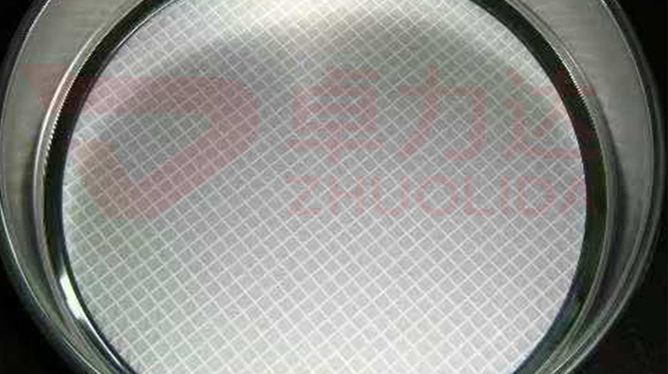
An electroformed screen fitted at the feed inlet of a distillation column has apertures of a few tens of microns and a foil as thin as 15 μm. What the plant actually watches is not how it filters in the first days, but whether the holes are still the same holes after months soaking in acidic liquor. Corrosion resistance control of electroformed screens governs precisely that: from bath chemistry and deposition current to post-treatment passivation, it locks nickel composition, density and surface state into a range the medium cannot easily attack, so the mesh holds both dimension and material in chemical and pharmaceutical work, where filtration accuracy matters and metal-ion leaching is unwelcome. Unlike screen processes that chase hole shape alone, corrosion is a slow variable; every sheet passes incoming inspection and only shows its trouble months into service, so the control points have to be built into the deposition stage up front.
The failures seen on the line are concrete. One batch of screens used on a chlorinated solvent crystallisation mother liquor turned grey after two weeks; under a vision measuring system the surface was a field of dense pits, the apertures eaten two or three microns wider, and the cut point of the grading drifted with them. Another batch showed fine blisters between the nickel and the substrate; a flash measurement scan found local delamination, and the sheet shed flakes at a gentle bend. The cause was a conductive layer left dirty in pre-treatment, so adhesion was weak to begin with and the medium crept through pinholes to lift the interface. The worst case is pharmaceutical intermediate filtration, where the screen itself is intact but nickel ions show up above limit in the filtrate and the whole batch is scrapped; the root turns out to be a non-resistant impurity phase in the deposit that dissolves first in acid. In all three, aperture tolerance, roundness and tension measured beautifully at dispatch; corrosion resistance control of electroformed screens simply was not written into the process card, so the problem surfaced at the customer instead.
Parameter Window
• Foil thickness 15–200 μm; below 30 μm, pinholes in the coating dominate corrosion behaviour and need sealing
• Micro-hole aperture tolerance ±3 μm, re-measured after exposure; the first acceptance criterion for corrosion resistance
• Screen roundness ±0.002 mm; pitting distorts hole shape, so this figure moves with coating density
• Bath current density 1–4 A/dm²; the high end burns, the low end deposits loose, both leaving corrosion paths
• Nickel-cobalt alloy hardness 450–550 Hv; cobalt raises hardness but shifts corrosion potential, so blend to the medium
• Aperture wall roughness ≤0.01 μm; a smooth wall holds less residue and traps less liquor, cutting pit initiation sites
Manufacturing Process (8 Steps)
1. Confirm the medium — establish pH, chloride and temperature first, set the nickel-cobalt ratio and coating system accordingly, and check the RoHS restricted-substance list.
2. Substrate pre-treatment — degrease, acid-pickling and activation of the mandrel without shortcuts, with an even conductive layer so no pinholes are left for later deposition.
3. Lamination and LDI — imported LDI exposure at 8 μm/8 μm resolution, ±5 μm double-side alignment, aperture pattern laid out on substrates up to 610×660 mm.
4. Development and strike — develop clean with no residual film, then lay a dense strike layer at low current to block the corrosion path toward the substrate.
5. Nickel-cobalt co-deposition — stage current density at 1–4 A/dm² and bath temperature to hold alloy composition and thickness spread together.
6. Corrosion post-treatment — low-temperature anneal for stress relief plus passivation and pore sealing, lowering surface energy so acidic liquor wets and clings less.
7. Corrosion re-test — vision and flash measurement for aperture and roundness, then sample salt-spray or immersion with before-and-after dimension drift compared.
8. Clean packing — pharmaceutical orders are washed and dried to an ion-leaching specification and ship with material and RoHS compliance records.
Core Advantages
1. Stable over long runs — the resistant layer keeps aperture erosion below a micron, so grading accuracy does not drift after months of service.
2. Clean filtrate — a nickel-cobalt alloy with a RoHS-compliant coating keeps metal-ion leaching in check, so pharmaceutical liquors stay uncontaminated.
3. No whole-sheet scrap — interface failures such as pinholes, delamination and blisters are screened out at pre-treatment and strike stages.
4. Thin foils still last — even 15–30 μm meshes take a continuous dense resistant layer, with no need to buy life by adding thickness.
5. Traceable by lot — bath batch, current curve and immersion re-test are logged per sheet, so anomalies trace back to the run.
6. One mesh, many duties — the same corrosion resistance control of electroformed screens carries from solvent filtration across to acid and alkali refining.
Typical Applications
1. Chemical distillation and crystallisation mother-liquor filtration, where chlorinated solvents and acid or alkali liquors demand no pitting and no flaking.
2. Pharmaceutical intermediate and API refining, where the filtrate is sensitive to nickel ions and a RoHS-compliant resistant coating is required.
3. Precision screens for semiconductor material grading, holding ±3 μm aperture tolerance even in wet environments.
4. Battery slurry and electrolyte filtration, where meshes sit in polar solvents for long periods and resist blistering and delamination.
5. Fine filtration in food and flavour extraction, resistant to cleaning-agent scouring with no metallic taint migrating into the product.
6. Hot wet dedusting and flue-gas sampling meshes, where corrosion and fine dust test the integrity of aperture walls together.
Design and Selection Notes
1. Fix the medium before the coating. Write pH, chloride concentration and temperature into the technical agreement; it is cheaper than swapping screens later.
2. Do not chase thinness alone. Foils of 15–30 μm carry little corrosion allowance, so long-service duty is better set above 50 μm.
3. Harder is not more resistant. 450–550 Hv is enough; tune the cobalt ratio together with the corrosion potential of the medium.
4. Keep current density inside the window. Sitting at the 4 A/dm² ceiling for long runs burns the deposit and leaves micro-cracks.
5. Do not read only aperture on the dispatch report. Ask for dimension re-test and roundness before and after immersion or salt spray.
6. List ion leaching separately for pharmaceutical orders. A RoHS record covers compliance, not the nickel content of the filtrate.
7. Agree the cleaning method. Strong-acid backwash eats the passivation layer, so the maintenance SOP must match the coating system.
Seen on its own, corrosion resistance control of electroformed screens is less a single step than an audit of the bath, pre-treatment and post-treatment stages. The nickel-cobalt blend sets the material baseline, dense deposition leaves the medium no interface to creep through, and passivation with pore sealing buys the months of margin after installation. Miss any one and ±3 μm aperture tolerance will not survive a single campaign in acidic liquor. What separates capable lines is rarely whether a screen can be made at all, but whether a dozen sheets from one bath still agree on dimension and filtrate figures after months at the customer. For orders that specify a nickel-alloy corrosion-resistant coating for screens, fix the medium parameters, current curve and immersion re-test method into the process card at sampling stage, then run to that card in production — far easier than chasing batches with extra tests after a complaint. That is where corrosion resistance control of electroformed screens earns its keep: turning a slow variable into a verifiable, traceable delivery condition.
Contact:赖先生
Phone:+86 18938693450
Tel:0755-2708-8292
Email:yw9@zldsmt.com
Add:深圳市宝安区福永镇新和村福园一路华发工业园A3栋
 Zhuolida